
The Historical Context of Moroccan Solidarity with Palestine
Throughout history, Palestine has been a pivotal issue within the fabric of Moroccan society and politics. This sentiment is reflected in various cultural expressions, from street art in Chaabi neighborhoods to impassioned football chants in stadiums. The solidarity exhibited by Moroccans towards the Palestinian cause is deeply embedded in a legacy of regional anti-colonial and anti-imperial struggles. Demonstrations erupt on Moroccan streets whenever there are violations against Palestinian rights, underscoring a brotherhood that traces back 750 years to the era of Salah ad-Din al-Ayyubi, who honored Moroccan support in reclaiming Jerusalem from the Crusaders by designating a quarter in the city as the Moroccan Quarter (Ḥārat al-Maghāriba).
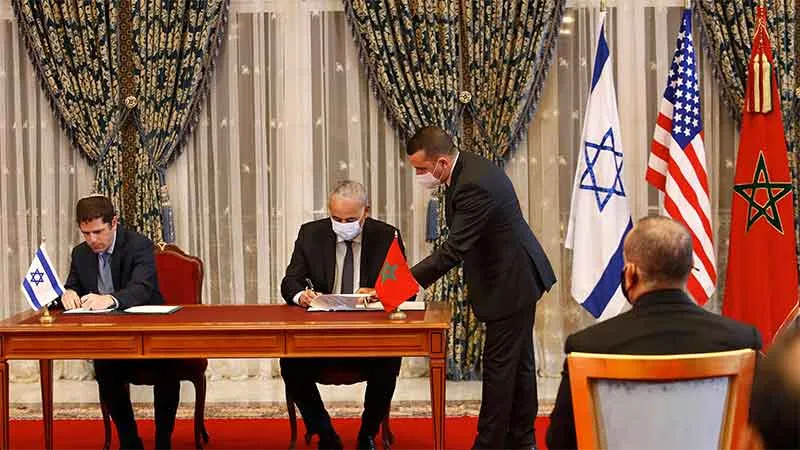
The Islamist Justice and Development Party (PJD), which has rooted much of its credibility in public support through pro-Palestinian marches, faced significant challenges after joining the makhzen state. This structural incorporation led to a shift in its ideological stance, notably when the PJD-led government signed the Abraham Accords in December 2020. This agreement marked a pivotal realignment of Morocco’s diplomatic priorities, often at odds with the party’s grassroots platform that emphasized Palestinian solidarity.
Public Dissent and the Rise of Anti-Normalization Movements
Since the signing of the Abraham Accords, there has been a palpable wave of public dissent against normalization with Israel. Moroccans have actively engaged in petitions, boycotts, and street protests, often risking their personal freedoms amidst a government crackdown on dissent that has intensified in the wake of the COVID pandemic. Recent investigative reports have brought to light Morocco’s alleged use of Israeli spyware to track activists and journalists, further fueling public discontent.
The normalization deal, executed without parliamentary approval, has left many Moroccans feeling alienated from their government’s foreign policy decisions. This dissatisfaction is compounded by a narrative pushed by Moroccan authorities and media that emphasizes the supposed benefits of normalization, particularly the U.S. recognition of Moroccan sovereignty over Western Sahara. However, this narrative often sidesteps the implications for Palestine, which has not gone unnoticed by the Moroccan populace.
In response to the deteriorating situation in Gaza and the perceived complicity of the Moroccan state in supporting Israel, various coalitions, such as the Moroccan Front for Supporting Palestine and Anti-Normalization, have emerged. These groups unite leftist, Islamist, and labor organizations in a common cause to advocate for the severing of ties with Israel. Amidst this, there is a contrasting rise in pro-Israel sentiments from certain Moroccan NGOs and civil society organizations, which have begun to promote normalization narratives, sometimes framing them within a ‘Morocco first’ perspective. This divergence of opinion on normalization reflects a growing chasm between state policy and public sentiment, particularly in light of recent events in Gaza.
As reported by countercurrents.org.