
The striking image featured on the cover of the song "Nashid" by Moroccan rapper Mehdi Yubi, known artistically as Mehdi Black Wind, captures a poignant moment in history. It depicts a man in a white caftan and a traditional red tarbouche kneeling, with his hands flat on the ground, as he bows to a child standing nearby in a pristine white suit. This powerful image, taken in 1970, portrays a Moroccan citizen kissing the feet of King Mohammed VI, who was then a mere child and the crown prince. The powerful visual evokes a sense of subservience and longing that resonates with contemporary issues of authority and expression in Morocco.
The release of Mehdi Black Wind's song comes at a time of renewed crackdowns on dissent in Morocco, particularly against artists and outspoken critics of the government. The most recent victim of this crackdown is rapper T-Flo, whose real name is Tarik El Tazi. He was arrested in Fez after sharing a video on Instagram where he vehemently criticized the Moroccan government led by Prime Minister Aziz Akhannouch. In his video, T-Flo condemned the government's treatment of Moroccan citizens, referencing a verse from the Quran to justify resistance against oppression. Just hours after posting, the video was deleted, and he was taken from his home by Moroccan police.
The lyrics of "Nashid" resonate deeply with the current sociopolitical climate in Morocco. They explore themes of disillusionment and the desire for change, reflecting a generational frustration with the status quo. The song's lines echo sentiments of betrayal, as the artist laments the contrast between the patriotic education received in school and the harsh realities faced by citizens under current governance.
Mehdi Yubi himself faced similar challenges when he was arrested at the airport in Rabat in July, accused of defamation and violating the privacy of the royal family. Having lived in France since 2017, Yubi was visiting Morocco when he was detained, and after 18 days in prison, he was released on August 1, pending trial set for October 2. Meanwhile, T-Flo awaits his trial on August 27. The delays in these proceedings are attributed to a lawyers' strike in the country, further complicating the situation for those awaiting justice.
Yubi identifies as a committed artist and has frequently expressed the need for politics and activism to intertwine with artistic expression. His music has become a voice for the youth in Morocco, especially in light of the Arab Spring revolutions, where he gained significant attention for his politically charged lyrics. The ongoing protests and public unrest have heightened the government's anxiety regarding dissent, leading to a palpable increase in repression against bold voices criticizing the monarchy and its affiliates.
Recent evidence suggests a systematic increase in arrests and direct repression against dissidents, exemplified by the cases of T-Flo and Mehdi Black Wind. The day before Yubi's arrest, journalist Ali El Marabet was detained, and rapper Sohaib Qabli, known as "Al-Hasil," was sentenced to eight months in prison for songs and posts criticizing corruption and the normalization of relations with Israel. Additionally, prominent youth activist Zainab Khroubi received a suspended six-month sentence for her role in leading protests advocating for healthcare reform and educational improvements, highlighting the broader struggle against governmental extravagance and corruption.
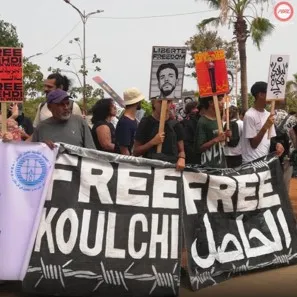
In light of these developments, many artists and activists have rallied around the hashtag #FreeKoulchi, meaning "freedom for all detainees." This slogan, which gained traction during the Arab Spring, reflects a unifying call for justice and change in Morocco. As Mehdi Black Wind poignantly warned, the pressures placed upon the youth could lead to resentment and a willingness to risk incarceration for their hopes of change.
In conclusion, the narratives unfolding in Morocco illustrate a complex interplay between art, activism, and governmental authority. As the country navigates its political landscape, the voices of its youth, embodied by artists like Mehdi Black Wind and T-Flo, continue to challenge the status quo in a quest for freedom and expression.
As reported by assafirarabi.com.