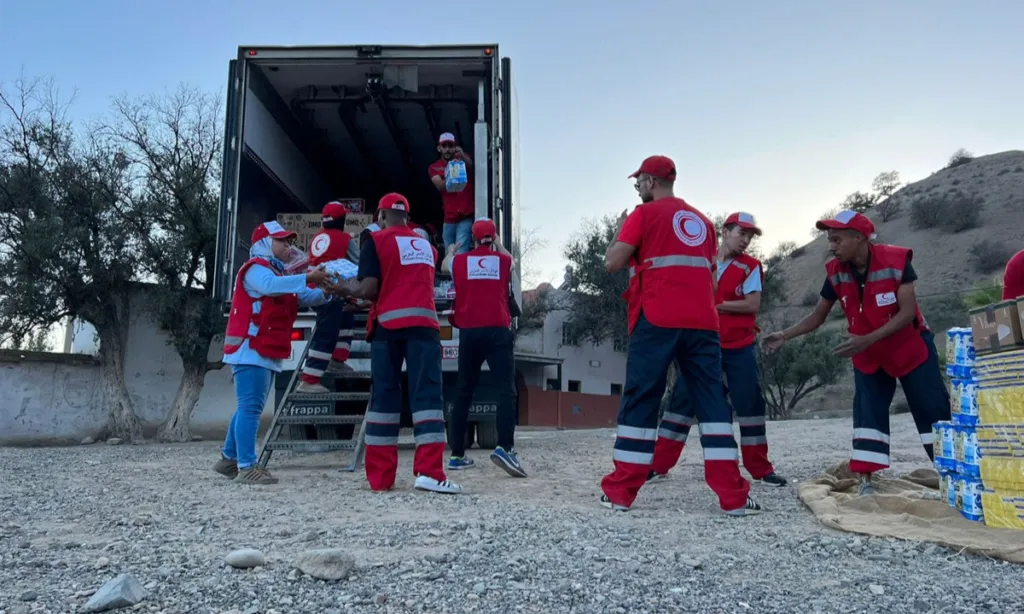

The Moroccan Red Crescent has reported remarkable humanitarian efforts following the devastating Al-Haouz earthquake, with a total of approximately 538,837 interventions benefiting 79,731 individuals across 17,189 families. These efforts are part of a comprehensive response program that commenced in September 2023 and is set to continue until December 2026. This extensive initiative aims to address the urgent needs of affected communities spread across 16 rural municipalities and 661 localities.
This significant data was shared during a meeting held on September 30, 2026, in Marrakech, which was attended by numerous institutional and international partners. The purpose of the gathering was to present the outcomes of the interventions carried out in the regions of Marrakech, Al-Haouz, Chichaoua, Taroudant, and Azilal, while also extracting valuable lessons from three years of fieldwork.
Impressive Impact of Red Crescent Interventions
According to Moulay Hafid Alaoui, the Vice President of the Moroccan Red Crescent, the response program has provided assistance to tens of thousands of earthquake victims. The distribution of operations was strategically tailored to meet the specific needs of each area and the extent of damage suffered by the residents and their infrastructure. The total number of interventions carried out by the Moroccan Red Crescent has reached an impressive 538,837, directly benefiting nearly 80,000 individuals from more than 17,000 families.
The interventions covered a wide range of critical areas, with a primary focus on shelter and housing, access to clean water and sanitation, financial assistance, health services, nutrition, first aid, as well as psychological and social support aimed at mitigating disaster risks. In particular, the Al-Haouz and Marrakech regions were highlighted as primary beneficiaries, where interventions reached seven municipalities and provided assistance to 7,839 families, encompassing around 36,620 people.
In the Chichaoua province, operations were conducted in two rural municipalities, benefiting 4,334 families, totaling 20,300 individuals. Additionally, the Moroccan Red Crescent's interventions in the Taroudant province spanned five municipalities, aiding 3,930 families composed of 16,996 individuals, while 1,032 families and 5,815 persons received support from interventions conducted in two municipalities within the Azilal province.
Continued Commitment to Recovery and Resilience
Support related to shelter and housing accounted for the majority of the Moroccan Red Crescent's operations, with a staggering 186,925 interventions reflecting the urgent needs resulting from the damage inflicted by the earthquake on mountainous and rural areas. Water, sanitation, and hygiene interventions ranked second, with 174,654 operations aimed at ensuring suitable health conditions for affected families.
Furthermore, the financial transfer initiatives amounted to 55,052 interventions, while disaster risk reduction efforts included 34,187 interventions. The operations also encompassed 31,629 interventions in the field of nutrition and 14,604 related to first aid. The health sector recorded 5,654 interventions, alongside 6,132 operations focusing on mental health and psychosocial support, an area that gained particular importance due to the psychological and social impacts of the disaster on the affected population.
Moulay Hafid Alaoui confirmed that the response program for the Al-Haouz earthquake will extend until December 31, 2026, marking the official completion of this phase of the Moroccan Red Crescent's interventions. The Marrakech meeting also served as an opportunity to commend the efforts of rescuers, staff, volunteers, and partners who contributed to the response operations from the earliest moments of the earthquake.
Tiziana Bonzon, Head of the International Federation of Red Cross and Red Crescent Societies office in North Africa, emphasized the importance of integrated interventions aimed at addressing the needs of the victims and enhancing the capacity of local communities to cope with future disasters. She underscored that building resilience does not end with the conclusion of emergency interventions; rather, it necessitates ongoing investments in preparedness, training for local populations and stakeholders, and improving readiness.
Mohamed Bendali, Head of the Emergency and Youth Department at the Moroccan Red Crescent, highlighted that the Marrakech meeting brought together various stakeholders involved in the earthquake response, allowing for the sharing of results and experiences with partners. This meeting also served as a platform for evaluating three years of interventions and identifying key lessons related to response speed, coordination of assistance, and accessibility for populations in rural and mountainous areas. The outcomes of the Moroccan Red Crescent's interventions following the Al-Haouz earthquake reflect the immense humanitarian work accomplished since September 2023, as priorities gradually shift from immediate response to supporting stability and enhancing local communities' capacity to manage future risks and disasters.
As reported by attasiaa.com.