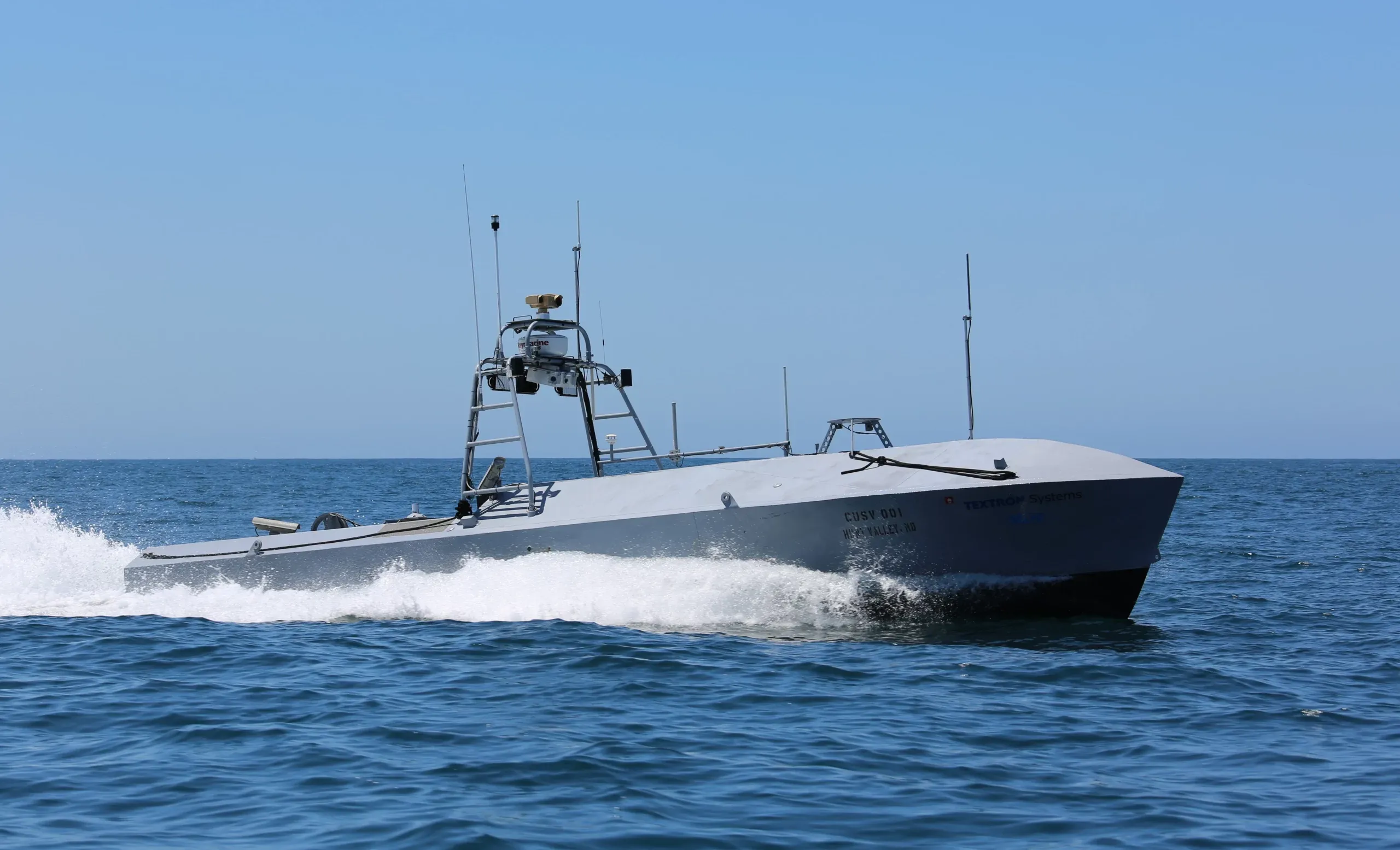

The Moroccan Royal Navy is set to significantly enhance its maritime capabilities by introducing two advanced, unmanned surface vessels following the Dutch government's approval to export these systems to Morocco. Valued at approximately 13 million euros, this deal is primarily focused on anti-submarine warfare and mine countermeasures, marking a pivotal step in augmenting Morocco's specialized maritime defense capabilities, which have previously been somewhat limited within its fleet.
An official memorandum from the Dutch Ministry of Foreign Affairs, directed to the parliament, reveals that the agreement encompasses two ships equipped for the dual missions of anti-submarine warfare and mine countermeasures. In addition to the operational payloads, the deal includes supplementary components, a mission control station, two sets of spare parts, along with essential technical documentation, training, and the necessary technology for operational support.
According to the same document, the vessels are designed to conduct missions lasting several days with a high degree of autonomy. The integration of the complete systems will take place in the Netherlands before the deployment of the vessels to the Moroccan Royal Navy.
While the Dutch authorities have not disclosed the name of the manufacturer or the specific model of the vessels, nor have they revealed the nature of all the sensors onboard, some of these details remain classified due to their commercial and military significance.
The military importance of this transaction lies in addressing a gap within Morocco's naval defense apparatus. Dutch assessments indicate that Morocco already possesses capabilities for anti-submarine operations, primarily based on large surface vessels equipped with sonar systems and a limited number of anti-submarine helicopters outfitted with dipping sonar. However, Morocco has had limited specialized capabilities in mine countermeasures.
The introduction of these new vessels will add another layer of defense for port entrances, coastal approaches, and maritime routes against threats emerging from beneath the surface, whether they originate from submarines or naval mines. Unmanned platforms allow for the deployment of sensors in potentially mined areas without putting manned vessels and their crews at risk, while also reducing the costs associated with prolonged surveillance missions compared to the continuous use of large frigates.
The importance of anti-submarine capabilities becomes particularly pronounced given Morocco's maritime environment. Algeria, which has strained diplomatic relations with Rabat, operates six Russian-made submarines from the 'Kilo' class, including four from project 636 and two older models from project 877, bestowing its navy with one of the most formidable underwater warfare capabilities in Africa.
On the northern front, Spain is also modernizing its submarine forces with the advanced 'S-80' series. The 'S-81 Isaac Peral' submarine has already entered service, while the 'S-82 Narciso Monturiol' was undergoing sea trials this August. The Spanish Navy asserts that these submarines possess advanced capabilities in stealth, reconnaissance, intelligence, and naval warfare, and they can deploy torpedoes, missiles, and mines.
Thus, the value of this deal lies not so much in the size or cost of the vessels but in the critical function they will add to the Moroccan Royal Navy. They will provide continuous and secure monitoring of the underwater domain, assist in detecting mines and submerged threats, and secure vital port gates and maritime corridors at a time when modern naval warfare is increasingly leaning towards unmanned systems and underwater combat.
As reported by assahifa.com.