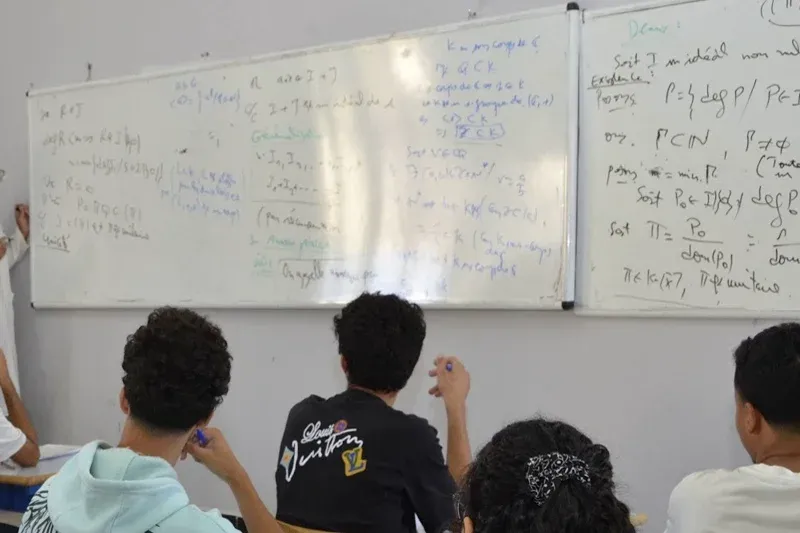

Significant Decline in Academic Performance Among Moroccan Students
Recent findings from the 2025 Programme for International Student Assessment (PISA), released by the Organisation for Economic Co-operation and Development (OECD), highlight a concerning regression in the academic abilities of Moroccan students compared to the 2022 assessment cycle. The results indicate a notable decrease in scores across several academic subjects, with Moroccan students experiencing a drop of 7 points in science, 18 points in reading comprehension, and 10 points in mathematics. The average scores recorded for Moroccan students were 358 in science, 321 in reading comprehension, and 355 in mathematics, alongside a score of 374 in problem-solving through computational thinking. These figures remain significantly below the average scores of OECD member countries.
High Percentage of Students Below Basic Proficiency Levels
One of the most alarming revelations from the PISA assessment is the substantial increase in the proportion of students performing below the minimum proficiency levels. A staggering 73.2% of participants failed to meet basic competencies (below Level 2), compared to a mere 0.1% achieving high performance in Levels 5 and 6. Gender disparities were also noted, with female students outperforming their male counterparts in reading comprehension, achieving an average of 329 points against 313 points for males. In science, girls scored 359 points while boys averaged 357 points. However, in mathematics, boys slightly led with 356 points compared to 354 points for girls.
Furthermore, the assessment revealed concerning trends in student attendance and the learning environment. Only 31.9% of students displayed consistent attendance, while 44.9% reported using artificial intelligence to assist with their learning. Despite the implementation of policies prohibiting mobile phones in 81.8% of schools, the ability of Moroccan educational institutions to enhance teaching through digital technologies fell below the international average. Only 12.4% of students reported having access to well-equipped educational environments, while merely 33.4% attended schools without a shortage of teaching staff.
Despite these challenges, it was noted that 47.2% of students had access to peer support programs in their schools, and the direct support provided by teachers was rated positively. The report also highlighted a strong awareness among students regarding environmental issues, with 70.5% expressing a desire to contribute to environmental protection through their future professions, surpassing the international average of 61.6%. Additionally, 81.5% of students reported participating in at least one environmental activity within their schools.
As reported by hespress.com.