
Moroccan Authorities Crack Down on Taxi Drivers Amid Migrant Surge
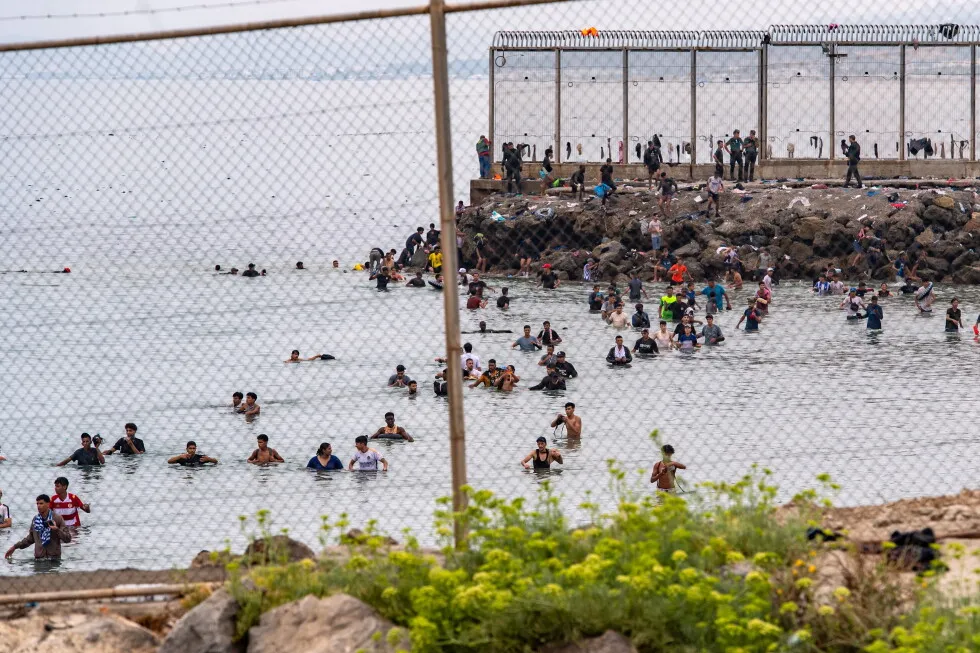
In a significant legal action, seven Moroccan taxi drivers have been sentenced to prison terms of up to six months and fined $1,070 each for their involvement in facilitating irregular migration. The verdict marks the first legal consequences in Morocco associated with the recent surge of over 70,000 individuals who attempted to cross into the Spanish enclave of Ceuta during the last week of July 2026. The judges in the northern Moroccan city of Tétouan found the taxi drivers guilty of "facilitating the illegal departure of Moroccans and foreigners through unauthorized border points" and "transporting passengers without a license." These charges arose after the drivers transported clients to the border town of Fnideq.
The convictions were handed down on a Monday, with the defendants appearing before prosecutors without legal representation due to a national lawyers' strike. They still retain the right to appeal their sentences. In conjunction with these actions, authorities confiscated one of the vehicles involved in the cases.
According to the Moroccan Association for Human Rights, as of Friday, 111 individuals are currently in preventive detention following the recent events in Ceuta. The charges against them include mass rebellion, assault on public officials, and obstruction of traffic. However, neither the Moroccan Ministry of Justice nor the prosecution has provided comments in response to media inquiries regarding these incidents.
Criticism of the sentences has emerged from various labor unions, including the national taxi drivers' union, who deemed the penalties "shocking and harsh." In a statement, they pointed out that "no official decision was issued to impose restrictions on passenger transport." Ali Younes, the general secretary of the Tétouan branch of the national taxi drivers' union, emphasized that "taxi drivers cannot be held responsible for what occurred" and noted that they were merely providing a public service.
The mass migration surge was reportedly fueled by false rumors circulating on social media claiming that the border was open, coupled with economic hardships faced by many Moroccans. Thousands of individuals crossed or swam to Ceuta, a Spanish city located on the North African coast, triggering a crisis that reverberated throughout Europe. Tragically, over 80 individuals lost their lives on both sides of the border during this humanitarian crisis. Most of the surviving migrants were expelled by Spanish authorities or returned voluntarily after realizing they were not welcome. An estimated 1,000 minors remain in precarious situations, with their futures hanging in the balance.
In a related development, Europol, the European Union's law enforcement agency, announced on Friday that an international police operation led by Spanish authorities successfully dismantled a significant criminal network involved in the trafficking of migrants, drugs, and weapons across the Western Mediterranean. This operation resulted in 78 arrests in Spain and Algeria just weeks before the surge of migrants toward Ceuta.
As reported by apnews.com.