
Morocco's Dual Role: Migration Route and Economic Gateway
In the initial segment of this series, I delved into the widening gap between Morocco's apparent economic growth and the stark reality faced by numerous young Moroccans who feel marginalized from this progress. This sense of disenfranchisement often compels them to seek dignity and prospects across the Mediterranean, yet their exodus is merely a fragment of a far more intricate and multifaceted relationship that intertwines Morocco, Europe, and Africa. Generally, European authorities perceive migration through the prism of border security, smuggling, deportation, and the strain on public resources. Conversely, Moroccan officials advocate a different perspective, asserting that migration should be viewed as a collective European-African responsibility. They contend that Morocco ought not to be relegated to the role of Europe’s perpetual border guard simply due to its geographical positioning as Africa's closest entry point to Europe. While this location presents challenges, it also offers significant opportunities.
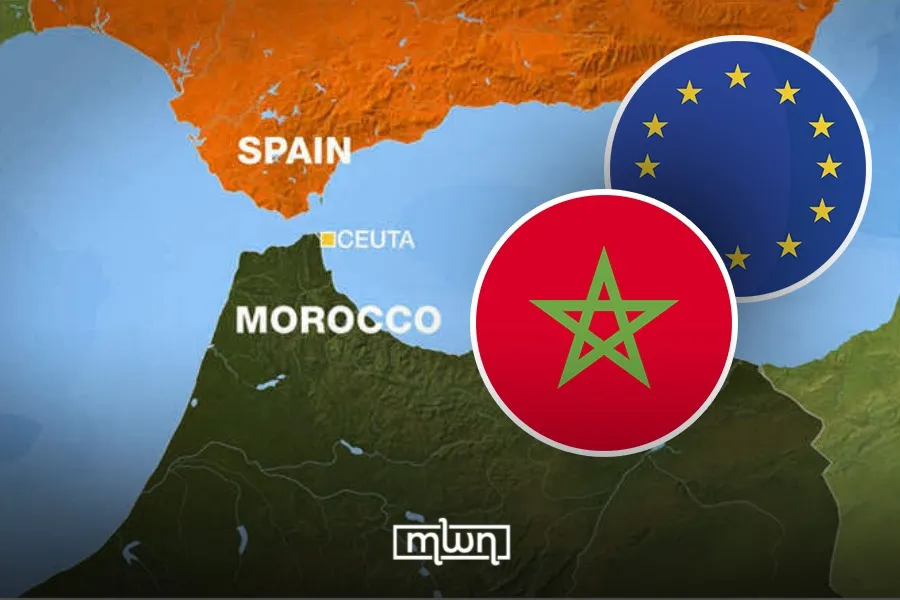
Morocco has emerged as a transit country for sub-Saharan migrants aiming to reach Europe, even as it grapples with the complexities of accommodating those who choose to stay. This unique position could transform Morocco into Europe’s commercial gateway to Africa, serving as a vital link between the two continents. With European companies, tourists, and retirees increasingly gravitating towards Morocco, the question arises: will Morocco be perceived as a mere barrier against Africa, or will it be developed as a bridge facilitating mutual prosperity? Situated a mere fourteen kilometers from mainland Spain, the Spanish enclaves of Ceuta and Melilla place European-controlled territory directly adjacent to Morocco’s Mediterranean coastline. With major ports along both the Atlantic and Mediterranean coasts, and robust connections to West Africa, Morocco is naturally positioned to act as a conduit between Europe and Africa. For many sub-Saharan migrants, Morocco represents the last stop before embarking on their journey to Europe.
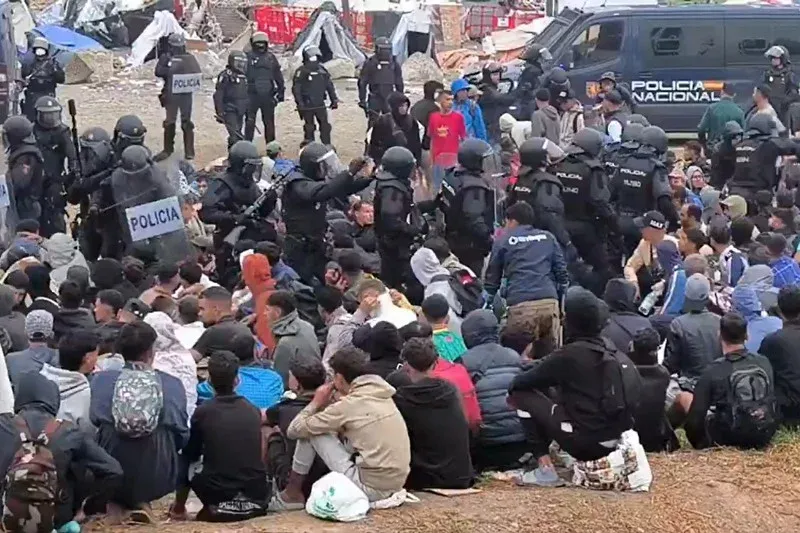
As a result, European governments frequently demand Moroccan cooperation in securing their southern borders. However, it is unjust to hold Morocco accountable for the wars, poverty, political instability, and systemic inequalities that drive migration northward, merely because it serves as the final transit point. Many of these conditions have been exacerbated by colonial legacies, foreign interventions, and postcolonial political and economic arrangements involving the very European nations now expressing concern over migration. While Morocco's geographical location underscores the necessity for European cooperation, it does not warrant the imposition of the burden of managing migration for an entire continent solely upon Morocco.
Morocco's Economic Potential: Beyond Migration Management
The geographic advantages that position Morocco as a migration pathway equally grant it the potential to become a commercial gateway for Europe into Africa. Its proximity to Europe, coupled with political stability, modern ports, and a developing transportation network, renders Morocco an appealing base for European enterprises seeking access to African markets. Notably, the Tangier Med port, now one of the Mediterranean's key shipping hubs, connects Morocco to crucial shipping routes that serve Europe, West Africa, and the broader Atlantic economy. Similar developments are underway at Hador port and the soon-to-be-completed Dakhla port. However, Morocco offers more than just infrastructure; its multilingual workforce, cultural affinity with both regions, and growing commercial footprint across Africa position it as an intermediary between European businesses and their African counterparts.
European firms could leverage Morocco as a manufacturing, logistics, banking, telecommunications, and professional services hub while remaining in proximity to their home markets. Europe should, therefore, regard Morocco as more than just a checkpoint designed to deter migrants. When adequately nurtured, it can evolve into the economic bridge facilitating European investments in Africa, generating jobs, and addressing some of the underlying factors that spur migration in the first place. By assisting Morocco in creating substantial employment opportunities for its youth and enhancing its capacity to manage migration effectively, Europe could shift the narrative from merely containing irregular migration at its southern borders to fostering collaborative solutions that begin in Morocco.
However, the movement between Morocco and Europe is not solely one-directional. While European governments engage in discussions on limiting the northward flow of African migrants, millions of European tourists flock to Morocco annually. Additionally, European retirees are increasingly opting to spend part or all of their retirement in Morocco, drawn by its favorable climate, affordable living costs, rich culture, and proximity to Europe. As a result, Morocco is making substantial investments in infrastructure to support this influx, with expansions in airports, increased airline connectivity, high-speed rail developments, and the establishment of new hotels, resorts, and coastal projects to cater to foreign visitors and residents.
The arrival of Europeans in Morocco is often heralded as an economic boon, yet this also exposes a double standard. Europeans residing in Morocco are frequently referred to as expatriates, retirees, or investors, while Moroccan migrants in Europe are often labeled simply as immigrants, carrying an implication of social burden. This discrepancy highlights a broader issue: while the movement of Europeans to Morocco is celebrated as tourism and investment, the migration of Moroccans to Europe is increasingly framed as a crisis.
Despite the necessity for foreign workers in many European economies, the prevailing sentiment often veers towards wariness concerning migration. As birth rates decline and populations age, countries like Spain, France, Italy, and Germany are grappling with a shrinking labor force amidst rising demand for healthcare, elder care, and essential services. Moroccan migrants are already integral to sectors such as agriculture, construction, hospitality, transportation, domestic services, and healthcare. European employers actively recruit Moroccan professionals, including doctors, nurses, engineers, and technicians, to fill gaps in their workforce. However, the paradox remains that while Moroccan professionals are deemed essential for economic sustainability, their presence is often met with suspicion when viewed through the immigration lens.
This contradictory stance allows governments to recruit the necessary labor while simultaneously promising voters a reduction in immigration. Europe does not only receive Morocco's most desperate migrants; it also attracts many of its most skilled citizens, resulting in a significant brain drain that deprives Morocco of vital professionals needed to foster economic growth. As OECD data revealed, around 425,000 university-educated Moroccan emigrants were residing in OECD countries in 2010-2011, more than double the figure from a decade prior. Among them were approximately 7,000 doctors and 7,300 nurses, underscoring the scale of Morocco's professional exodus.
Such brain drain adversely impacts the institutions and opportunities available to those who remain, perpetuating the very conditions that drive further emigration. A damaging cycle emerges: while Europe fills its labor shortages with Moroccan talent, the resulting loss of that talent hinders Morocco’s development, thereby exacerbating future migration. Compounding these challenges is the rise of far-right movements in Europe, which capitalize on fears surrounding the growing visibility of Islam within European societies. Most Moroccan migrants are Muslim, and these far-right groups often frame the narrative not merely around employment and public services, but as a cultural and demographic transformation threatening Europe’s Christian heritage. This rhetoric influences legislation and public policy, shaping a landscape where even law-abiding Moroccan professionals may be viewed with skepticism due to their religious identity.
Morocco itself is not merely a source of emigrants; it has also become a transit nation for sub-Saharan Africans aspiring to reach Europe. As Morocco navigates its own immigration dilemmas, it faces questions comparable to those confronting Europe: how many migrants can it accommodate? Should undocumented migrants be allowed access to legal employment? How can the government balance border enforcement with humanitarian considerations? Regularization campaigns launched in 2014 and 2016 granted legal status to tens of thousands of migrants, yet many still contend with precarious employment, inadequate housing, and discrimination.
It is essential for Morocco to advocate against being treated as a mere holding area for unwanted migrants while simultaneously ensuring that sub-Saharan Africans within its borders are treated with dignity and respect. The imperative for a partnership that transcends mere border patrols is clear. Europe could enhance legal and circular migration options while collaborating with Morocco to address genuine labor shortages. In return, Morocco should ensure the welfare of its citizens abroad and manage irregular migration responsibly, all while treating migrant populations with compassion. Geography has positioned Morocco as a gateway between Europe and Africa, but this gateway should symbolize movement, commerce, and exchange rather than solely a barrier. Europe cannot simultaneously welcome Moroccan products, recruit its professionals, and retire along its coasts while viewing Moroccan and African migrants primarily as threats. Moreover, Morocco must acknowledge its own contradictions: it cannot reap the benefits of remittances while ignoring the exodus of its young talent and skilled labor. Ultimately, progress should be measured not only by the breadth of infrastructure built but also by the extent to which ordinary citizens can engage meaningfully in the economy.
As reported by moroccoworldnews.com.