
Morocco's Stance on the Migrant Situation in Ceuta
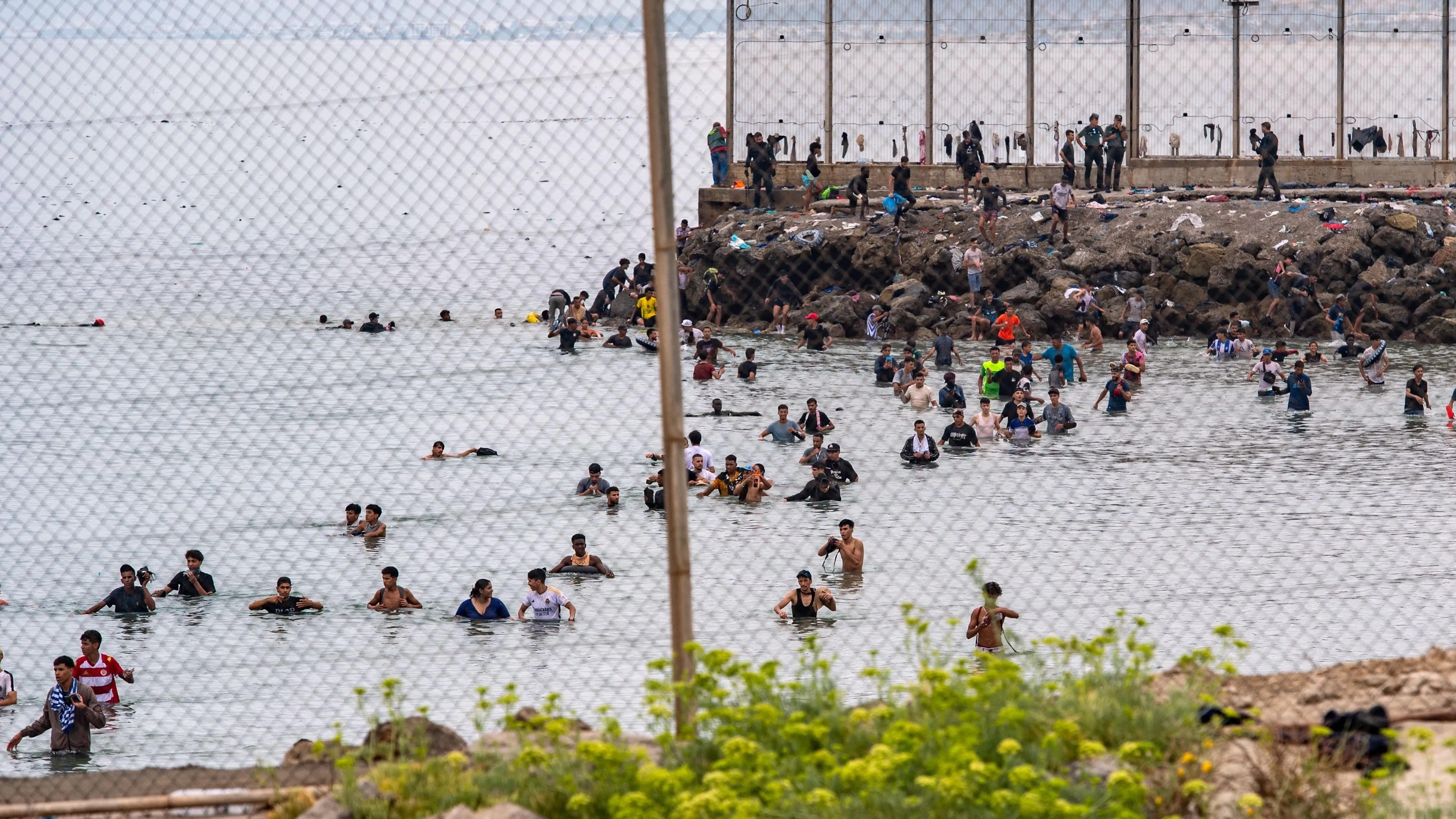
The Moroccan government has recently provided its perspective on the ongoing migrant crisis in Ceuta, attributing the situation to misinformation circulating on social media, human trafficking networks, and misinterpretations surrounding a Supreme Court ruling in Spain regarding immediate returns of migrants. According to Moroccan officials, approximately 40,000 migrants have entered the autonomous city, with eleven reported fatalities occurring on Moroccan territory. This figure contrasts with the estimates from Pedro Sánchez's government, which reported that over 50,000 individuals crossed the Ceuta border, with most already returned, and cited 72 migrant deaths on Spanish soil. Recent calculations by Spanish police indicate that around 73,500 migrants have returned to Morocco from Ceuta in the past few days.
The Moroccan Interior Ministry issued a statement through national media, asserting that the events in Ceuta were not the result of spontaneous circumstances or random factors. Instead, they described it as a combination of the malicious exploitation of digital space and the activities of human trafficking networks, alongside the spread of misleading information and misinterpretations that followed recent decisions made by Spanish judicial authorities. These misunderstandings, stemming from what they referred to as information poisoning, reinforced the belief among some would-be migrants that they could avoid immediate return.
Proactive and Comprehensive Approach by Rabat
Rabat defends its actions as being impeccable from the onset of the crisis, adopting a proactive and comprehensive approach. This strategy was based on early surveillance, increased levels of monitoring and mobilization, and strengthening the preparedness of various security services and territorial authorities. This approach enabled Morocco to control the unfolding events, protect lives, maintain public order, and secure its borders, all while strictly adhering to legal provisions and the principle of proportionality in intervention. For the first time, the Moroccan Ministry of Interior has also provided its own casualty figures, confirming eleven fatalities, including ten drownings and one death due to injuries sustained from falling in a rocky area near Ceuta. Furthermore, it was reported that 1,135 migrants were prevented from entering Melilla.
In this context, Morocco is collaborating with Spanish authorities to verify the actual number of affected individuals, their identities, and nationalities to complete the necessary legal, administrative, and humanitarian procedures. The Moroccan Interior Ministry concluded its statement with a final assessment of the migration issue, emphasizing that the management of migration phenomena can only be effectively achieved within a framework of shared responsibility, genuine solidarity, and an equitable distribution of burdens.
Morocco reiterated its commitment to being a reliable and responsible partner, as expected by its allies, and is dedicated to enhancing international cooperation and coordination in the fight against irregular migration and human trafficking. Meanwhile, the Moroccan government will continue to implement all necessary measures to protect public order, safeguard border security, and ensure the safety of individuals and property, all within the framework of the rule of law and respect for national and international obligations.
As reported by rtve.es.