Moroccan Authorities Blame Social Media for Migrant Surge
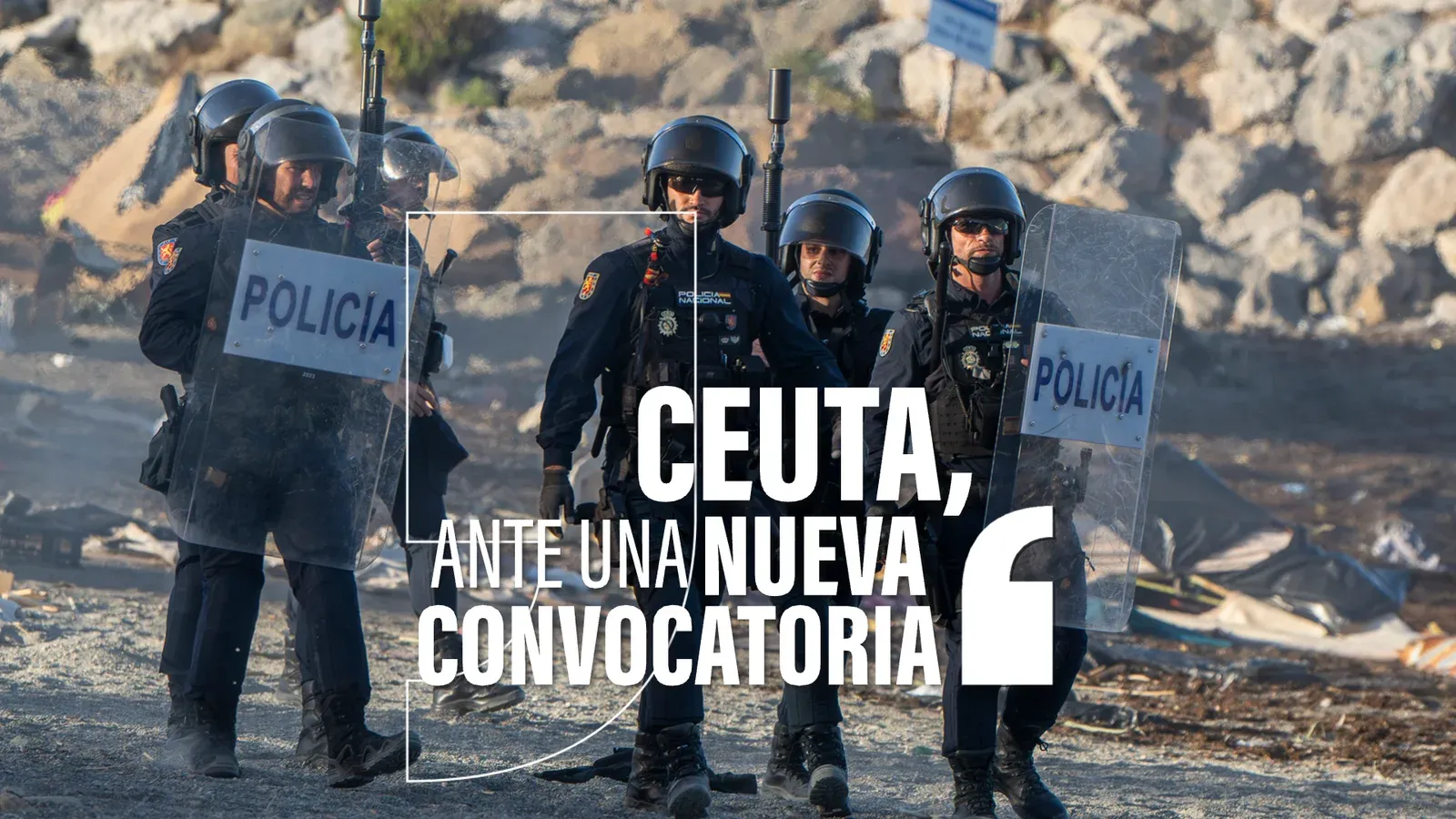
In the wake of a significant influx of migrants attempting to cross into Ceuta, the Moroccan Ministry of the Interior has publicly attributed much of the recent migratory wave to the spread of misleading information on social media platforms. The incident, which has unfortunately resulted in the loss of several lives, has prompted the European Union to tighten its border security measures while urging enhanced cooperation with both origin and transit countries.
In an official statement following the events, Moroccan authorities pointed out that the distorted narratives circulating on social media were among the primary factors that drove hundreds of individuals to make perilous attempts to reach Ceuta. One poignant personal story is that of Mustafa Zarrouki, a waiter from Morocco, who returned to Fnideq after a night in the Spanish enclave of Ceuta, where he had gone to find his 12-year-old son, who had successfully swum across the sea just a week prior.
Mustafa sent his daughter, Umayma, a picture from Ceuta, along with a message that read, "Where are you, my daughter? I am in Ceuta." Her response, filled with desperation, was, "Don't leave me here alone," prompting her to attempt the crossing herself, lifting her mobile phone above her head to keep it dry as she swam, as reported by Tagesschau.
Digital Misinformation and Migrant Smuggling Concerns
According to journalist Ahmed Biouzan, who has specialized in migration and asylum issues for years, mobile phones and social media played a crucial role in mobilizing large groups of people before the events in Ceuta. He noted that between July 27 and 28, between 800 and 1,000 individuals arrived in Ceuta, driven by posts on platforms such as TikTok, Facebook, and Instagram that encouraged people to head to the city, falsely promoting the ease of entry.
Biouzan emphasized that he found no evidence linking these movements to smuggling networks or local mafias, indicating that these groups did not derive direct financial gains from the recent surge. In a formal statement, Rashid Khalfi, spokesperson for the Moroccan Ministry of Interior, clarified that the mass crossing was not spontaneous but rather resulted from a combination of factors, particularly the "malevolent exploitation of the digital space and the dissemination of misleading information." He pointed out that human traffickers also played a role, alongside the misinterpretation of a Spanish court ruling that suggested individuals intercepted at sea would not be immediately returned, thereby encouraging further attempts to cross.
As the situation developed, European capitals monitored the crisis closely, with political responsibilities for the large number of arrivals yet to be clearly defined. Despite speculation within Morocco about how such a mass crossing occurred under tight security measures, the government has refrained from directly addressing these theories, asserting that effective migration management requires international cooperation.
Khalfi stated that "managing the phenomenon of migration cannot be achieved without a comprehensive approach based on shared responsibility and effective solidarity, and a fair distribution of burdens," highlighting the need for European partners to assume a greater share of responsibility.
In response to the crisis, EU interior ministers, during an extraordinary meeting via video conference, agreed to bolster external border surveillance, tighten policies on the repatriation of irregular migrants, and develop early warning systems. They expressed full solidarity with Spain, confirming that the situation was under control and that the majority of individuals who entered Ceuta irregularly had already returned, with no subsequent movements toward other European countries.
The participants also expressed their condolences to the victims' families, emphasizing that the protection of the EU's external borders represents a "shared responsibility" that necessitates unified European coordination. Irish Minister for Justice, Equality and Integration, Jim O'Sullivan, noted that the meeting allowed for an evaluation of the tools available to the EU for managing border crises and identifying areas of cooperation requiring enhancement, in preparation for the upcoming European Council meeting in October. There was a call for intensified efforts against migrant smuggling networks, enhanced return operations, and strengthened border protection, along with an expansion of cooperation with countries of origin and transit to address the root causes of irregular migration.
As reported by infomigrants.net.