
Moroccan Government Responds to Migrant Crisis at Ceuta Border
A high-ranking official from the Moroccan government, who requested to remain anonymous, firmly rejected claims on Monday evening that the Moroccan border controls were inadequate. Instead, the official emphasized that the number of migrants attempting to reach the Spanish enclave bordering Morocco had swelled to such an extent that the Moroccan security forces were unable to effectively manage the situation at a certain point. The official remarked, "It is too simplistic to say that the Moroccan security forces could have just used force to stop them."
Furthermore, the official pointed out that Morocco does not bear the sole responsibility for addressing this issue. They referred to a Spanish court ruling that prohibits the immediate deportation of migrants arriving by sea, indicating that the Moroccan government had warned Madrid that this ruling would lead to complications, which it indeed has. "It is now up to Spain to find answers to the challenges posed by this ruling," the official stated. Spanish Prime Minister Pedro Sánchez had previously suggested that the massive influx of migrants was fueled by misinformation spread by "human traffickers" on social networks, who had deliberately misinterpreted the court's ruling.
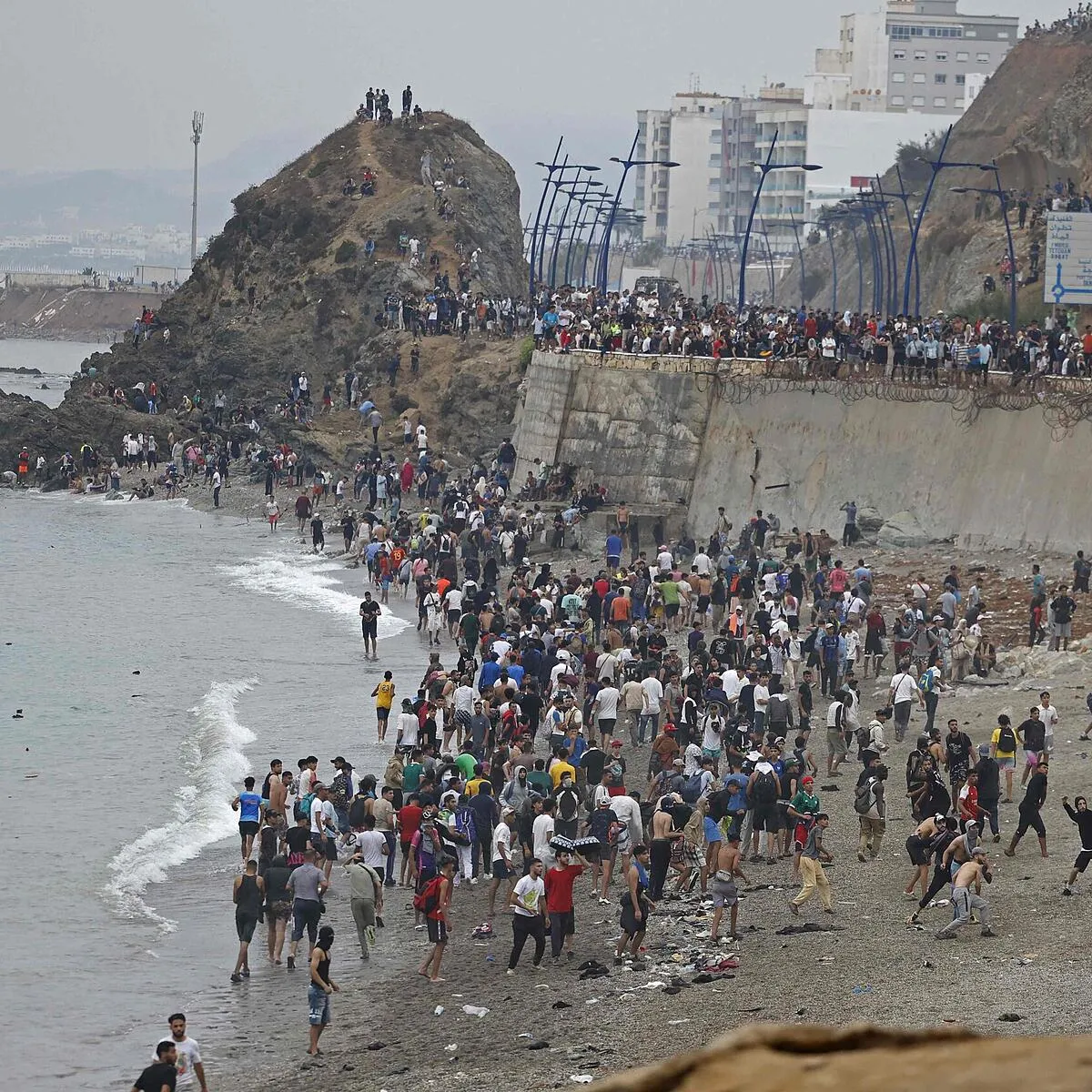
Recently, approximately 60,000 individuals, some arriving by swimming, reached the enclave of Ceuta, which borders Morocco. According to the Spanish government, 72 people lost their lives in the attempt to reach Ceuta. The majority of the migrants who initially arrived in the enclave have since returned to Morocco, with only around 2,500 still remaining as of Monday.
The recent events have sparked speculation that Morocco may have intentionally allowed the migrants to cross, possibly in response to Spanish Prime Minister Pedro Sánchez's recent visit to Algeria. Morocco and Algeria have been embroiled in a longstanding dispute over Western Sahara, with Morocco claiming the region and receiving backing from the UN Security Council for this claim. Meanwhile, Algeria supports the independence movement, Frente Polisario. In 2022, Spain shifted from its long-standing neutrality on the Western Sahara issue to support Morocco, which could explain why Sánchez's recent visit to Algeria might have caused discontent in Rabat.
As reported by nachrichten.at.