
Morocco's Political Landscape: The Struggle for Power
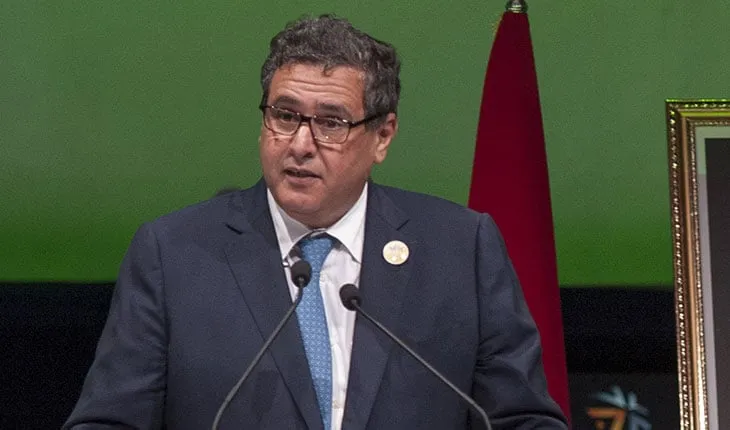
In the evolving political scenario of Morocco, the National Rally of Independents (NRI), led by Aziz Akhannouch, has expressed its determination to remain part of the government coalition. This decision comes as the party aims to tackle upcoming challenges and build upon previous achievements. The party's commitment to staying in the government for an additional five years is contingent upon a decision from its national council, which has been summoned to discuss its participation based on the latest political consultations.
This affirmation of the NRI's position followed a meeting between key leaders from the party and officials from the Authenticity and Modernity Party (PAM), including Fatima Zahra Mansouri, the appointed head of government by King Mohammed VI. The meeting was part of ongoing discussions to form the next government. However, the NRI's statement was not merely a declaration of intent to remain in the upcoming government; it also praised Akhannouch's management of the previous coalition and the coherence maintained throughout his term despite the challenging circumstances. The party highlighted the accomplishments of its ministers, positioning itself as a capable stakeholder in government affairs.
Despite a decline in electoral support, with the NRI securing only 66 parliamentary seats compared to 102 in the previous elections, it is attempting to frame this outcome as a cost associated with governing under difficult conditions. The party asserts its commitment to interpreting the messages from the ballot box and aims to improve its field performance and communication strategies moving forward.
Challenges and Internal Dynamics of Government Formation
The recent consultations for government formation have not been without drama, particularly noted during Fatima Zahra Mansouri's reception of NRI leaders. A prominent figure in the NRI, Rashid Talbi Alami, who is also the Speaker of the House of Representatives, was involved in a controversial leaked audio that hinted at preventing newly joined PAM member Fouzi Lekjaa from obtaining the Ministry of Economy and Finance. This scenario has drawn significant media attention and public scrutiny. The duration of the meeting, reportedly lasting around fifteen minutes, has led to speculation about either a pre-existing agreement or ongoing tensions related to the contentious election campaign. Observers are cautious, suggesting that the brevity of the meeting does not provide enough insight into the discussions that transpired.
Some analysts believe this situation indicates a bleak outlook for the previous coalition between PAM and the NRI, with Mansouri later stating that there are 'no red lines' regarding future government alliances. However, strong statements from Hicham Al-Mahajri, a prominent PAM MP, have reignited discussions on the potential collaboration with the NRI. During a television appearance, Al-Mahajri emphasized that future government discussions must adhere to party mechanisms and organizational processes, expressing personal opposition to forming an alliance with the NRI. He argued that such a partnership seems implausible under current circumstances, emphasizing the need for change, especially concerning sectors like agriculture.
These remarks have sparked controversy, prompting academic Omar Al-Sharqawi to criticize PAM leaders for their public comments during this sensitive period of government formation. He urged them to maintain discipline and restraint, as their statements could disrupt the royal mandate process. Al-Sharqawi emphasized that this phase is pivotal to the constitutional authority of the appointed Prime Minister, stressing that such discussions should remain private until the task is completed.
Conversely, some observers perceive Al-Mahajri's comments as indirect indicators of internal discussions within PAM regarding the potential alliance with the NRI, while others view them merely as personal opinions. The NRI's insistence on continued government participation underscores its desire to enter negotiations from a position of strength, not as passive recipients of decisions made by other parties.
While the NRI is eager to maintain a role in the government, it faces a complex landscape of strategic sector allocations, particularly concerning key ministries that influence political power. Observers speculate that the distribution of these strategic sectors will be contentious, as the NRI typically seeks control over influential portfolios such as agriculture, which is vital for rural presence and local relationships. On the other hand, PAM is expected to fight for substantial ministries as well, particularly finance and agriculture, complicating the possibility of a coalition that includes both the NRI and PAM.
As the political discourse continues to unfold, the public’s reaction to the NRI's ambitions reflects a broader skepticism about its return to governance, with some commentators labeling it a farcical return to power. The current political climate suggests that the next government will emerge from a delicate balance of party negotiations and public sentiment.
As reported by alquds.co.uk.