
Marrakech – On June 16, 1998, Morocco faced off against a formidable Brazilian squad featuring legends such as Ronaldo, Rivaldo, and Bebeto at the Stade de la Beaujoire in Nantes during the World Cup held in France. This was a tournament that Morocco had ambitiously sought to host. Unfortunately, the Atlas Lions experienced a disappointing defeat, succumbing to Brazil with a score of 3-0. However, they managed a commendable 3-0 victory over Scotland in their final match, accumulating four points overall. Regrettably, their hopes of advancing were dashed when Norway scored a last-minute penalty against Brazil, thereby snatching the second qualifying spot. This World Cup was marked by heartbreak yet also by notable achievements, such as Moroccan referee Said Belqola officiating the final match between Brazil and France.
Fast forward twenty-eight years, and the two teams are set to meet again. Tonight, Saturday, June 13, Morocco will take on Brazil in their Group C opener at the MetLife Stadium in East Rutherford, New Jersey, with kickoff scheduled for 6 p.m. local time, which translates to 11 p.m. in Morocco. The late start is primarily due to the geographical time difference between Morocco and the three host nations: the United States, Canada, and Mexico, which ranges from five to eight hours depending on the venue. This time discrepancy has led to the scheduling of many World Cup matches late into the night in Morocco, prompting authorities across the country to implement measures to accommodate fans.
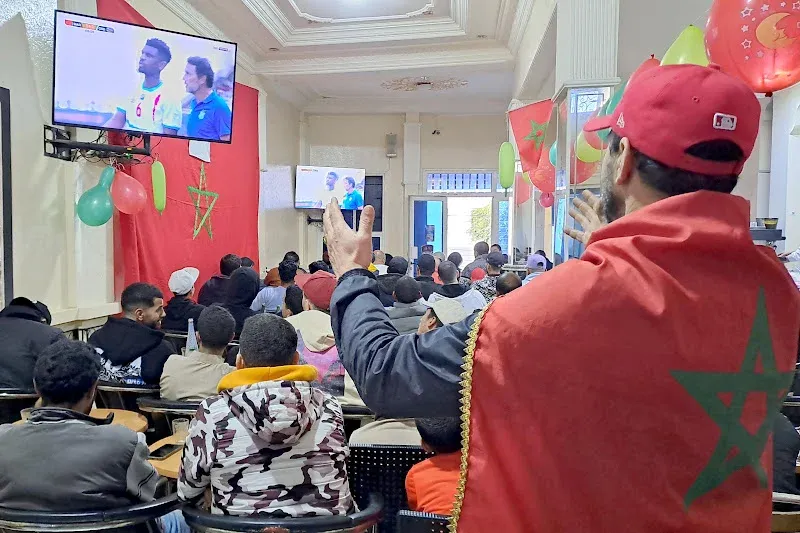
In response to the late-night matches, cafés and restaurants throughout Morocco have been granted permission to remain open until 4 a.m. for the duration of the tournament. Marrakech was among the first cities to embrace this initiative, with Fatima Ezzahra El Mansouri, president of the city’s communal council, announcing that the extended hours would be in effect from June 11 through July 19. Other cities have quickly followed suit. The National Federation of Café and Restaurant Owners confirmed that this decision came after discussions with local authorities, including governors and walis.
A representative of the federation conveyed to the daily Al Akhbar that the goal is to establish a “consensual formula that preserves the interests of professionals, the peace of residents, and public order.” They also emphasized the importance of maintaining professional standards and quality service throughout the tournament. In a separate development, the federation addressed rumors of a 5-dirham surcharge being imposed on customers watching the matches, clarifying that “no such agreement exists.” Nonetheless, it is worth noting that pricing disputes have been common during previous tournaments, especially during peak demand periods.
The situation for bars, however, remains complicated. Most establishments serving alcohol currently operate under licenses that require them to close by midnight or 2 a.m. Bar owners have been advocating for temporary extensions, arguing that matches starting at 11 p.m. could extend into extra time or penalty shootouts, rendering the current restrictions impractical. They contend that cafés alone may not be able to accommodate the expected influx of supporters on match nights.
As for tonight’s highly-anticipated match, both teams will be facing significant absences due to injuries. Brazil, under the management of Carlo Ancelotti, will be without their star player Neymar, who is sidelined with a calf injury. Additionally, Rodrygo, Estevao, Eder Militao, and Wesley are also unavailable for selection. On the other hand, Morocco, now led by new coach Mohamed Ouahbi—who took over from Walid Regragui just three months prior to the tournament—has lost key players Nayef Aguerd and Abde Ezzalzouli in their last pre-tournament friendly. In their stead, Amine Sbai and Marwane Saadane have been called up as replacements.
However, it is essential to note that this is not the same Morocco that participated in the 1998 World Cup. Today, they compete as the semifinalists from Qatar 2022 and the reigning AFCON champions, boasting a squad ranked seventh in the world, featuring stars like Achraf Hakimi and Brahim Diaz. In 1998, the pressing question was whether Morocco could hold their own against Brazil. Tonight, millions of Moroccans will gather in cafés late into the night to ponder a different question: can Brazil keep pace with this formidable Moroccan team?
As reported by moroccoworldnews.com.