
Strategic Partnership Between Morocco and Egypt
The recent meeting between Morocco's Foreign Minister and his Egyptian counterpart marks a significant turning point in the diplomatic landscape of North Africa. This encounter signifies a mutual commitment to establish a new era of political and diplomatic coordination between the two nations. The launch of the first session of the Morocco-Egypt Joint Coordination and Follow-up Committee represents a pivotal moment in the relationship, laden with profound political and strategic implications, especially as the global order undergoes a transformation that redraws regional alliances.
In this evolving context, Rabat and Cairo are emerging as key regional players intent on re-engineering their bilateral relations beyond traditional frameworks. Their partnership aims to cover a wide array of sectors, including politics, economics, and security, particularly in light of the stagnation faced by the Maghreb Union. This stagnation opens the door for more pragmatic and effective alliances that can address current regional challenges.
Strengthening Sovereignty and Economic Collaboration
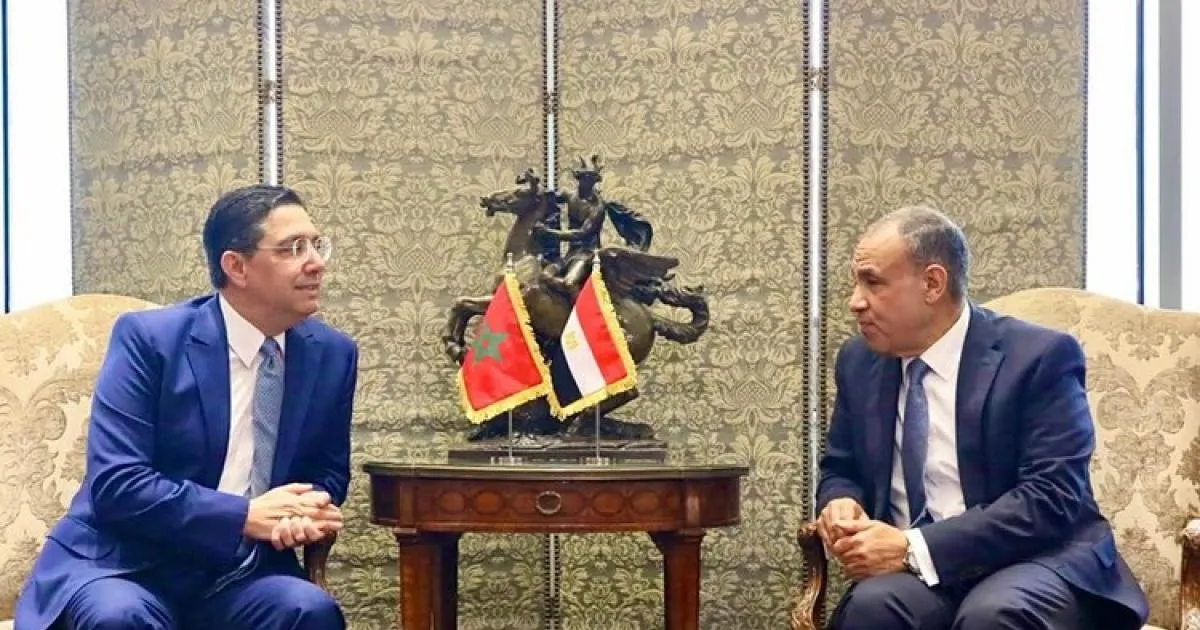
During this session, Moroccan Foreign Minister Nasser Bourita engaged in bilateral discussions with Egyptian Foreign Minister Badr Abdel Atty in the new administrative capital, reflecting a clear intention to foster a new phase of political and diplomatic collaboration. This dynamic is particularly crucial regarding the issue of Moroccan sovereignty over the Sahara, as it is expected to bolster regional support for Morocco's autonomy initiative under its sovereignty.
Historically, Egypt has adhered to the principle of state unity and has rejected separatist movements. Its current positions align with Morocco's stability and territorial integrity, emphasizing a strategic partnership conducive to mutual interests. Furthermore, Moroccan Prime Minister Aziz Akhannouch held discussions with Egyptian Prime Minister Mostafa Madbouly in Cairo, focusing on enhancing economic partnership and mutual investments. This indicates a practical approach towards achieving economic integration between the two countries.
The delegation from Morocco included high-ranking officials from various sectors, showing that the meeting transcended mere ceremonial exchanges and is aimed at establishing a long-term strategic path, enjoying direct backing from Moroccan King Mohammed VI and Egyptian President Abdel Fattah el-Sisi. This initiative emerges amidst a tense international and regional backdrop, necessitating that influential nations reassess their strategic priorities, especially as security and economic challenges escalate. The Moroccan-Egyptian rapprochement is thus a realistic choice for fostering regional stability and constructing a coalition capable of addressing geopolitical shifts.
Ultimately, this committee is more than just a mechanism for monitoring bilateral agreements; it serves as a strategic platform for coordinating positions and enhancing cooperation in vital areas such as industry, energy, tourism, and investment. This framework aims to solidify a balanced partnership that serves shared interests. It marks the beginning of a new phase in Moroccan-Egyptian relations, characterized by deep coordination, shared ambitions, and advocacy for strategic issues, primarily reinforcing Morocco's claim over the Sahara within a realistic and sustainable vision that reflects the transformations of the regional system and the emergence of rising powers in North Africa and the Mediterranean.
As reported by middle-east-online.com.