
Morocco's Ministry of Foreign Affairs has warmly welcomed the endorsement from Guinea-Bissau regarding its initiatives focused on Atlantic cooperation. This development marks a significant step towards enhancing bilateral relations as both nations commit to aligning their positions on critical regional issues. The Atlantic Initiative, spearheaded by Morocco, aims to unlock the potential of landlocked Sahel countries by providing them access to the Atlantic Ocean. Morocco has expressed its readiness to facilitate this access through its extensive network of roads, railways, and ports.
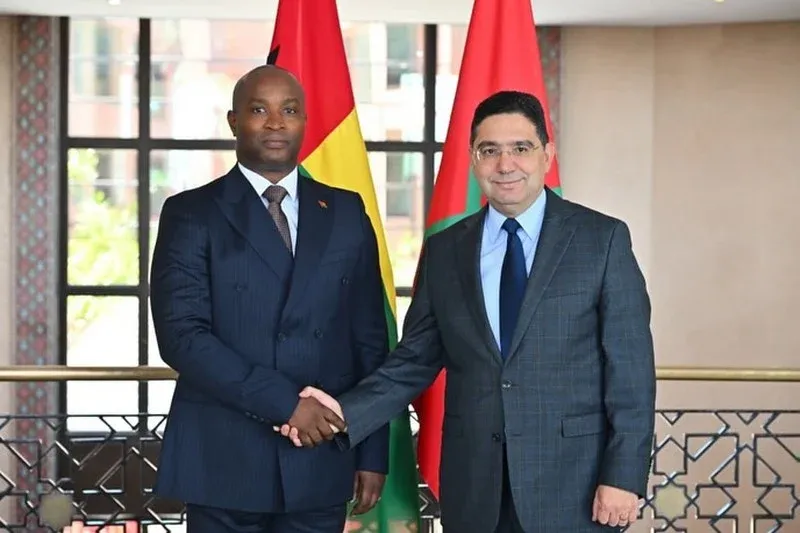
During a recent meeting in Rabat, Moroccan Foreign Minister Nasser Bourita and his counterpart from Guinea-Bissau, João Bernardo Vieira, discussed the active participation of Guinea-Bissau in various royal initiatives, particularly the Atlantic Initiative and the Nigeria-Morocco gas pipeline project. Bourita acknowledged Guinea-Bissau’s consistent support for these initiatives during a joint press conference, highlighting the importance of their collaboration in advancing these projects.
Both ministers took this opportunity to explore avenues for enhancing the implementation of these initiatives while broadening the frameworks for bilateral cooperation. Bourita emphasized Morocco’s enduring diplomatic principles, which include non-interference and respect for national sovereignty, expressing his confidence in Guinea-Bissau’s ability to navigate its internal political landscape. He assured that bilateral relations would remain robust despite any domestic challenges faced by Guinea-Bissau.
Vieira echoed these sentiments, underscoring the strong convergence of views shared between the two countries on both regional and international matters. He reiterated Guinea-Bissau's commitment to bolstering cooperation with Morocco and expressed unwavering support for Morocco’s sovereignty over the Sahara territory, endorsing Rabat’s autonomy plan as the only viable and realistic solution to the ongoing conflict.
In a related diplomatic exchange, the President of Senegal, Bassirou Diomaye Faye, conveyed a written message to King Mohammed VI, delivered by Foreign Minister Yassine Fall during her meeting with Minister Bourita in Rabat. Fall praised the enduring relationships of solidarity and friendship shared between Morocco and Senegal.
Furthermore, a recent report by UN Secretary-General Antonio Guterres criticized Algeria for its obstructive role in hindering a political resolution to the Sahara conflict, while recognizing the various efforts made by successive UN envoys to facilitate dialogue. The report highlights the challenges faced in achieving a lasting solution over the past four decades.
In the financial sector, Casablanca Finance City (CFC) and Rwanda Finance Limited (RFL) have entered into an agreement aimed at promoting investment and cooperation in financial services between Morocco and Rwanda. The agreement, signed via videoconference, focuses on fostering best practices and supporting the development of Kigali’s International Financial Center (KIFC), with CFC’s CEO, Saïd Ibrahimi, playing a leading role in this initiative.
Lastly, the Stimson Center has lauded Morocco for its political and institutional advancements, noting the kingdom's steady reform trajectory supported by gradual changes and institutional stability. This assessment from the Washington-based think tank highlights Morocco's unique hybrid governance model, which combines elements of a constitutional monarchy with a pluralistic parliamentary system.
As reported by northafricapost.com.