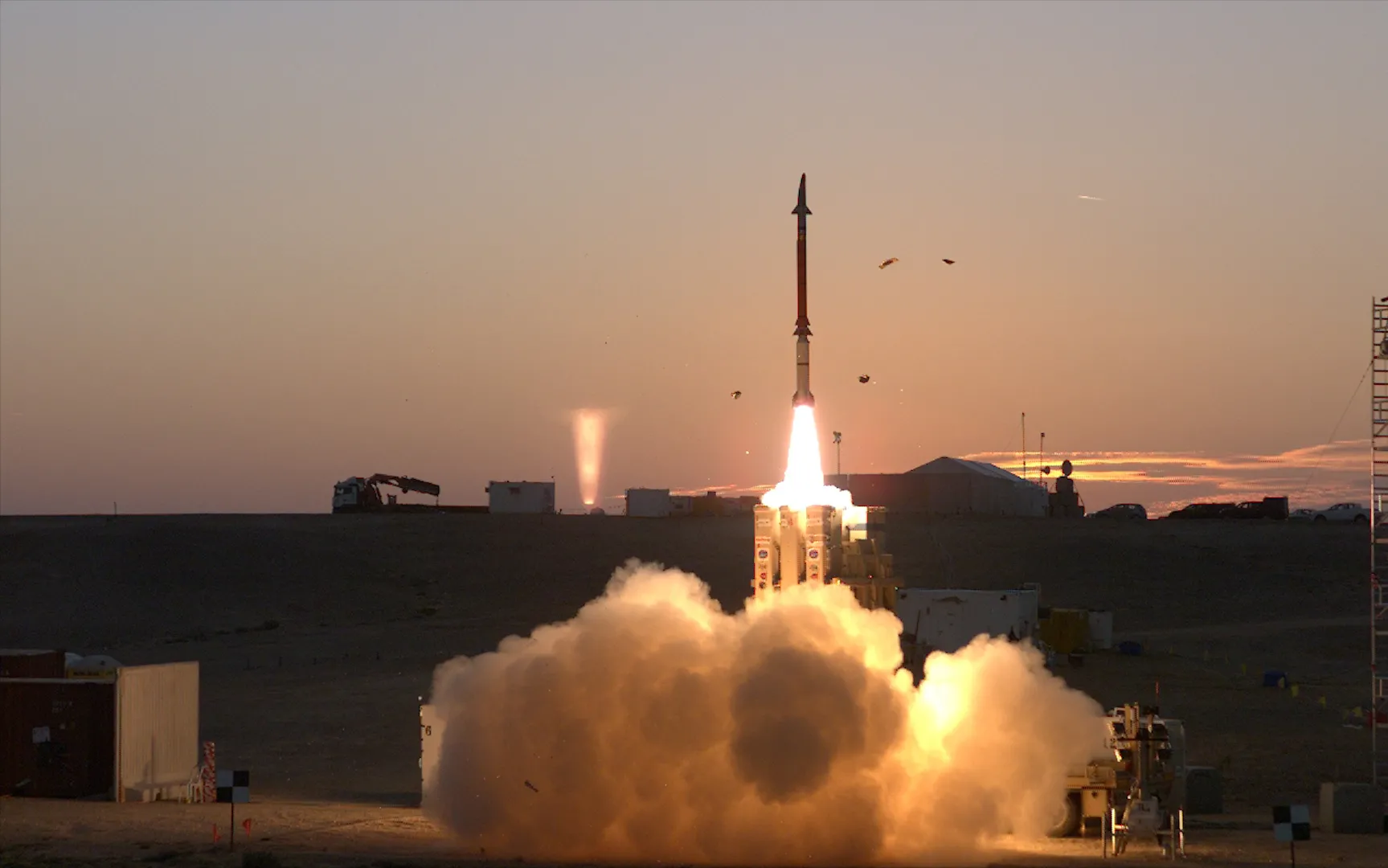

Recent reports indicate that Morocco and Israel are engaged in advanced discussions regarding the potential integration of Israel's David's Sling air defense system into the Moroccan military forces. This sophisticated system is designed to target threats at medium to long ranges, thereby complementing the existing air defense systems that Morocco has already procured from Israel.
According to the information available, Morocco has acquired and deployed several Israeli air defense systems, including the Barak MX and the Spyder, both developed by Rafael and IAI, respectively. The current focus appears to be on David's Sling, as Morocco and Israel delve deeper into talks about incorporating this system into the Royal Moroccan Armed Forces.
The military collaboration between the two nations has significantly expanded following the Abraham Accords, with Morocco acquiring various defense systems, including PULS rocket launchers from Elbit and ATMOS howitzers. Additionally, there is ongoing cooperation in the local production of drone technology.
Understanding the David’s Sling System
David's Sling comprises several crucial components that enhance its operational capabilities. These include a vertical launch system for the interceptors, the ELM-2084 fire control radar, a command and control station, and the Stunner interceptor missile. This advanced system is specifically engineered to intercept ballistic missiles and cruise missiles at ranges between 40 and 300 kilometers.
By filling the operational gap between shorter-range systems and the defense against more distant threats, David’s Sling presents a formidable addition to Morocco's military capabilities. However, the specific nature of Morocco's potential acquisition of this system remains unclear based on the current information.
The Stunner missile itself is 4.6 meters long and features a two-stage design, enabling it to engage targets at altitudes of up to 15 kilometers and at distances ranging from 40 to 300 kilometers. It employs a solid rocket motor with three thrust phases; the first two phases accelerate the missile during its initial flight, while the third phase is activated prior to interception to provide additional speed and maneuverability, achieving speeds of up to Mach 7.5.
One of the unique aspects of the Stunner is its interception principle. Unlike the Tamir interceptor used in the Iron Dome system, the Stunner does not rely on a warhead; instead, it is designed to destroy the target through direct impact. For terminal phase guidance, the asymmetric nose of the Stunner is equipped with two sensors: a combined electro-optical and imaging infrared sensor, along with a radar seeker, enabling target acquisition under various weather conditions.
During the mid-flight phase, the Stunner receives updates via a data link from ground-based radar. This combination of ground control and onboard sensors allows for effective target engagement across multiple flight phases. The production cost of a single Stunner missile is estimated to be around $1 million.
Should Morocco proceed with the acquisition of David’s Sling, it would enhance the existing array of Israeli air defense systems already in place, which includes the Barak MX and Spyder, thereby providing Morocco with capabilities to engage ballistic and cruise missiles at distances of up to 300 kilometers. However, the extent of Morocco's potential procurement of this system remains uncertain at this time.
As reported by esut.de.