
Strengthening Diplomatic Relations Between Morocco and Israel
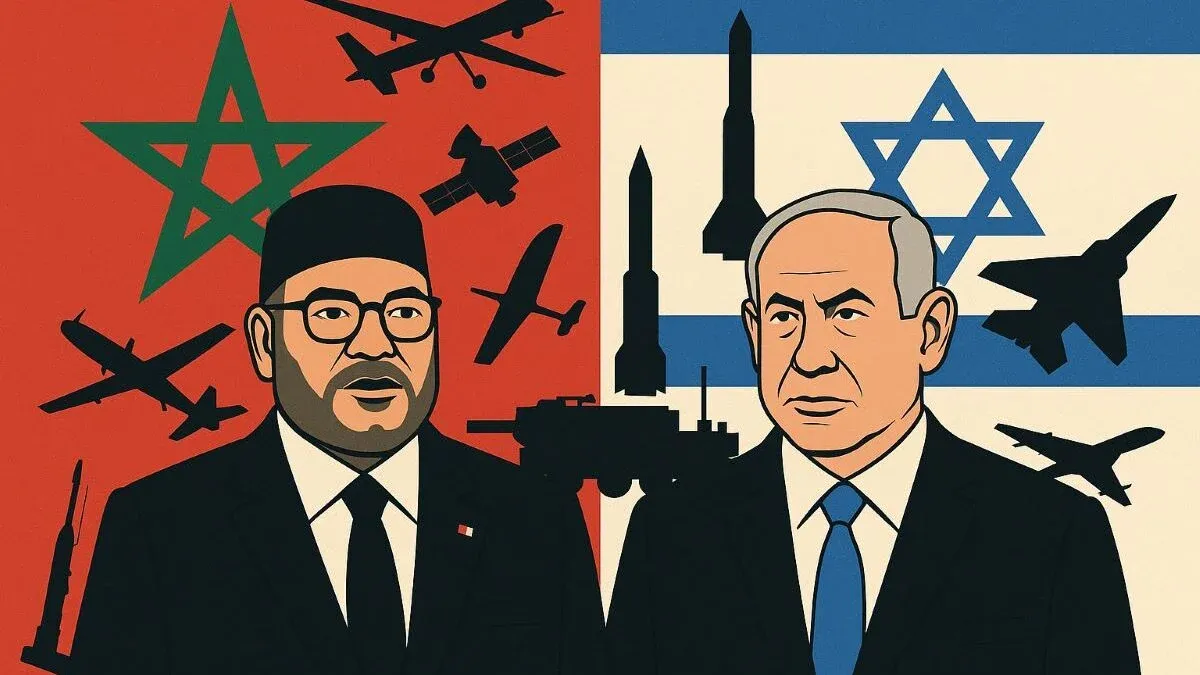
In a significant development, Morocco and Israel have elevated their liaison offices to full-fledged embassies, marking a substantial advancement in their diplomatic alliance. This transformation comes six years after the normalization of relations, which included a notable military collaboration that has since deepened. Nevertheless, the partnership's primary objective regarding Western Sahara remains fragile, as recent developments indicate that the United States continues to engage Algeria as an essential interlocutor in the region. With the upcoming renewal of the MINURSO mandate, it is evident that Algeria's role is being acknowledged while Morocco's aspirations face challenges.
The transition from liaison offices to embassies represents a pivotal step in the Morocco-Israel alliance, allowing both nations to appoint ambassadors and elevate their diplomatic relationship to the highest tier. Since the re-establishment of ties in December 2020, King Mohammed VI has reaffirmed that this rapprochement is a long-term commitment. However, the different facets of this partnership have not progressed at the same pace, particularly concerning Western Sahara, which holds the most significance for Rabat but appears to be yielding less favorable outcomes.
Military and Technological Collaboration Amid Geopolitical Challenges
The defense agreement signed between Morocco and Israel in 2021 encompasses intelligence sharing, military industries, and the procurement of equipment, with expansions into drones, cybersecurity, and surveillance systems. Morocco has ambitious plans to locally produce various types of Israeli drones, a move intended to bolster its defense industry and enhance border security with Algeria and Mauritania, as well as in Western Sahara. This partnership also extends into the space sector, with Israel Aerospace Industries announcing a billion-dollar contract for the delivery of the Ofek 13 observation satellite to Morocco in 2024, although full official confirmation is still pending from both sides. While these capabilities represent a leap forward for Morocco, they also introduce a new dependency on Israel, replacing reliance on previous suppliers rather than eliminating it entirely.
Interestingly, the most significant signals regarding the Western Sahara issue have emerged from Algeria rather than Morocco. In a span of just over a year, U.S. envoy Massad Boulos has made three visits to Algeria, including a trip on September 13, 2026, which was officially focused on energy, yet he also addressed the Western Sahara topic. With the UN Security Council set to deliberate on the MINURSO renewal at the end of October, Algeria's influence remains palpable, especially as it did not support Resolution 2797 passed in October 2025. This paradox can be attributed to Algeria's leverage that cannot be quantified solely in votes at the Security Council, including its influence over the Polisario Front, hosting Sahrawi refugees, its regional weight in the Sahel and Libya, and American interests in its energy resources. In contrast, Morocco, heavily invested with Washington, lacks the same maneuverability in its dealings with the United States.
The normalization with Israel has, thus far, yielded primarily supportive rhetoric for Rabat. However, the Western Sahara issue remains firmly in the hands of Washington and Algiers. This deepening security partnership comes at an internal cost for Morocco, as the Palestinian cause retains significant popular support. Protests have emerged condemning the war in Gaza and calling for the severance of relations with Israel. The Moroccan palace aims to navigate these competing pressures by maintaining its alliance with Israel while asserting a role in Gaza's reconstruction, reflected in its participation in the International Stabilization Force, which was formalized in July 2026, involving the dispatch of military officials, gendarmes, police, and the establishment of a field hospital.
Thus, the opening of embassies signals a partnership characterized by dual dynamics. Militarily, Morocco has gained capabilities but has also increased its dependency on a new supplier. In contrast, regarding Western Sahara, the recognition gained in Washington and Tel Aviv has not sufficed to advance a situation that continues to hinge on Algerian negotiations.
As reported by afrik.com.