
Strengthening Ties: Morocco and Israel's Diplomatic Evolution
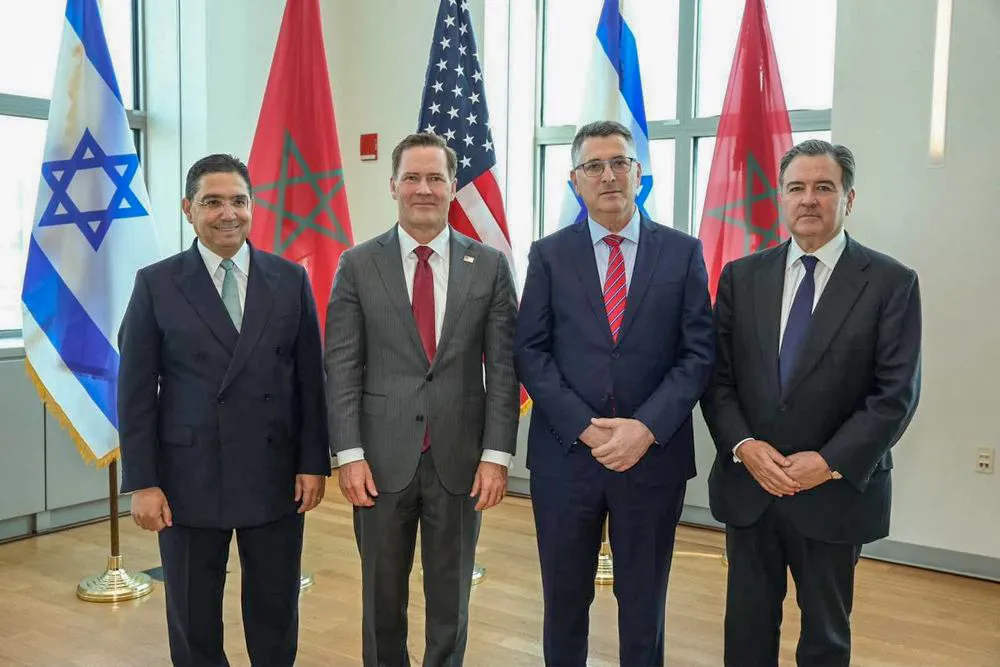
On September 16th, a significant meeting took place in New York involving Moroccan Foreign Minister Nasser Bourita, Israeli Foreign Minister Gideon Saar, and U.S. Ambassador to the United Nations Mike Waltz. This dialogue culminated in a pivotal decision to upgrade their liaison offices to full embassies, paving the way for the appointment of ambassadors. This development has captured the attention of many observers, stirring a mixture of reactions, particularly concerning the broader implications for the region and the ongoing discourse surrounding support for Palestine. Critically, the discussion transcends mere emotional responses; it delves into the intricate realm of geopolitics, where decisions are often influenced by factors beyond conventional reasoning.
The Context of Moroccan-Israeli Relations
The announcement regarding the transition of liaison offices to embassies is not an isolated event but rather a continuation of the diplomatic thaw that began in 2020. This shift is underscored by the backing of Washington, which plays an essential role in regional matters concerning Morocco. Moreover, the relationship between Morocco and its Jewish diaspora is highlighted as a significant factor in this evolving partnership. Despite the anticipated backlash both domestically and internationally, it is likely that public sentiment in Morocco will ultimately align with these diplomatic maneuvers, as the Moroccan populace tends to revert to its foundational principles amidst external criticism.
Historically, the Moroccan Jewish community has maintained a profound connection to their homeland, regardless of their current residence. This enduring bond is reflected in the contributions of Moroccan Jews throughout history, such as their involvement in key historical events, including the Islamic conquest of Spain. Prominent figures from this community have played vital roles in various capacities, reinforcing the notion of loyalty and shared heritage. Furthermore, the unique position of the Moroccan king as “Amir al-Mouminine,” or commander of the believers, extends to all monotheistic faiths, fostering a sense of allegiance among Moroccan Jews, irrespective of their dual national identities.
Yehuda Lancry, the president of the Israel-Morocco Chamber of Commerce and Industry, exemplifies this enduring connection. His participation in Moroccan cultural events signifies the strong ties that continue to bind the two nations. Additional measures, such as the resumption of direct flights between Morocco and Israel, further illustrate the commitment to enhance bilateral relations. The Moroccan Jewish diaspora, the largest in the global Jewish community, holds a dual commitment: to remain loyal to their Moroccan roots while actively engaging in the socio-political landscape of their homeland.
In conclusion, as Morocco navigates its complex relationships and diplomatic strategies, it is vital to approach these developments with an open mind, recognizing the potential benefits that can arise from these alliances. History unfolds at its own pace, and so too does the journey toward democracy and mutual understanding.
As reported by lecourrierdelatlas.com.