
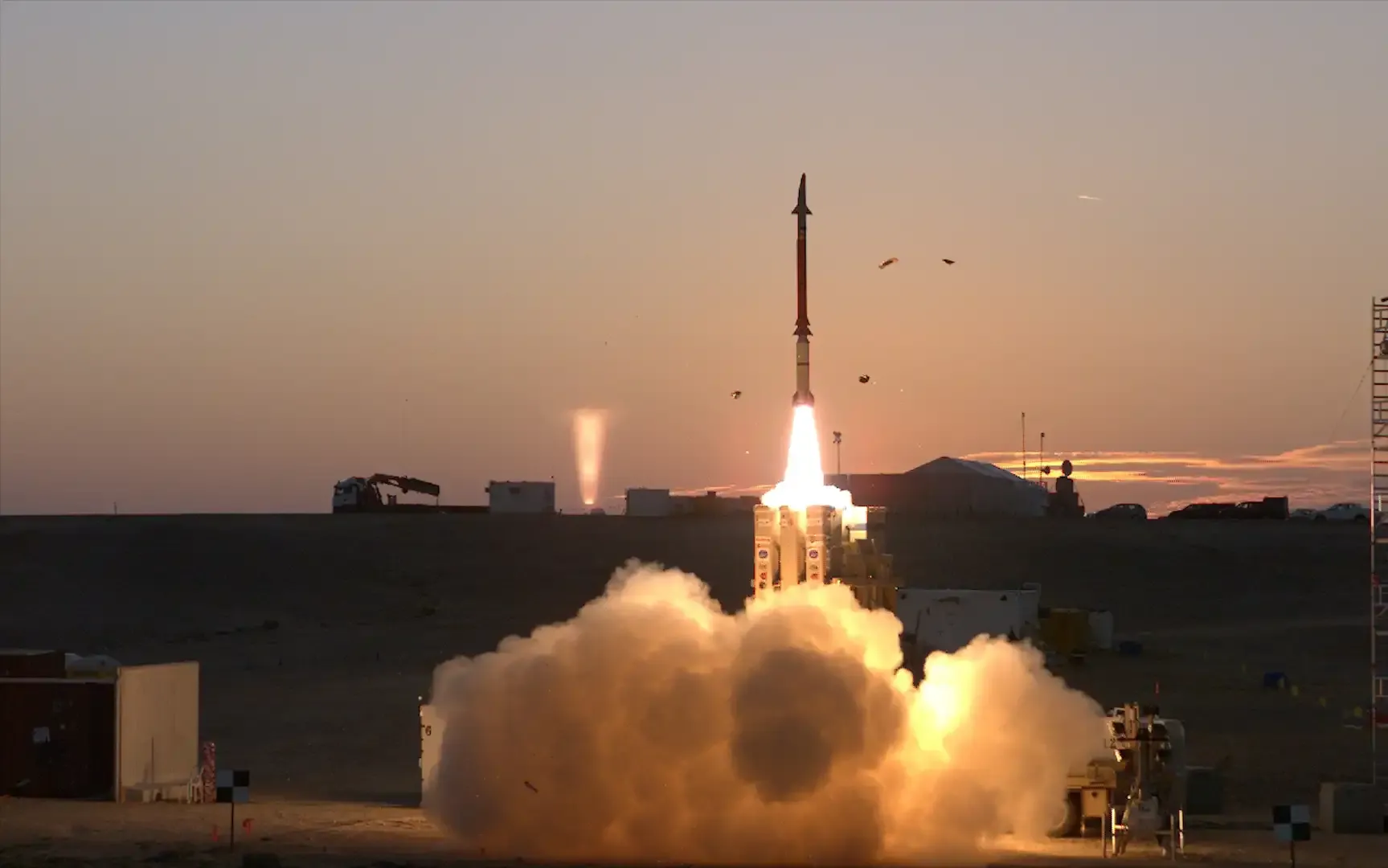

On October 9, 2026, the prominent German defense publication, Europäische Sicherheit & Technik, reported on advanced discussions between Morocco and Israel concerning the potential integration of the David's Sling air and missile defense system into the arsenal of the Royal Moroccan Armed Forces. The report, authored by Israeli military journalist Arie Egozi, highlights Morocco's ongoing efforts to enhance its layered air defense capabilities, thereby improving its ability to counter various aerial and missile threats.
According to the report, these negotiations align with Morocco's strategic objectives to bolster its defense systems. Currently, Morocco operates several Israeli air defense systems, including the Barak MX and the SPYDER, which positions the potential acquisition of David's Sling as a significant step towards expanding its defensive coverage. This development is part of a broader military cooperation framework between Rabat and Tel Aviv, which has seen notable expansion since the resumption of diplomatic relations in 2020 and the signing of a defense cooperation agreement in 2021. The collaboration spans various domains, including air defense systems, missile artillery, military industries, and drone-related technologies.
David's Sling: An Additional Layer in Morocco's Air Defense Network
The David's Sling system is designed to provide interception capabilities against aerial and missile threats at relatively medium to long ranges, focusing on countering ballistic missiles and cruise missiles. As reported by the German publication, this system can engage targets at distances ranging from 40 to 300 kilometers, allowing it to cover areas beyond the reach of short-range air defense systems. The system consists of several key components, including the ELM-2084 fire control radar, a command and control center, vertical launch platforms, and Stunner interceptors.
The radar plays a crucial role in detecting and tracking targets and providing the necessary data for managing interception operations. The command and control system coordinates engagements and directs missiles towards their intended targets. Should the deal proceed, these capabilities could significantly expand the options available to the Royal Moroccan Armed Forces for addressing missile threats that exceed the engagement range of shorter-range systems. It is important to note that the actual deployment of the systems and their coverage areas will depend on the configuration chosen by Morocco.
Stunner Missile: Speed Reaching Up to 7.5 Mach
The Stunner missile serves as the primary intercepting element within the David's Sling system. Measuring approximately 4.6 meters in length, it employs a solid-fuel propulsion system with a multi-pulse thrust mechanism designed to provide acceleration during initial flight phases, followed by enhanced speed and maneuverability in the final engagement stage. According to figures presented by the Israeli military expert, the missile can reach maximum speeds of around 7.5 Mach, and it is capable of intercepting targets at altitudes of up to 15 kilometers, with a range of 40 to 300 kilometers.
The missile utilizes a guidance system that combines data updates received during flight with embedded sensors used during the final interception phase. These sensors include an electro-optical sensor, an infrared imaging sensor, and a radar seeker, enabling the missile to track its target and update its interception path based on engagement conditions. Notably, the Stunner operates on the principle of direct impact to destroy the target, rather than relying on a conventional explosive warhead, aiming for a direct collision between the interceptor and the hostile target, leveraging precision guidance and maneuverability in the final phase.
Published estimates suggest that the cost of a single Stunner missile could be around one million dollars; however, the actual cost may vary based on contractual terms, order size, and accompanying provisions.
The integration of different range systems allows for the establishment of a multi-layered air defense network, where each system addresses specific types of threats within defined engagement ranges. In this context, the David's Sling system could complement the capabilities provided by the Barak MX and SPYDER systems, particularly in intercepting ballistic and cruise missiles, according to the declared capabilities of each system and the configuration Morocco may adopt.
Possessing interception capabilities at longer ranges could grant command centers greater options in managing aerial engagements, distributing targets among air defense units, and utilizing early warning systems to detect threats and allocate appropriate resources to address them. However, the operational effectiveness of any air defense network does not solely depend on missile range but also relies on radar integration, the speed of information exchange, and the ability of command centers to coordinate engagements, in addition to the number of batteries and missiles available and their deployment locations.
These aspects are closely tied to the final configuration of any potential deal, as the report did not disclose the number of batteries Morocco might acquire, their financial value, or the delivery timeline. The expert opines that if the discussions referenced in the report culminate in an official contract, Morocco would be on the cusp of expanding its air defense network by adding a system designed to tackle a spectrum of increasingly complex missile threats, alongside previously acquired Israeli systems.
The importance of these systems grows with the evolution of ballistic and cruise missiles, as well as drones, necessitating a diversification of air defense methods to effectively counter various threats. The advanced discussions regarding the David's Sling system reflect Morocco's commitment to further developing its defense capabilities and expanding its options in air and missile defense. Although no formal announcement has been made regarding a procurement contract, the inclusion of this system in the negotiations underscores the Royal Moroccan Armed Forces' direction towards enhancing their capabilities in addressing advanced aerial and missile threats.
As reported by defense-arabic.com.

