
Morocco's Diplomatic Maneuvers and Military Modernization
On September 16, as Spanish courts halted the transfer of migrants from the beach at Trampolín to facilities at the Ceuta port, Morocco was focused elsewhere—specifically, on New York, where a meeting was underway that would bolster one of the most concerning diplomatic and military axes for Spain. Since July 30, the Spanish government has been striving to portray its ally, Morocco, as a reliable neighbor, yet Morocco continues to weave its diplomatic networks, enhancing military capabilities that increasingly position it as a significant regional power.
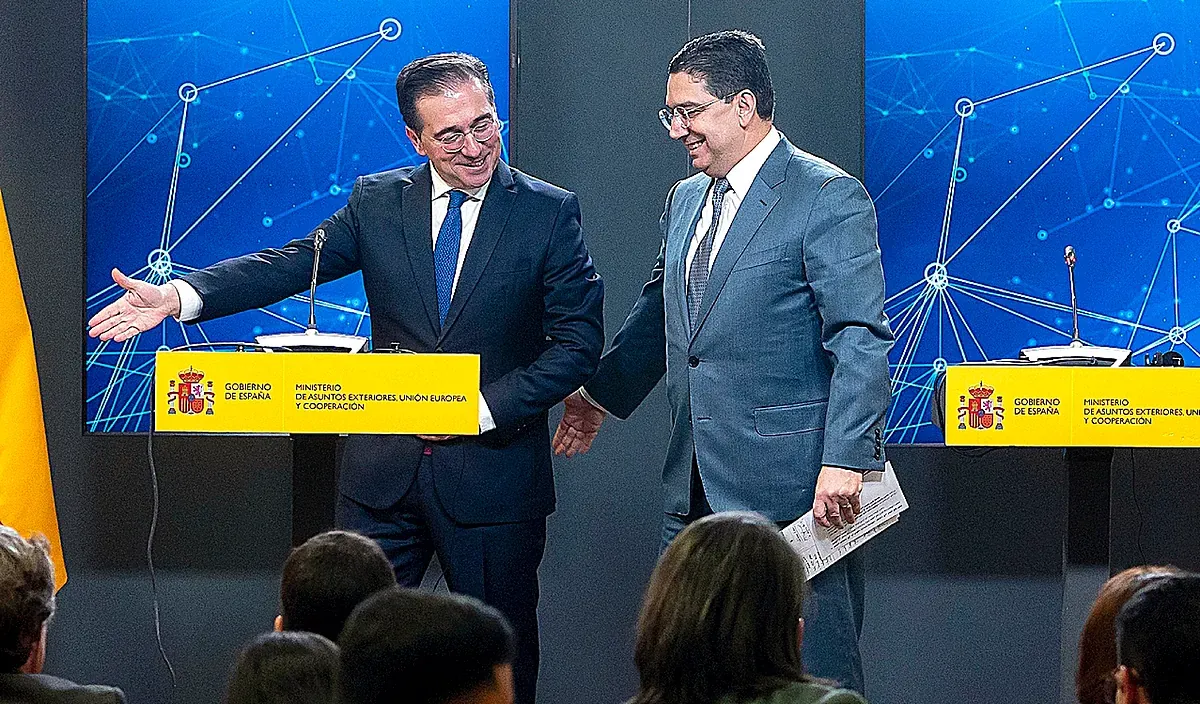
During that pivotal meeting on September 16, Morocco and Israel elevated their diplomatic relations, agreeing to open embassies in each other's countries, a gesture solidified by a handshake in New York just six weeks following an attempted breach of Spanish territorial sovereignty in Ceuta. This interaction depicted a triangle involving Moroccan King Mohamed VI, former U.S. President Donald Trump, and Israeli Prime Minister Benjamin Netanyahu, situated at the southern border of NATO and amid two of the most prominent figures in foreign policy that generate significant tension for the Spanish government.
The subsequent communiqué from the meeting emphasized the future of this relationship, highlighting the 'unlimited opportunities' that the Morocco-Israel connection promises. The parties expressed their intention to strengthen trilateral cooperation on the international stage, undeterred by regional challenges. This announcement follows a particularly tense summer along the Spanish border while Israel continues its military operations in Gaza and southern Lebanon. Furthermore, Mohamed VI and Netanyahu, through their respective foreign ministers, lauded Trump as a 'visionary leader,' while both the U.S. and Israel reaffirmed Morocco's sovereignty over Western Sahara.
The Security Dilemma for Spain
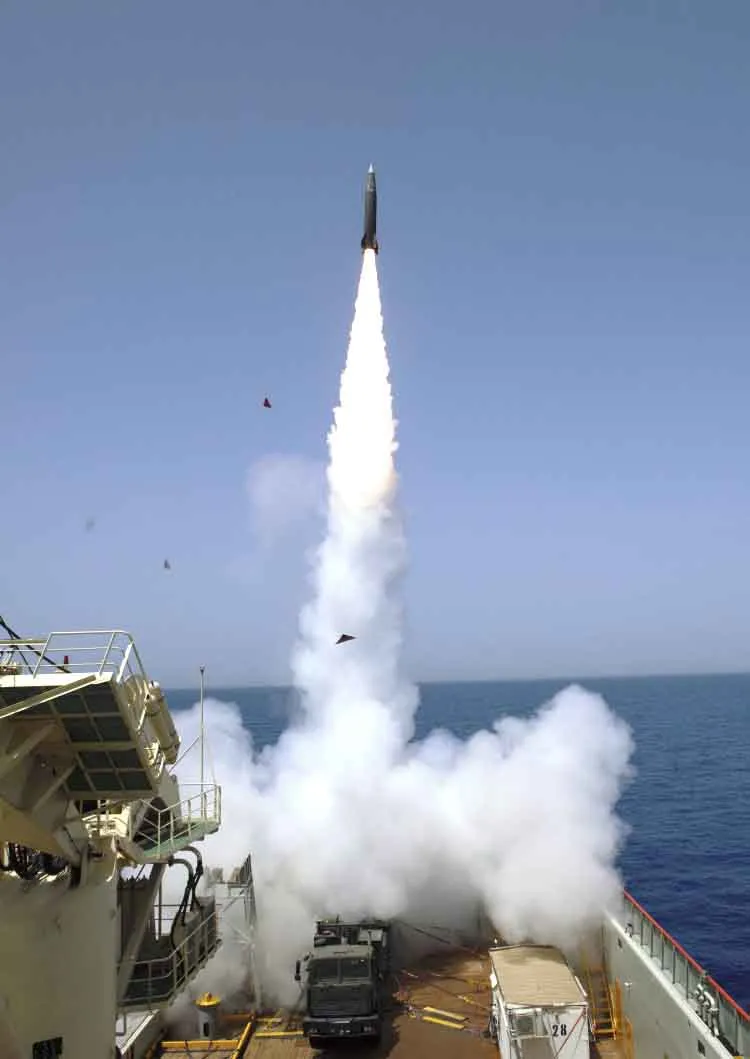
The situation extends beyond mere diplomatic relations. Since King Mohamed VI signed the Abraham Accords, military cooperation between Morocco and Israel has deepened, with successive arms acquisition agreements paving the way for enhanced military capabilities. The Moroccan Army is engaged in a modernization and rearmament process that encompasses various capacities, including naval dimensions. Recently, Morocco has even acquired a vessel delivered by Navantia. This military relationship with the U.S. and Israel adds to Morocco's strategy of strengthening its armed forces, a development closely monitored by Spain due to its geographical proximity.
Despite all of this, Spain continues to present Morocco as a trustworthy partner, a contradiction that underscores the challenges facing Spanish foreign and security policy. Spain is attempting to maintain a strategic relationship with Morocco—essential for migration control, counterterrorism, and the stability of the Strait of Gibraltar—while Morocco pursues an increasingly autonomous foreign and military policy.
On the eastern front of NATO, the situation is similarly constrained. Ongoing hybrid threats and attacks attributed to Russia have compelled allies to agree on increased defense spending during the latest NATO summit. Spanish Prime Minister Pedro Sánchez confronted Trump, asserting that Spain would determine its investment based on the fulfillment of committed capabilities rather than adhering to a specific figure. Sánchez maintained that Spain would not need to exceed a 2.1% defense investment, a stance that NATO Secretary-General Mark Rutte questioned.
The phrase 'investing in defense is investing in peace,' reiterated by Defense Minister Margarita Robles since the onset of the Ukraine war in 2020, takes on heightened significance in this context. The Russian threat is no longer viewed solely as a localized issue within Ukraine. Incursions, drone activities, and military maneuvers necessitate ongoing vigilance from allies.
Spain is actively participating in this security architecture. Fighter pilots from the Air and Space Army's Wing 12 stationed in Romania conduct daily Tango Scramble exercises and respond to real Alpha alerts. Eurofighters deployed on the Eastern Flank are already accustomed to escorting Russian aircraft, while the Navy's vessels involved in the Sea Guardian operation in the Mediterranean maintain surveillance over Russian ships traversing these waters. While these missions differ, they address a common need: to understand immediate surroundings and be prepared to respond should the situation escalate.
In addition, the U.S. military presence in Spain plays a critical role. U.S. Navy destroyers stationed in Rota provide essential missile defense capabilities for NATO, making the Cadiz base a strategic asset in the allied security framework.
However, Madrid faces the challenge of connecting these two realities. The Russian threat extends beyond Ukraine, and Moroccan pressure is not confined to the land borders of Ceuta and Melilla. The Mediterranean has evolved into a space where military, energy, migration, and diplomatic interests of powers intertwine, forming increasingly close relations. Morocco is not forging its alliances with Spain in mind; its key strategic partners are the United States and Israel. The relationships of both countries with the Sánchez government are currently strained.
This complex equation also introduces hybrid dynamics. NATO’s envoy for the Sahel, Javier Colomina, recently acknowledged the difficulty in believing that mass immigration events are not a form of hybrid warfare. Spain's response involves bolstering its presence in areas where the Alliance anticipates potential escalations while maintaining operational capabilities to detect and respond to any threats. Fighter jets, frigates, destroyers, radar systems, ground units, and surveillance assets comprise a cohesive security architecture. Yet, while Spain enhances its presence in the East to contain Russia, it observes Morocco accelerating its rearmament and strengthening its ties with two powers increasingly distancing themselves from the Sánchez government. Consequently, Spain must simultaneously focus on both the East and the South, as the gap between regional crises and their repercussions for Spain narrows.
As reported by elmundo.es.