
Strengthening Ties Between Morocco and Israel
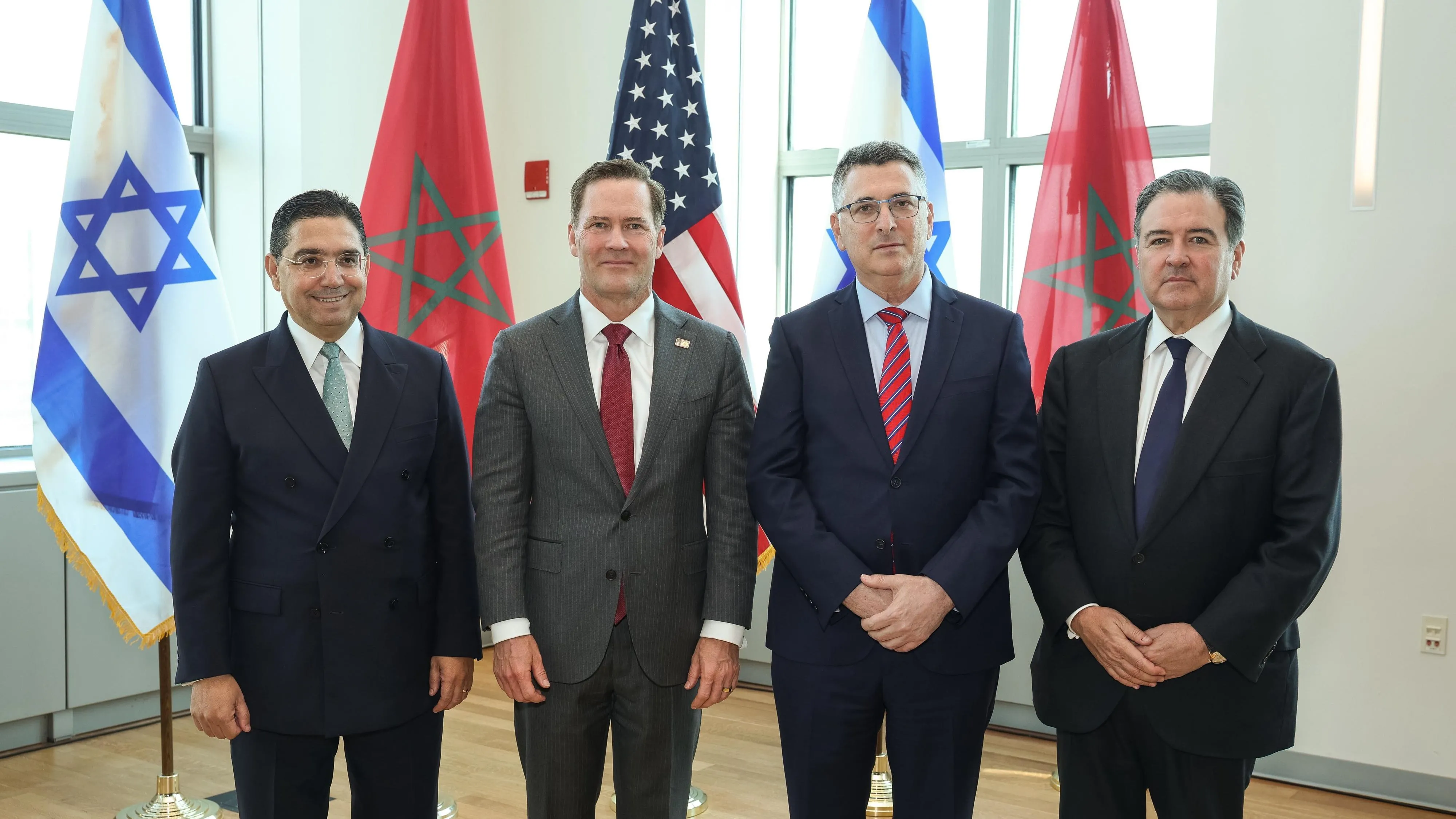
In a significant diplomatic advancement, Morocco and Israel have announced plans to exchange embassies, thereby enhancing their previously established liaison offices into full diplomatic missions. This announcement was made during a joint statement with the United States following a trilateral meeting held in New York on Wednesday. The meeting brought together Moroccan Foreign Minister Naser Burita, his Israeli counterpart Gideon Saar, and U.S. Ambassador to the UN Mike Waltz. This escalating rapport between Rabat, Israel, and the U.S. occurs amidst a crisis in Ceuta, particularly after European Commission President Ursula von der Leyen affirmed the city's status as Spanish and European, emphasizing Europe's solidarity with it.
The joint statement confirmed an agreement to elevate diplomatic missions between Morocco and Israel to full embassies and facilitate the exchange of ambassadors, although specific dates were not provided. Additionally, both nations committed to restoring direct flights between Morocco and Israel by the end of this year, alongside finalizing agreements to safeguard investments and establish double taxation measures aimed at bolstering bilateral economic and financial ties.
Support for Moroccan Sovereignty Over Western Sahara
This initiative to strengthen relations is part of the framework established by the Abraham Accords, signed in December 2020, which aimed at normalizing relations between Israel and several countries, including the United Arab Emirates, Bahrain, Sudan, and Kazakhstan, under the auspices of former U.S. President Donald Trump. As part of these accords, Morocco reestablished relations with Israel in exchange for U.S. and Israeli recognition of Moroccan sovereignty over the former Spanish colony of Western Sahara.
In the joint statement issued on Wednesday, both the U.S. and Israel affirmed their recognition of Morocco's sovereignty over the entirety of Western Sahara, supporting Rabat's proposal as the only serious, credible, and realistic basis for a just and lasting solution to the dispute. The statement emphasized that any alternative approach would merely prolong the status quo, which is deemed unacceptable. This urgently needed solution is expected to foster peace in the region, paving the way for prosperity and greater integration across Africa.
During the meeting, Saar expressed profound respect for His Majesty King Mohammed VI of Morocco, acknowledging his leadership and commitment to the relationship between the two peoples. He highlighted the historical roots of friendship between Moroccans and Jews, noting the longstanding presence of the Jewish community in Morocco and its significant contributions to the nation's culture, economy, and national life.
Burita further emphasized that Morocco's experience illustrates how relations with Israel can provide Arab governments with practical tools to assist Palestinians, stating, "We can help the Palestinians, humanitarian-wise, because we have these relations with Israel." He posed a rhetorical question, challenging the effectiveness of continuing political rhetoric while remaining passive in their capitals, advocating for proactive initiatives to foster peace and stability in the region.
Despite the recent advancements, it is noteworthy that while the UAE and Bahrain were the first to establish full diplomatic relations with Israel under the Abraham Accords, Morocco and Sudan have yet to open embassies. Morocco and Israel first established diplomatic relations in September 1994, which permitted the opening of liaison offices in both territories, following the Oslo peace process. However, these relations were severed during the Second Intifada in 2000 and remained strained until the 2020 agreement, which led to the re-establishment of liaison offices instead of embassies.
In July 2023, Israeli Prime Minister Benjamin Netanyahu acknowledged Morocco's sovereignty over Western Sahara in a letter to King Mohammed VI. The ongoing conflict in Gaza, initiated in response to the October 7, 2023 attacks by Hamas and other Palestinian groups, has temporarily stalled the progress in diplomatic relations. Morocco has witnessed demonstrations of solidarity with the Palestinians, with calls to end normalization with Israel, yet the Moroccan government has refrained from taking such steps, instead advocating for an end to hostilities in the Palestinian territories.
In their recent declaration, Morocco, Israel, and the U.S. expressed deep appreciation for their cooperation in technology, security, and innovation, particularly during challenging times, asserting that this collaboration strengthens bilateral and trilateral ties and provides practical solutions that benefit the peoples of the region. The three nations discussed enhancing economic cooperation across various sectors, including trade, finance, innovation, technology, tourism, water, agriculture, food security, regional security, energy, and telecommunications, and agreed to conduct a series of high-level visits in the upcoming months.
This rapprochement between Morocco and Israel comes amid the crisis in Ceuta, where approximately 80,000 individuals entered irregularly from Morocco on July 30 and 31. In light of this, President von der Leyen reiterated before the European Parliament that "Ceuta is Spain, Ceuta is Europe, and Europe will stand by you" in response to Moroccan claims over the Spanish autonomous city and Melilla.
As reported by rtve.es.