
Historical Diplomatic Advancements between Morocco and Israel
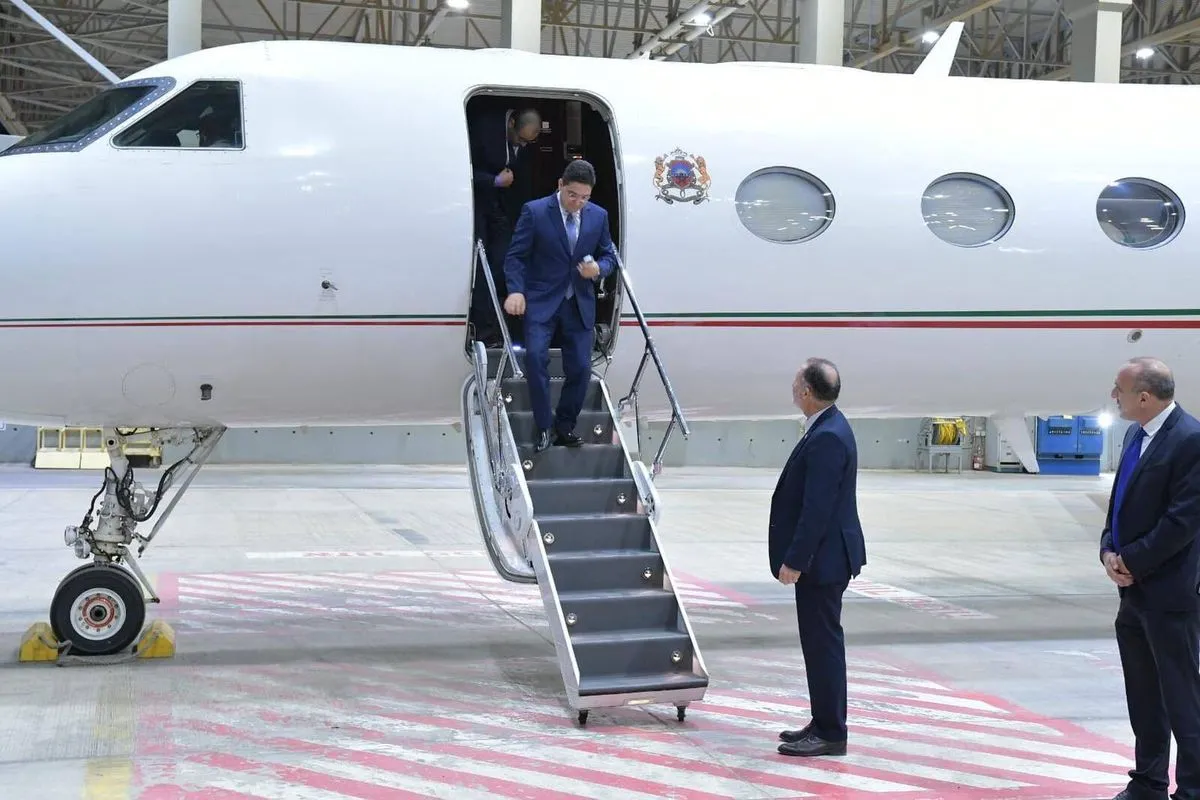
In a significant political development, Morocco and Israel announced plans to elevate their existing liaison offices to full-fledged embassies. This noteworthy announcement, deemed "historic" by observers, was made on September 16, following a meeting between Israeli Foreign Minister Gideon Saar and his Moroccan counterpart, Nasser Bourita. The meeting was facilitated by the U.S. Ambassador to the UN and took place at the United Nations headquarters in New York City. Furthermore, additional high-level visits have been announced, signaling a commitment to deepen cooperation between the two nations.
The normalization of relations between Morocco and Israel began in 2020 under the Abraham Accords, which saw the two countries enter into various bilateral agreements. These agreements encompass cooperation in sectors such as agriculture, energy, and military operations, including joint exercises aimed at enhancing defense capabilities.
Last month marked the resumption of direct flights between Morocco and Israel for the first time in nearly three years. Arkia Israel Airlines now operates flights between Ben Gurion Airport and Marrakech on Mondays and Wednesdays. This direct connection is particularly significant as it resumes after Israeli airlines had suspended operations following the Hamas terrorist attack on October 7, 2023. Prior to the attack, estimates from the Moroccan Ministry of Tourism indicated that around 200,000 Israelis visited Morocco in the year leading up to the incident.
Political Implications and Strategic Context
The timing of the announcement is particularly noteworthy, coinciding with the parliamentary elections in Morocco scheduled for September 23. This strategic move came during a politically sensitive period as the nation's political parties campaigned on issues such as employment, purchasing power, and education, while also aiming to restore public trust in institutions. The decision to enhance diplomatic ties with Israel was made just before the elections, suggesting that the Moroccan monarchy views these relations as a matter of strategic state interest that transcends electoral outcomes.
Among the political parties, only the Islamist Party of Justice and Development (PJD) publicly opposed the normalization efforts, reiterating their firm stance against any form of agreement with Israel. Interestingly, the PJD advised its members to avoid discussions regarding this topic and focus instead on their electoral campaign and highlighting the party's achievements and agenda.
Additionally, significant developments are on the horizon for Morocco, particularly with the UN Security Council expected to make decisions regarding the future of the MINURSO mission in Western Sahara on October 31. Analyst Intissar Fakir from the Middle East Institute suggested that Morocco's rapprochement with Israel could be interpreted as a strategy to assert its influence, potentially with U.S. support, in the upcoming UN deliberations.
Morocco's strategic location between Europe, Africa, and America, along with its relatively developed infrastructure and a young, increasingly skilled workforce, positions it advantageously in various sectors. However, the country continues to grapple with substantial social issues, as evidenced by the youth protests witnessed last year. Approximately one-fifth of the working population is considered underemployed, engaged in jobs that do not align with their qualifications.
Morocco is pursuing an ambitious development plan, with the 2030 FIFA World Cup—co-hosted with Spain and Portugal—serving as a short-term anchor, while the planned Nigeria-Morocco gas pipeline is seen as a long-term project aimed at transporting natural gas from Nigeria through West Africa to Morocco and further into Europe. This World Cup is expected to accelerate billions in investments across transportation, tourism, and urban development, while the pipeline initiative aims to establish Morocco as an energy corridor linking West Africa with Europe.
Israeli entrepreneurs and technology have long been involved in Moroccan agriculture, with Moroccan blueberries and avocados increasingly making their way to European supermarkets. The blueberry harvest in Morocco begins in the fall, with the potential for Moroccan blueberries to reach the European market over several months. This positions Morocco as a vital complement to European blueberry production.
One of the pioneers in Morocco's blueberry industry, Israeli entrepreneur Avi Weizman, co-founded African Blue in 2007 alongside the Australian Costa Group and Moroccan entrepreneur Abdelatif Bennani. Initially perceived as an agricultural experiment, African Blue has evolved into a large-scale operation, with commercial plantings commencing in 2008.
Another noteworthy Moroccan-Israeli joint venture involves an avocado plantation established by the Israeli agricultural firm Mehadrin. Following the normalization of relations between Morocco and Israel in late 2020, Mehadrin partnered with a local entity to enter Moroccan agriculture. The Israeli company holds a 51% stake, while the Moroccan partner retains 49%, with plans for a cultivation area of approximately 500 hectares. The initial investment was estimated at around 80 million Moroccan dirhams, equivalent to about 8 million euros, with planting commencing in early 2024 and projected annual yields of up to 10,000 tons of avocados once fully operational.
Water scarcity remains a critical issue in both Morocco and Israel. Israel leads globally in precision agriculture, employing advanced technologies to maximize crop yields while addressing severe water shortages. Moreover, Israel is recognized as an international leader in water recycling, treating a significant portion of wastewater for reuse, especially in agricultural irrigation. This innovative approach allows Israel to conserve its limited natural water resources and maintain supply despite a dry climate, complemented by modern desalination plants and efficient water management practices.
Europe stands as the primary market for Moroccan avocados, with approximately 85% of the harvest destined for European consumers. However, the anti-Israel Boycott, Divestment, Sanctions (BDS) movement actively campaigns against this trade on social media, urging consumers to be aware of Israeli involvement in Moroccan avocado exports.
As reported by mena-watch.com.