
Strengthening Bilateral Relations
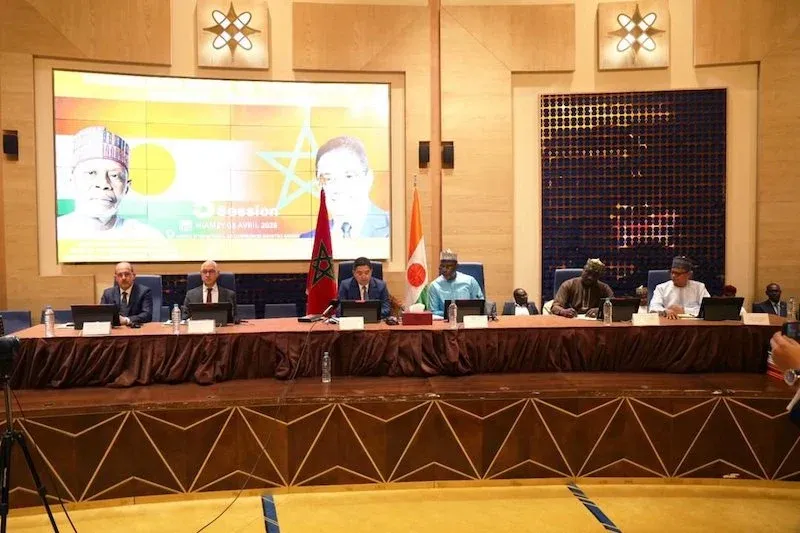
Under the esteemed directives of King Mohammed VI, Morocco's Minister of Foreign Affairs, African Cooperation, and Moroccans Living Abroad, Nasser Bourita, presided over the fifth session of the Joint Cooperation Commission between Morocco and Niger, held in Niamey. This significant meeting was co-chaired by Niger's Minister of Foreign Affairs, Cooperation, and Nigeriens Abroad, Bakary Yaou Sangare. During the proceedings, Bourita emphasized Morocco's commitment to elevating its relations with the Republic of Niger to a multidimensional partnership, in line with the King's high-level instructions.
In his opening address, Bourita stated that this session marks an important milestone in reaffirming the historical ties between the two nations and illustrates their shared desire to advance to a strategic partnership of multiple dimensions. He underscored Morocco's unwavering commitment to South-South cooperation, which he described as a "stable strategic choice for Morocco and a fundamental pillar of its foreign policy."
New Initiatives and Agreements
Bourita highlighted the significant royal initiatives aimed at achieving continental integration, particularly the Atlantic African States Initiative and the royal initiative to facilitate access for Sahel countries to the Atlantic Ocean. Both initiatives share a common goal of fostering conditions for a new phase of shared development and enhancing security and stability across the continent.
Furthermore, Bourita reiterated Morocco's full solidarity with Niger in its fight against terrorism and violent extremism, strongly condemning the terrorist attacks that have targeted sensitive facilities within the country. He praised the resilience of Niger's forces and emphasized the importance of the religious dimension in preventing extremism through the training of imams and guides at the Mohammed VI Institute, contributing to intellectual and spiritual security in the brotherly nation of Niger.
This fifth session of the Joint Cooperation Commission is anticipated to be a turning point in bilateral cooperation, with the signing of several agreements and memorandums of understanding covering vital sectors. The aim is to diversify and enrich the partnership, particularly in areas such as renewable energy, pharmaceutical industry, health, transportation, infrastructure, youth, and sports.
Bourita also acknowledged the positive role played by Moroccan private sector investments in Niger, particularly in banking, telecommunications, and air transport, expressing confidence in the promising potential for expanding these investments to benefit both nations. He commended the level of cooperation in academic, cultural, and religious fields through annual scholarship programs offered to Nigerien students.
In conclusion, Bourita reaffirmed Morocco's determination to make this session a "new starting point toward a more advanced phase" in bilateral relations, aligning with the aspirations of King Mohammed VI and his counterpart, President of the Republic of Niger, Abdourahamane Tidjani, exemplifying an ideal model of African cooperation based on effective solidarity and fruitful partnership for both parties.
As reported by hespress.com.