
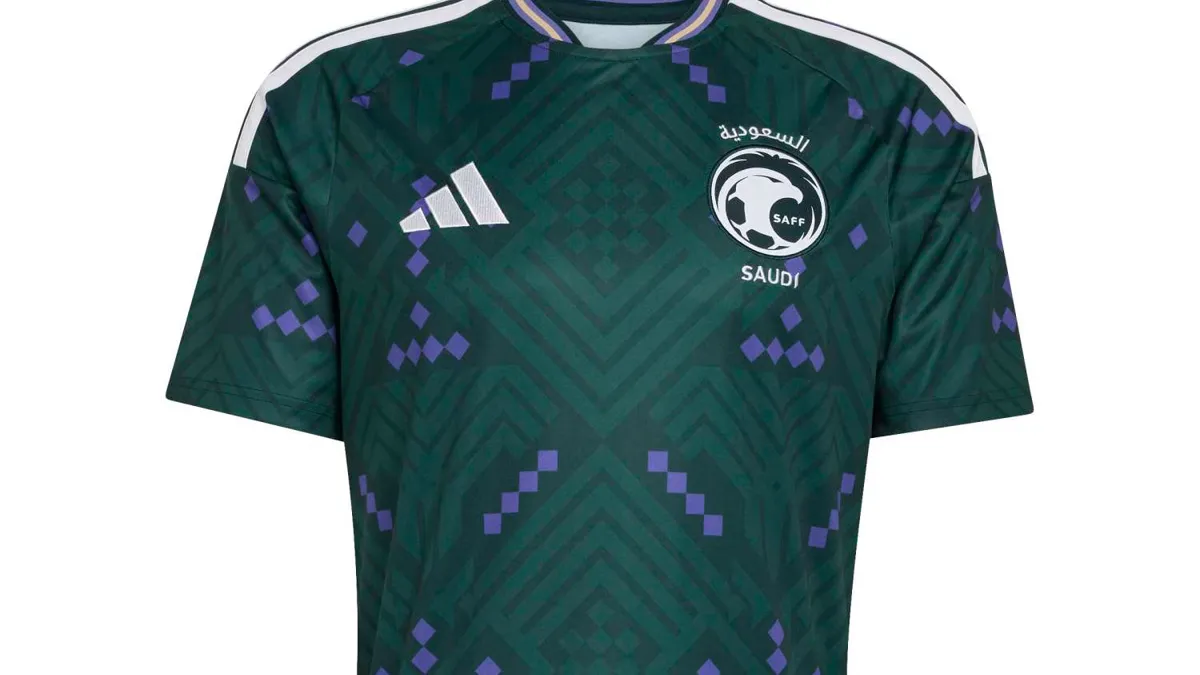

Celebrating Cultural Identity in Sports Design
As the excitement builds just hours before the commencement of the 2026 World Cup, The Athletic has unveiled its ranking of the primary kits for the participating teams in this expanded tournament featuring 48 nations. Notably, the jerseys of Morocco and Saudi Arabia have secured places within the top ten globally, illustrating the growing success of Arab teams in integrating cultural identity into modern sports designs.
The report emphasized that the World Cup transcends being merely a football competition; it has evolved into a global platform where sportswear companies showcase their latest creative ideas, striving to blend national symbols with contemporary design trends. The Moroccan national team's jersey has claimed the fifth spot globally, receiving widespread acclaim from the publication, which described it as a "masterpiece, featuring a unique collar, stunning color, and exquisite embroideries inspired by traditional Moroccan textile designs." Meanwhile, the Saudi Arabian jersey landed in sixth place, earning high praise for its geometric patterns influenced by local traditional art, presented in a modern spirit. The publication highlighted it as an excellent and fabulous kit, drawing inspiration from Tetris patterns, thereby infusing a contemporary touch into the cultural heritage.
Global and Arab Rankings Unveiled
In the overall ranking, Ghana's jersey topped the list, surpassing those of renowned teams such as Brazil, which came in second, England in third, and Germany in fourth place. Conversely, Croatia's kit found itself at the bottom of the rankings, receiving the lowest evaluation among the 48 participating teams. The Egyptian national team's jersey sparked controversy, landing in 44th place globally, making it the lowest-ranked among Arab teams. The publication critiqued the design, suggesting that Puma appeared to have consulted Egypt's Wikipedia page to incorporate some symbols associated with the country, adding, "This doesn’t necessarily make it a bad kit, but rather a humorous one." In the Arab ranking, Tunisia, Iraq, and Jordan placed in mid-tier positions, while Qatar and Algeria's kits fell into the lower half of the list. This classification reflects the growing importance of marketing and aesthetics in modern football, where jerseys have become integral to a team's identity and global image, just as vital as on-field performance.
As reported by sabq.org.
