
Key Legal Battle Over AFCON 2025 Outcome
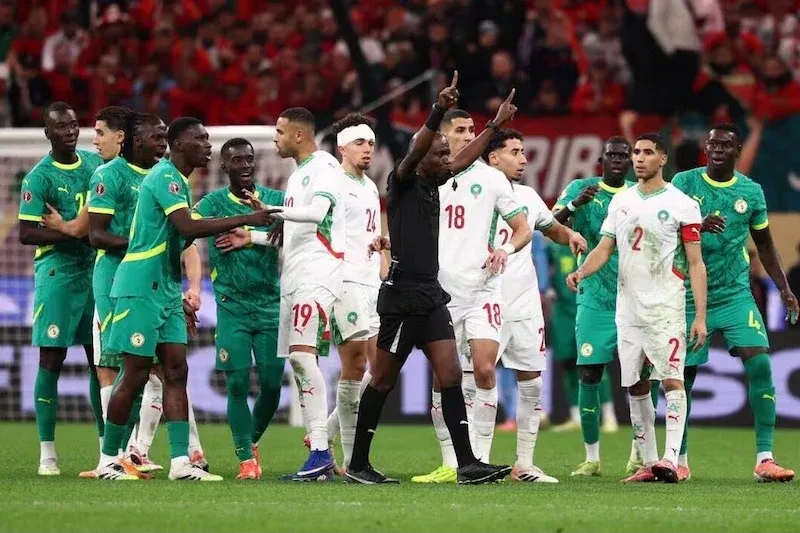
On Thursday, all eyes will be on Lausanne, Switzerland, where the Court of Arbitration for Sport (CAS) will deliberate on the appeal filed by the Senegalese Football Federation against the decision that awarded Morocco a 3-0 victory in the 2025 Africa Cup of Nations final. This pivotal match occurred under controversial circumstances, particularly concerning the actions of the Senegalese players who left the field during the match.
The session holds significant weight for Moroccan football, as Morocco prepares to defend its stance based on a ruling from the Confederation of African Football's (CAF) Appeals Committee. This ruling concluded that the Senegalese players' exit from the pitch constituted a breach of Articles 82 and 84 of the AFCON regulations, thereby justifying the decision that deemed Senegal the loser by three goals.
During the hearing, which will take place behind closed doors in Lausanne, the panel will consist of notable figures including French jurist Gérald Simon, Italian Luigi Fumagalli, and German Ulrich Haas. These officials will listen to representatives from the Royal Moroccan Football Federation, the Senegalese Football Federation, and CAF.
The final match, held on January 18 in Rabat, featured extraordinary events as a substantial number of Senegalese players protested a penalty awarded to Morocco during injury time by leaving the field. The match was halted for approximately fifteen minutes before the Senegalese players returned, ultimately leading to Morocco missing the penalty and Senegal scoring in extra time, resulting in a final score of 1-0 on the field.
However, the Royal Moroccan Football Federation appealed to CAF, demanding adherence to competition regulations concerning player exits prior to the match's legal conclusion. On March 17, CAF's Appeals Committee ruled in favor of Morocco, declaring Senegal the loser by a score of 3-0 based on the specified articles of the tournament regulations.
As a result, Morocco finds itself defending a decision already solidified by CAF's highest appellate body, while the Senegalese Federation seeks to overturn this ruling and reaffirm the match's outcome as it transpired on the field. The Senegalese appeal is reportedly anchored in the principle of the finality of a referee's decisions regarding on-field events, as well as the argument that the referee allowed the match to resume after the Senegalese players returned.
Legal experts in sports law note that the forthcoming ruling will not only determine the champion of the Africa Cup of Nations but may also set precedents for how similar situations are handled in the future, particularly concerning player protests against referee decisions. They argue that overruling the penalty imposed by the CAF Appeals Committee without a legal justification that distinguishes this incident could establish a precedent that allows teams to pressure referees by disrupting matches, thus creating chaos on the field. Conversely, upholding the decision would reinforce the principle of respecting the referee's authority and adhering to legal procedures for contesting decisions rather than resorting to on-field insurrections.
As reported by hespress.com.