
Morocco and Senegal's Legal Battle Over AFCON 2025 Final
On Thursday, all eyes will be on Lausanne, Switzerland, where the Court of Arbitration for Sport (CAS) is set to review an appeal lodged by the Senegalese Football Federation against a decision that awarded Morocco a 3-0 victory in the final of the 2025 Africa Cup of Nations (AFCON). This controversial match was marred by the Senegalese players leaving the field during the game, which has led to significant legal implications for both teams.
The session holds particular importance for Moroccan football, as the nation is relying on an official ruling from the Appeals Committee of the Confederation of African Football (CAF). This ruling deemed that the departure of Senegalese players from the pitch constituted a violation of Articles 82 and 84 of the AFCON regulations, thereby ruling them as having lost the match 3-0.
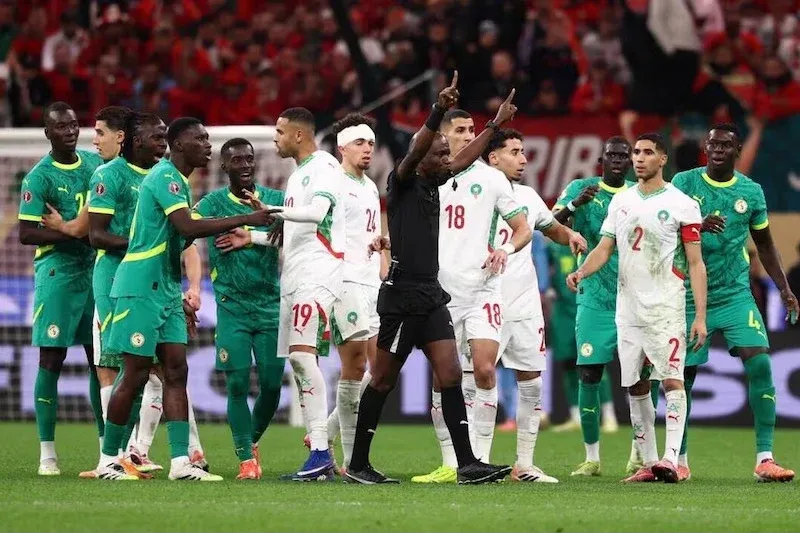
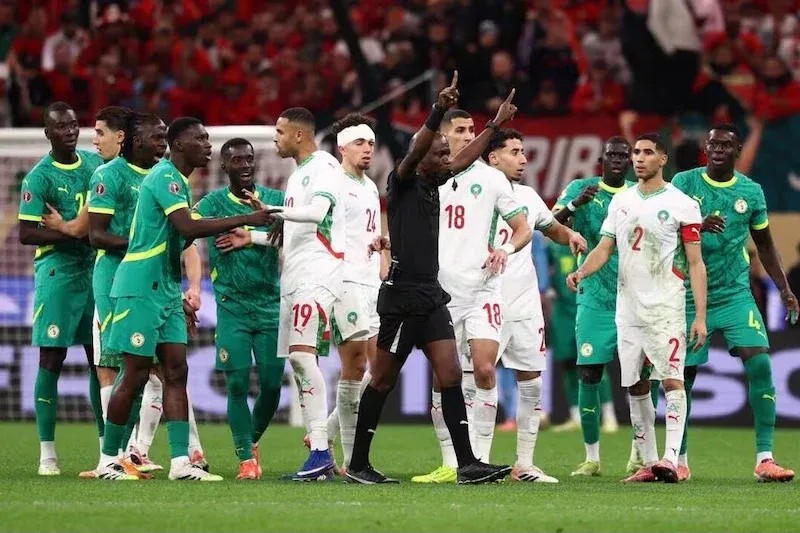
The arbitration panel, which includes Frenchman Gérald Simon, Italian Luigi Fumagalli, and German Ulrich Haas, will hear arguments from representatives of the Royal Moroccan Football Federation, the Senegalese Football Federation, and CAF in a closed session in Lausanne. The final match, held on January 18, was notable for its tumultuous events, where a significant portion of the Senegalese players protested a penalty awarded to Morocco in stoppage time, leading them to temporarily leave the field.
Despite the interruption, the match resumed after approximately 15 minutes, during which Moroccan player Ibrahim Diaz missed the penalty. Senegal, however, managed to score a goal in extra time, leading to a physical match ending with a 1-0 score in favor of Morocco. Following the game, the Royal Moroccan Football Federation appealed to CAF, demanding that the regulations concerning players leaving the pitch before the match's conclusion be enforced.
On March 17, CAF's Appeals Committee ruled in favor of Morocco, officially declaring Senegal as having lost 3-0 based on the aforementioned regulations. This places Morocco in a defensive stance before CAS, as they seek to uphold a decision from the highest appellate body within CAF, while Senegal aims to overturn this ruling and recognize the result as it stood on the pitch.
Senegal's appeal is reportedly grounded in the principle of finality concerning the match referee's decisions on in-game occurrences, along with the fact that the referee allowed the match to continue after the Senegalese players returned. Legal experts in sports law believe that the upcoming ruling will have implications beyond just determining the AFCON champion; it will also set a precedent for how future incidents of player protests against referee decisions are handled.
Experts assert that overturning the penalty imposed by CAF's Appeals Committee without a legal justification that highlights the unique aspects of this incident could set a concerning precedent, potentially encouraging teams to disrupt games and create chaos on the field. In contrast, affirming the decision would reinforce the importance of respecting the authority of referees and adhering to legal procedures for contesting decisions rather than resorting to on-field disruptions.
As reported by hespress.com.