
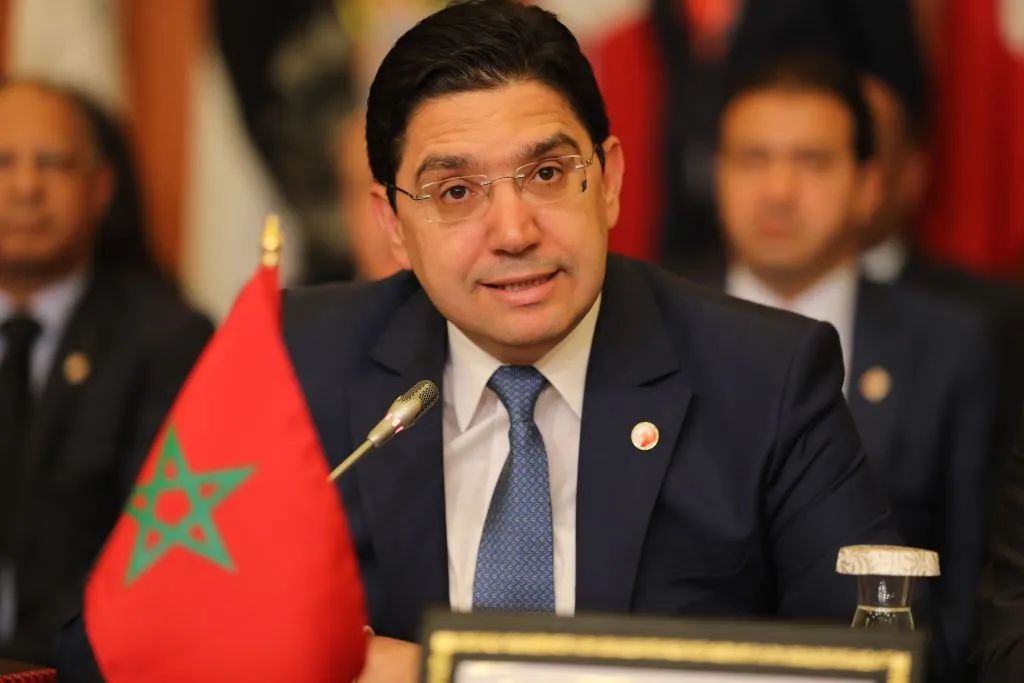

In a recent exchange that highlights the ongoing diplomatic strain between Morocco and Spain, Moroccan Foreign Minister Nasser Bourita criticized Spain for its inability to facilitate the return of thousands of migrants stranded in Ceuta. This issue has resurfaced following a massive influx of migrants last July, which resulted in over 80,000 individuals crossing into the Spanish exclave, leading to tragic consequences with more than 100 lives lost. Bourita's remarks come after his first in-person meeting with Spanish Foreign Minister José Manuel Albares, held during the UN Assembly in New York.
Albares reassured that Spain is dedicated to fostering a positive relationship with Morocco and expressed that the Spanish government has consistently offered its cooperation to expedite the return of these migrants. However, Bourita pointedly redirected the responsibility for the lack of repatriation toward Spain, stating, "If illegal immigrants have not been returned, if minors have not been returned, the question should not be put to Morocco, but to Spain." This statement underscores the complexities involved in managing migrant returns and the differing perspectives between the two nations regarding the situation in Ceuta.
Discrepancies in Migrant Numbers and Return Efforts
Despite Morocco's willingness to assist, discrepancies in reported migrant numbers have emerged. Authorities in Ceuta estimate that around 13,000 migrants remain in the territory, while Spanish Prime Minister Pedro Sánchez has suggested the figure is closer to 5,000. Various ministers have provided differing estimates, indicating that a significant number of migrants may still be unaccounted for. Following the initial surge, many migrants have voluntarily returned to Morocco, with more than 7,500 having done so since early August. Nevertheless, legal hurdles complicate the situation, especially regarding the status of minors. Current Spanish law permits over 2,300 registered minors to remain in the country, while many migrants from sub-Saharan Africa may also qualify for international protection, further complicating repatriation efforts.
The Spanish government has faced criticism from Moroccan officials regarding bureaucratic obstacles that allegedly hinder the return process. Conversely, Spanish legal entities, including judges and police unions, have accused Morocco of not cooperating adequately in identification and repatriation procedures. This ongoing tension reflects the broader challenges faced by both nations in managing migration effectively, particularly in light of the events that transpired during the 2021 Ceuta crisis.
Legal Protections and the Future of Migrant Policies
As Spain grapples with the complexities of its immigration policies, particularly concerning minors, the Spanish Public Prosecutor’s Office has highlighted a stringent approach adopted by Morocco regarding deportations. The legal framework surrounding minors adds another layer of complexity, with many unaccompanied minors likely to remain in Spain rather than being returned to their home country. Recent reports indicate that 54 minors have already been transferred to mainland Spain to reunite with their families, with officials suggesting that the majority express a desire to remain in the country. Such legal protections underscore the challenges posed by existing immigration laws and the ongoing debate over the rights and treatment of vulnerable migrant populations.
As reported by euractiv.com.
