
Reassessing the Changing Landscape Across the Strait
The dynamics of economic development on the Moroccan side of the Strait of Gibraltar have sparked a renewed debate among observers in Spain. As Morocco continues to enhance its port, industrial, and logistical capabilities, the prevailing question emerges: should this evolution be perceived as a cause for concern or rather as a strategic opportunity for collaboration, investment, and mutual growth? It is vital for segments of the Spanish media to approach this transformation with a balanced perspective, understanding that a more connected and industrialized Morocco can ultimately benefit Spain, Europe, and the broader Euro-African region.
The recent emergence of Nador West Med, coupled with the consolidation of Tangier Med as a prominent logistics hub for the Mediterranean and Africa, has led to alarmist narratives within certain Spanish circles. These narratives often frame Morocco's economic progress as a competitive threat, interpreting each advancement—be it a new port, industrial zone, or energy project—as a direct challenge to Spain's interests and regional stability. Such a viewpoint oversimplifies the intricate relationship between the two nations and overlooks the reality that Morocco's development is a natural outcome of its growing institutional maturity and integration into global value chains.
Morocco's strategic planning has been decades in the making, culminating in a well-coordinated approach that encompasses port infrastructure, industrial zones, logistical connectivity, energy transition, and international collaboration. The Nador West Med project exemplifies this long-term vision, designed not merely as a response to immediate demands but as a critical component of Morocco's broader public policy aimed at bolstering its economic stature in the region.
Fostering Cooperation Over Competition
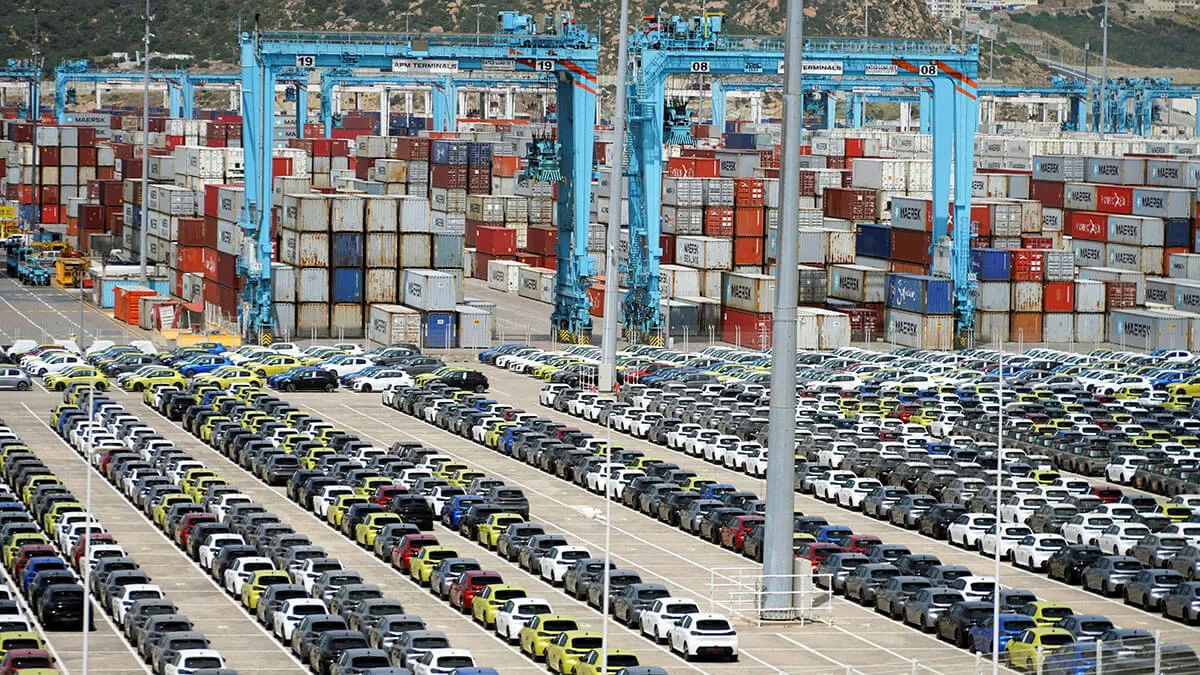
Recent figures underscore the success of the Tangier Med port complex, which handled over 11 million TEUs in 2025, marking an impressive 8.4% increase from the previous year. This growth solidifies Tangier Med's status as the leading container port in both the Mediterranean and Africa, while Nador West Med is poised to enhance Morocco's national port infrastructure significantly. With an estimated operational capacity of about 3.5 million TEUs upon its expected launch between late 2026 and 2027, the new port is indicative of Morocco's commitment to modernizing its logistics capabilities.
While it is crucial to acknowledge the competitive landscape, adopting a confrontational stance is counterproductive. The port economy is inherently competitive, and various factors—including costs, operational efficiency, and connectivity—play a pivotal role in shaping outcomes. Spanish ports such as Algeciras and Valencia are certainly monitoring developments at Tangier Med and Nador West Med, but competition should not be equated with hostility. Instead, in an interconnected region like the western Mediterranean, competition can foster complementarity, specialization, and overall growth in activity levels. This perspective aligns with the EU's emissions trading scheme (EU ETS), which, while seen as a competitive pressure by European ports, should not be misattributed to Morocco's development policies.
Morocco remains committed to its energy transition and climate agenda, focusing on expanding renewable energy production and enhancing infrastructure for energy security. Ports like Nador West Med are integral to this vision, supporting economic and energy independence while facilitating new industrial flows. Therefore, labeling Nador West Med as merely an "environmental tax loophole" is an oversimplification of the broader economic and environmental landscape.
The bilateral relationship between Morocco and Spain is characterized by mutual respect and interdependence rather than competition. Trade figures illustrate this reality, with Spain being Morocco's largest trading partner, with bilateral trade exceeding €22.5 billion. Over 350 Spanish companies operate in Morocco across various sectors, reinforcing the notion that Morocco is not a threat but a vital partner in economic collaboration. The joint initiatives, including the 2030 Men's World Cup, exemplify this evolving relationship, highlighting the potential for deeper cooperation that goes beyond mere economic transactions.
In conclusion, the shared future of Morocco and Spain hinges on their ability to transcend outdated narratives of rivalry and embrace a vision of collaboration. Recognizing the complementary strengths of both nations can lead to a more prosperous and interconnected Euro-African region. As they navigate this transformative landscape, the emphasis should be on building bridges of cooperation rather than walls of competition.
As reported by atalayar.com.