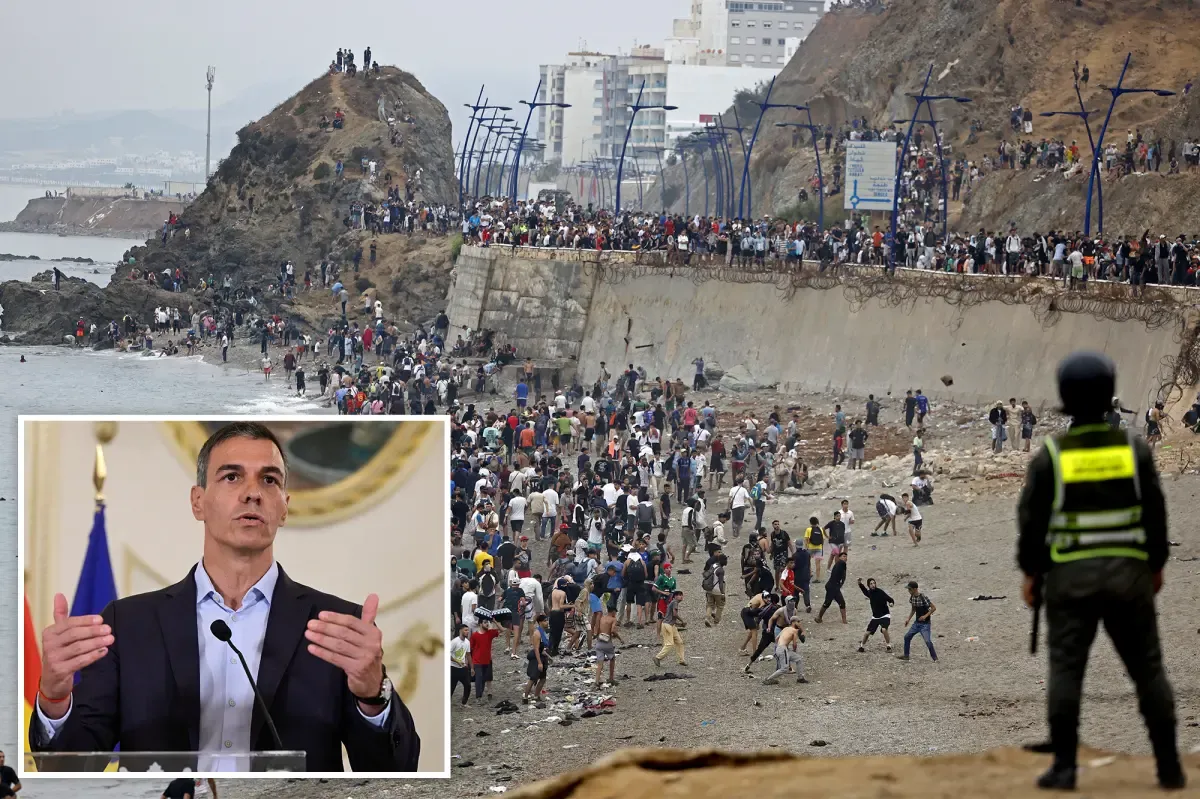

Recent Surge of Migrants to Ceuta: A Closer Look
Moroccan authorities have attributed the recent surge in migration, which saw approximately 60,000 individuals enter the Spanish enclave of Ceuta, to the dual forces of social media misinformation and human trafficking networks. In a statement released by the Moroccan Interior Ministry, officials clarified that the influx was not a result of spontaneous circumstances but rather a calculated exploitation of digital platforms combined with the actions of trafficking organizations. This assertion marks the first official commentary from Rabat regarding the escalating border crisis, as reported by RTVE.
The Moroccan government pointed to the spread of misinformation surrounding a recent ruling by the Spanish Supreme Court, which indicated that the government could not expedite the deportation of migrants arriving by sea, a privilege not extended to those who breach land borders or scale fences. According to the authorities, this misinterpretation fueled a false belief among potential migrants that they could evade immediate deportation. They emphasized their commitment to a proactive and comprehensive strategy in handling the border crisis, positioning Morocco as a trustworthy partner in combating illegal migration and human trafficking.
Political Repercussions and International Responses
The Moroccan stance on internet misinformation aligns with claims made by the Spanish government. Spanish Prime Minister Pedro Sánchez noted that discussions with Moroccan officials revealed that trafficking networks had manipulated the Supreme Court ruling for their own gain, leading to a rapid spread of the belief that those arriving by sea would be exempt from deportation. The political implications of this crisis have been significant, particularly for Sánchez, who faced backlash following revelations that his government had supported legalizing the status of 500,000 undocumented migrants earlier in the year. In a bid to regularize immigration, the application window ran from mid-April to late June, resulting in over 1.17 million undocumented individuals seeking legal status.
Out of these, approximately 609,000 have received temporary work permits, with around 160,000 securing formal employment. The demographics of those applying indicate that 81% are under 45 years old, and 57% are male. The situation has provoked strong criticism from political opponents, including Santiago Abascal, leader of Spain’s far-right Vox party, who labeled the events in Ceuta as an “invasion” and called for Sánchez’s prosecution, asserting that the crisis was exacerbated by the government's failure to effectively address migration issues. Abascal proposed a series of stringent measures, including the immediate deportation of illegal migrants, the militarization of the border, and the closure of border crossings.
Critics within Spain have pointed to the government's immigration policies as a catalyst for the influx, with Miguel Tellado from the People’s Party stating that the expectation of gaining citizenship for those entering Spain has only intensified the urgency for migration. As the situation develops, President Trump has likened the scenes unfolding in Ceuta to an invasion, while Vice President JD Vance attributed the crisis to the consequences of mass migration and radical leftist policies. In light of the crisis, Italy has temporarily suspended its participation in the Schengen agreement, affecting free travel between 29 EU countries for a month. Despite the initial influx, most of the 60,000 migrants have since dispersed from Ceuta.
As reported by nypost.com.