
Morocco's Commitment to Enhancing National Ownership in Peacebuilding
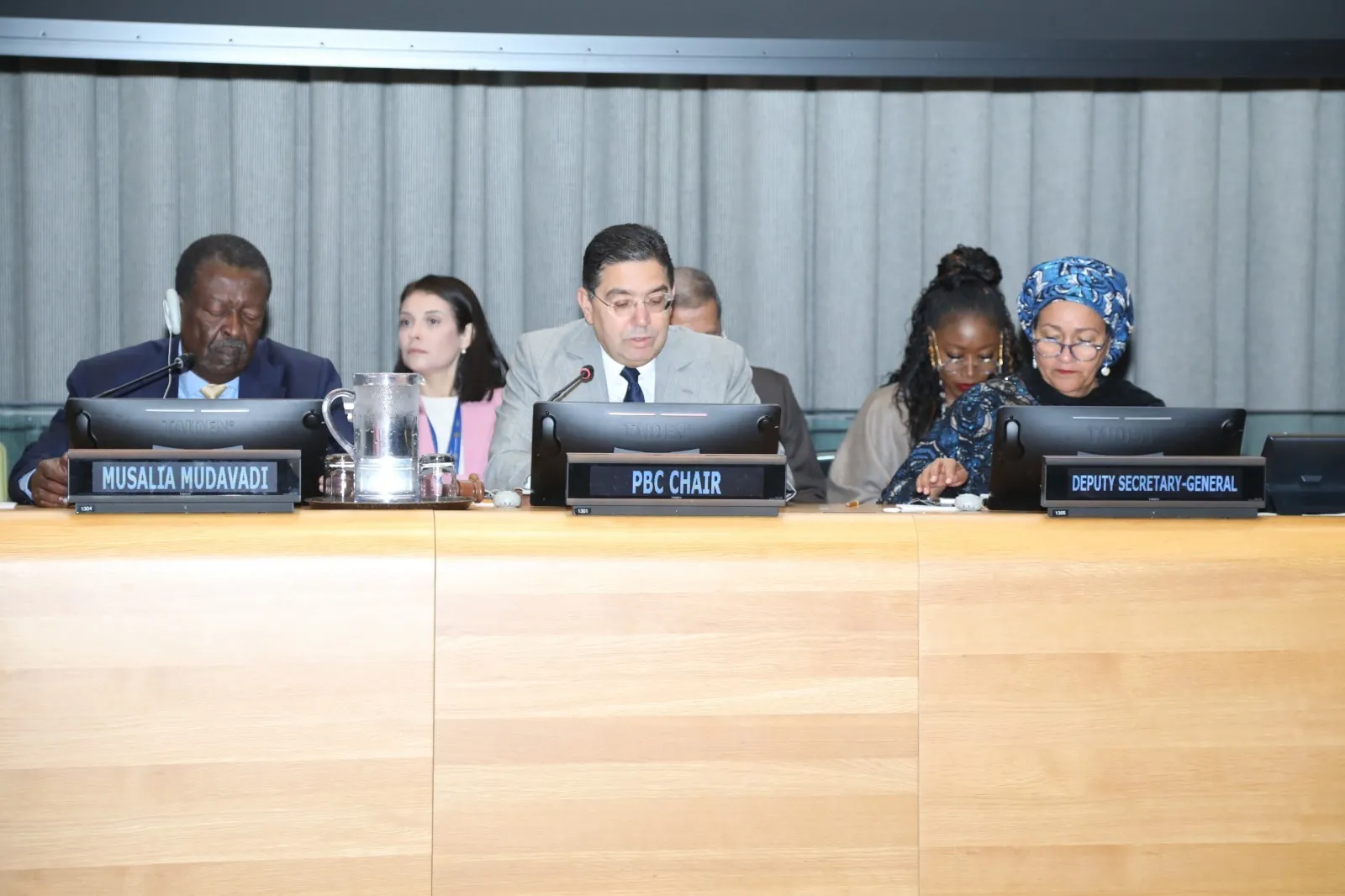
On September 24, 2026, in a pivotal meeting held in New York, Morocco's Minister of Foreign Affairs, African Cooperation, and Moroccan Expatriates, Mr. Nasser Bourita, articulated the primary principles that Morocco is championing during its presidency of the UN Peacebuilding Commission (PBC). This high-level gathering focused on the theme of "National Ownership in Practice: Strengthening Inclusive State Institutions," and was attended by notable figures including UN Deputy Secretary-General Amina J. Mohammed and Prime Minister of Papua New Guinea James Marape, among others. The convergence of international leaders underscored the global commitment to fostering inclusive and effective governance in peacebuilding efforts.
In his address, Minister Bourita emphasized the necessity of enhancing national ownership in peacebuilding processes through the establishment of inclusive institutions and fostering international partnerships that are aligned with the specific priorities of individual states. He pointed out that the PBC, two decades after its inception, stands at a critical juncture, particularly in light of the ongoing discussions surrounding the Pact for the Future and the upcoming 2025 review of the Peacebuilding Architecture. The Minister made it clear that sustainable peace cannot be achieved in isolation from the states and societies directly involved, advocating for a model of national ownership grounded in the principles of sovereignty, shared responsibility, and the fortification of national capacities.
Minister Bourita articulated that true national ownership must encompass political, institutional, and financial dimensions, advocating for the establishment of legitimate and inclusive institutions that are responsive to the needs of the populace. He elaborated that this approach resonates with Morocco's overarching vision of the nexus between peace, security, development, and governance. He underlined the Kingdom's steadfast commitment to conflict prevention, mediation, peacekeeping, and the reconstruction of post-conflict societies, positioning Morocco as a proactive player in the global peacebuilding landscape.
Further advocating for innovative solutions, Bourita proposed the institutionalization of the PBC's outreach initiatives through on-the-ground sessions in affected countries and the development of a National Ownership Assessment aimed at collaboratively identifying the necessary capacities for sustainable peacebuilding. Additionally, he called for enhanced predictability in funding and stronger collaborations with international financial institutions and development banks to ensure that peace, investment, and development strategies are effectively aligned with national priorities.
Ultimately, Bourita asserted that the true value of the PBC lies in its unique ability to forge connections between peace and development, to bridge the gap between states and the multilateral system, and to synchronize national objectives with international resources. He concluded his address by expressing a commitment not merely to increase peacebuilding efforts, but to optimize them for greater efficacy. As the President of the PBC, he reiterated his dedication to facilitating the implementation of the 2025 review and to bolstering the Commission in its mission to foster peace that is genuinely national, inclusive, and sustainable.
As reported by diplomatie.ma.