
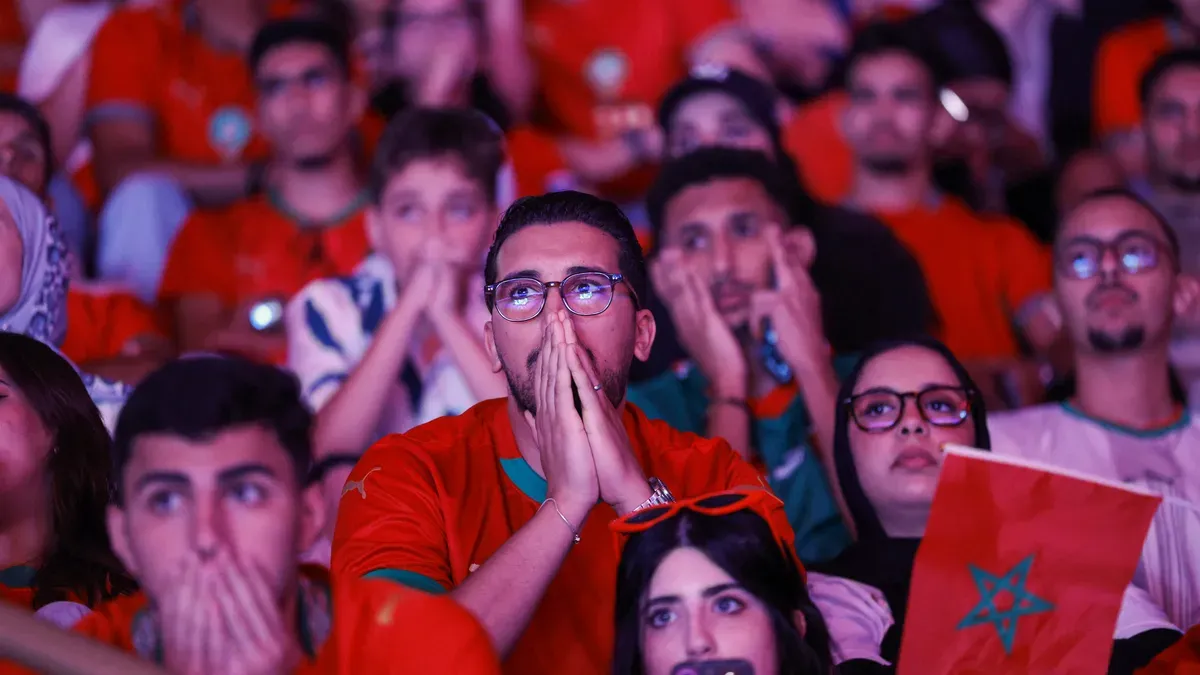

In a bold statement, Morocco's top soccer official has asserted that his nation will host the final match of the 2030 Men's World Cup, despite the absence of any formal confirmation. The upcoming tournament is scheduled to be a collaborative effort among Spain, Morocco, and Portugal, following three initial matches to be held in South America, commemorating the centenary of the competition that first unfolded in Uruguay.
Fouzi Lekjaa, the president of the Royal Moroccan Football Federation, expressed his aspiration for the grand finale to take place at the King Hassan II Stadium, which is set to accommodate 115,000 spectators and is currently under construction near Casablanca in the Benslimane province. During a political gathering on September 10, Lekjaa stated, "The city of Benslimane will host the World Cup final. Hate it or love it, and if anyone wants to talk on top of that, let them talk. The city is Benslimane, the Hassan II stadium is the stadium, and I hope that Morocco will be playing it." His remarks suggest a strong belief in Morocco's role as a host, igniting excitement and ambition within the country.
Speculation has been rife in the media, particularly in the UK, regarding whether FIFA President Gianni Infantino may have informally assured Morocco of the final in exchange for political backing amidst his potential re-election challenges this coming March. However, FIFA has firmly denied these claims, reinforcing their commitment to a transparent decision-making process. A spokesperson for FIFA remarked, "As communicated on 5 August 2026, a decision will be made by FIFA in due course," thus maintaining the suspense surrounding the final host selection.
While Morocco may boast one of the largest stadiums globally, Spain is not to be overlooked. The country's iconic venues, such as Real Madrid's Santiago Bernabéu and FC Barcelona's Camp Nou, are both viable contenders for the final match. The Bernabéu has recently undergone significant renovations, now seating over 80,000 fans, while plans are in place for Camp Nou to exceed 100,000 capacity by 2027. This competitive landscape has transformed the quest for the World Cup final into a politically charged arena since Spain clinched victory at the 2026 World Cup.
The political backdrop further complicates matters; a recent surge of over 70,000 migrants crossing into Ceuta, a Spanish enclave in North Africa, has resulted in tragic losses and a political crisis, prompting calls from political parties in both Spain and Portugal to reassess their partnership with Morocco as co-hosts of the 2030 tournament. In this context, Lekjaa's political maneuvers become increasingly significant as he recently joined the Authenticity and Modernity Party, hinting at aspirations for a higher political office. The outcome of Morocco's parliamentary elections later this month could greatly influence the planning and execution of the World Cup.
Spanish politicians have been vocal in asserting their country's right to host the final. Milagros Tolón, Spain's Minister of Education, Vocational Training, and Sports, emphasized in an August radio interview that Spain, as the reigning champion in both men's and women's soccer, along with Portugal, deserves recognition for spearheading the 2030 World Cup bid, which Morocco later joined. "We have many advantages and strengths as a country," she stated, reinforcing Spain's strong position in this competitive bidding process.
As reported by usatoday.com.
