
National Pride and Historical Significance
In a vibrant atmosphere of national pride and continuous mobilization, the Moroccan people, alongside the families of resistance and the Liberation Army, will commemorate the 47th anniversary of the recovery of the Tindouf region this Friday. This event stands as a significant milestone in the journey towards completing national independence and achieving the sacred territorial unity of the nation.
The High Commission for Former Resistance Fighters and Members of the Liberation Army issued a statement on this occasion, recalling that delegations of scholars, dignitaries, and tribal leaders of the Tindouf region gathered in the Kingdom's capital, Rabat, on August 14, 1979. They pledged their allegiance to the late King Hassan II, affirming their deep-rooted commitment to the glorious Alaouite throne and their loyalty to the monarch, following the legacy of their ancestors. This gathering connected the past with the present, emphasizing their strong Moroccan identity and dedication to national unity, from Tangier to Lagouira, effectively countering the plans of those who oppose territorial integrity and the legitimate rights of the nation.
Historical Commitments and Future Aspirations
During this momentous event, the participants recited the allegiance text, reflecting their unwavering bond with their homeland, Morocco. The text emphasized: “Our nobles, scholars, dignitaries, men, women, elders, and youth have gathered, affirming our unwavering unity and commitment to renew our pledge to His Majesty King Hassan II, as our forefathers pledged to his ancestors. We pledge to uphold his guidance and advice at all times, standing as his supporters and soldiers.” This historical moment symbolized the unity of the nation, spearheaded by the visionary leadership of the late King Hassan II, who addressed the courageous people of the southern tribes, vowing to protect their safety and welfare.
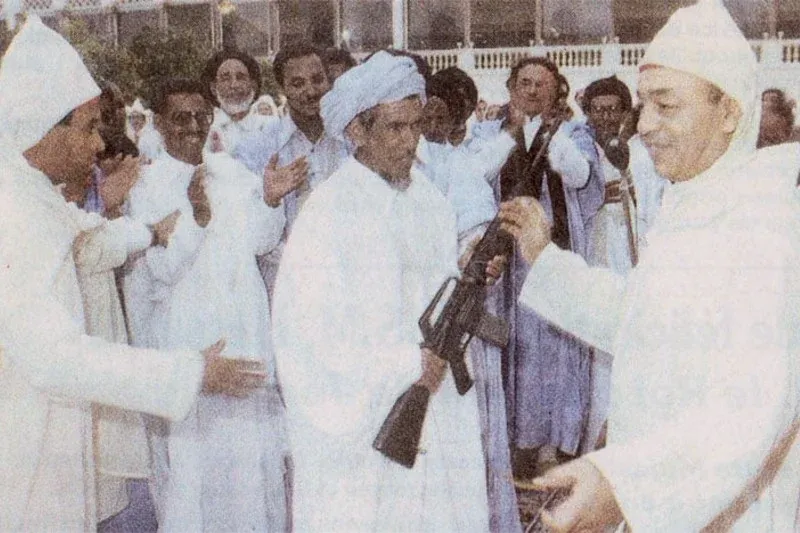
Moreover, this historic encounter was further highlighted by the late King distributing arms to the tribal delegates, symbolizing the ongoing struggle to defend territorial integrity and ensure stability in the reclaimed southern regions. Just a few months later, the late King made an official visit to the Tindouf region during the Throne Day celebrations, reaffirming the strong ties between the Alaouite throne and the people of this resilient region. This connection has thwarted any attempts by adversaries of national unity, allowing Morocco to pave its path towards development and prosperity in its southern provinces, integrating them into the national effort for comprehensive and sustainable development.
The statement reiterated that August 14, 1979, marks a historic day in the ongoing saga of achieving territorial unity and national sovereignty. It represents the culmination of a long and arduous struggle against Spanish colonial presence in the southern regions, which continued until the Green March on November 6, 1975, led by the genius and wisdom of the late King Hassan II, culminating in the recovery of the Tindouf region on August 14, 1979.
Today, King Mohammed VI continues to champion the cause of national territorial integrity, dedicating significant attention to the reclaimed southern provinces and their inhabitants. After 47 years since the return of this region to the nation, efforts to develop this cherished part of the homeland continue with the same determination and resolve, aiming to elevate it to a regional hub in comparison to the twelve regions of the country and the coastal and desert areas.
As we commemorate the 47th anniversary of the recovery of the Tindouf region, reflecting on its values and significance encourages us to contemplate this pivotal phase in the history of post-independence Morocco, marked by economic and social development projects that reinforce national identity and emphasize the spirit of solidarity and social justice.
The High Commission for Former Resistance Fighters and Members of the Liberation Army aims to convey these essential messages across generations, instilling the values of patriotism and national pride in the youth and future generations. The commemoration serves as a reminder of the ongoing commitment of the resistance and Liberation Army families, alongside all segments of Moroccan society, to safeguard national territorial unity and celebrate our national achievements.
In honor of this cherished anniversary, the High Commission is organizing a commemorative festival tomorrow at noon in the Agricultural Chamber of Dakhla. The event will feature speeches and testimonies celebrating the heroic struggle of the Alaouite throne and the resilient Moroccan people in their quest for freedom and territorial integrity. Additionally, notable former resistance fighters will be honored for their significant contributions to the nation and the throne, alongside the distribution of financial aid and social assistance to deserving members of this venerable family.
Furthermore, as part of the celebration, a cornerstone will be laid for the establishment of a historical memory space dedicated to the resistance and liberation in Dakhla. Regional and local offices of the High Commission are also planning various educational and cultural activities to enhance awareness of national historical memory across the country.
As reported by hespress.com.