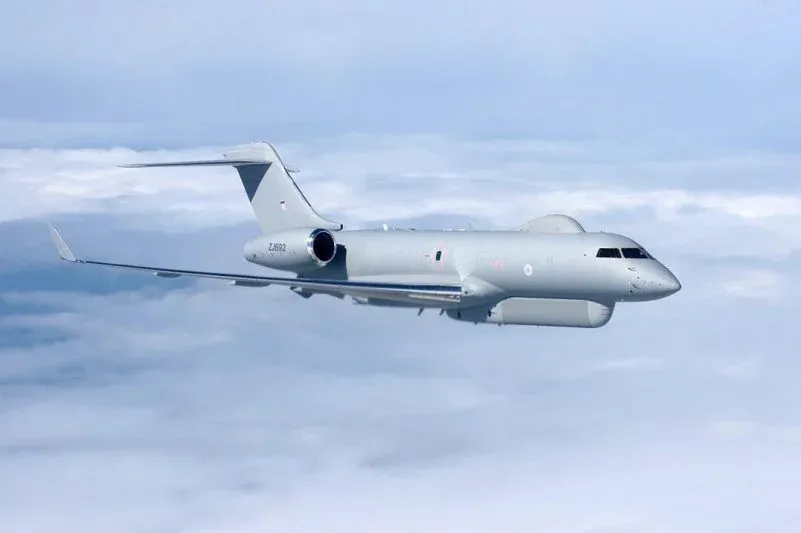

Morocco is currently assessing the potential acquisition of the U.S. Army's High Accuracy Detection and Exploitation System (HADES), a strategic move that reflects a significant reevaluation of the nation’s airborne intelligence, surveillance, and reconnaissance (ISR) strategy. According to the defense publication Defensa, this initiative aims to enhance the Royal Armed Forces' capabilities in deep, long-range sensing across critical regions such as the Sahara, the Sahel, the Atlantic coast, and northern maritime corridors, thereby bolstering national security and operational readiness.
The report indicates that Rabat's interest in the HADES system stems from an ongoing effort to address a persistent capability gap in high-altitude, long-endurance aerial intelligence collection. This is particularly pertinent in the fields of signals intelligence, electronic surveillance, and wide-area monitoring, where Morocco has historically faced limitations. Previously, the Moroccan military considered the acquisition of Gulfstream G550 aircraft to be retrofitted for intelligence purposes; however, that initiative did not come to fruition, leaving the air force dependent on older and less capable assets, such as the Dassault Falcon 20.
At present, the U.S. Defense Security Cooperation Agency has not listed any HADES-related sales for Morocco, indicating that while interest exists, formal negotiations have yet to commence. HADES represents a pivotal component of a modern aerial ISR architecture, designed to surpass legacy platforms in terms of speed, altitude, range, endurance, and payload capacity. The U.S. Army emphasizes that this system will enable "deep sensing" capabilities in contested environments, which is crucial for effective military operations.
Moreover, the Army has announced that the first platform based on the Global 6500 has been procured, with the integrated system anticipated to be operational by early 2027. Engaging with the HADES program could provide Morocco with access to a U.S.-led technological ecosystem, ensuring future upgrades and facilitating interoperability with American military systems. This interoperability is vital for Morocco, which has actively strengthened its defense relationships with the United States over recent years.
Nonetheless, pursuing the acquisition of HADES will likely be a protracted process, necessitating political approvals, technical discussions, and adherence to the U.S. foreign military sales framework. If successfully navigated, this purchase would represent a significant advancement in Morocco’s strategic capability for airborne intelligence gathering.
As reported by en.hespress.com.