
Morocco's Display of Force at the Ceuta Border
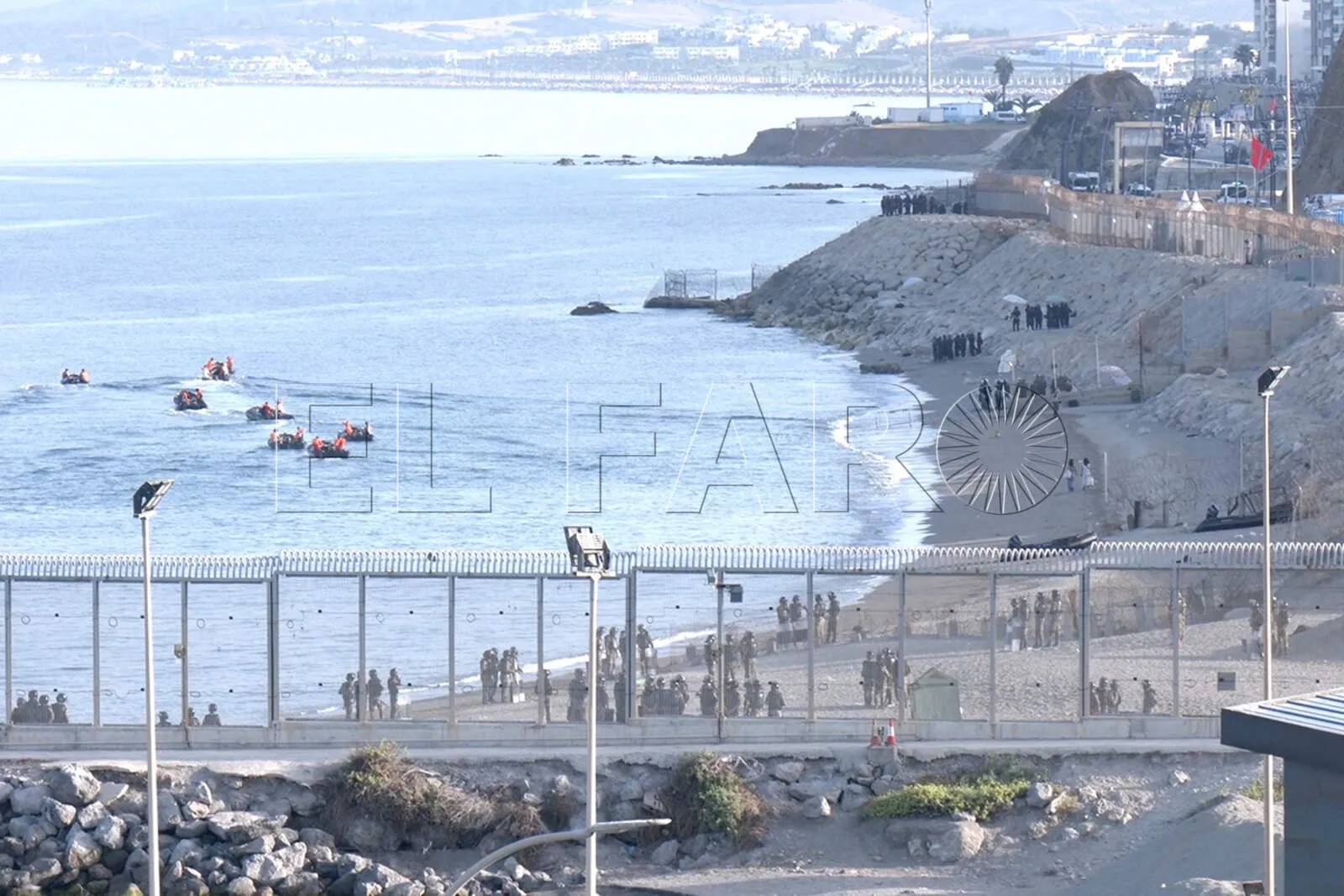
This Tuesday, Morocco showcased a significant display of military strength at the border with Ceuta. For nearly half an hour, the Moroccan border crossing was closed as part of a simulated operation involving agents from various units on land and at sea. This demonstration starkly contrasts the events of July 30th and 31st, which witnessed chaotic surges leading to fatalities and one of the most severe crises faced by Ceuta in recent times.
The sandy beaches adjacent to the breakwater, which previously saw thousands of individuals crossing with ease, now hosted a considerable presence of security forces, effectively reinforcing Morocco's position. On the water, multiple vessels and jet skis were deployed both near Tarajal and further out to sea, while on land various units were seen securing the area surrounding the passage into Ceuta.
During this brief period, the border crossing was entirely shut to individuals returning to Ceuta, forcing locals to reroute through nearby roundabouts. This show of force comes just days ahead of an official announcement regarding a planned mass crossing, and it coincides with intelligence reports suggesting potential movements of groups towards the border. In addition to the announcement for the 15th, intelligence services warn of further mobilizations.
The most significant border incident occurred at the end of July, resulting in over 70,000 individuals entering Spain, with many returning to their homeland but leaving thousands still in Ceuta, creating a substantial security issue. Morocco's previous inaction during these entries now contrasts sharply with its current capacity to secure the border, which some see as a strategic marketing campaign designed to counteract the widely publicized discussions about upcoming mass crossings.
In addition to the mobilization of various forces, a metal barrier resembling those previously installed in Beliones has been erected in the Bab Sebta area to deter rushes towards Benzú. This military presence extends beyond Ceuta; neighboring Nador province also reports a strong deployment of security forces, including police checkpoints at key access points to the city.
Critics have labeled this show of military might as a mere charade, suggesting that the Moroccan government seeks to justify their actions regarding immigration while presenting themselves as a reliable partner to Spain and Europe. Many in Ceuta and across Spain remain skeptical, viewing such displays as insufficient and questioning the credibility of their intent.
In summary, while Morocco may attempt to project an image of control and cooperation, the underlying tensions regarding immigration and border security remain pressing concerns for Spain. The call for stronger border defenses and legislative measures to manage immigration effectively continues to resonate among those affected by the ongoing crisis.
As reported by elfarodeceuta.es.