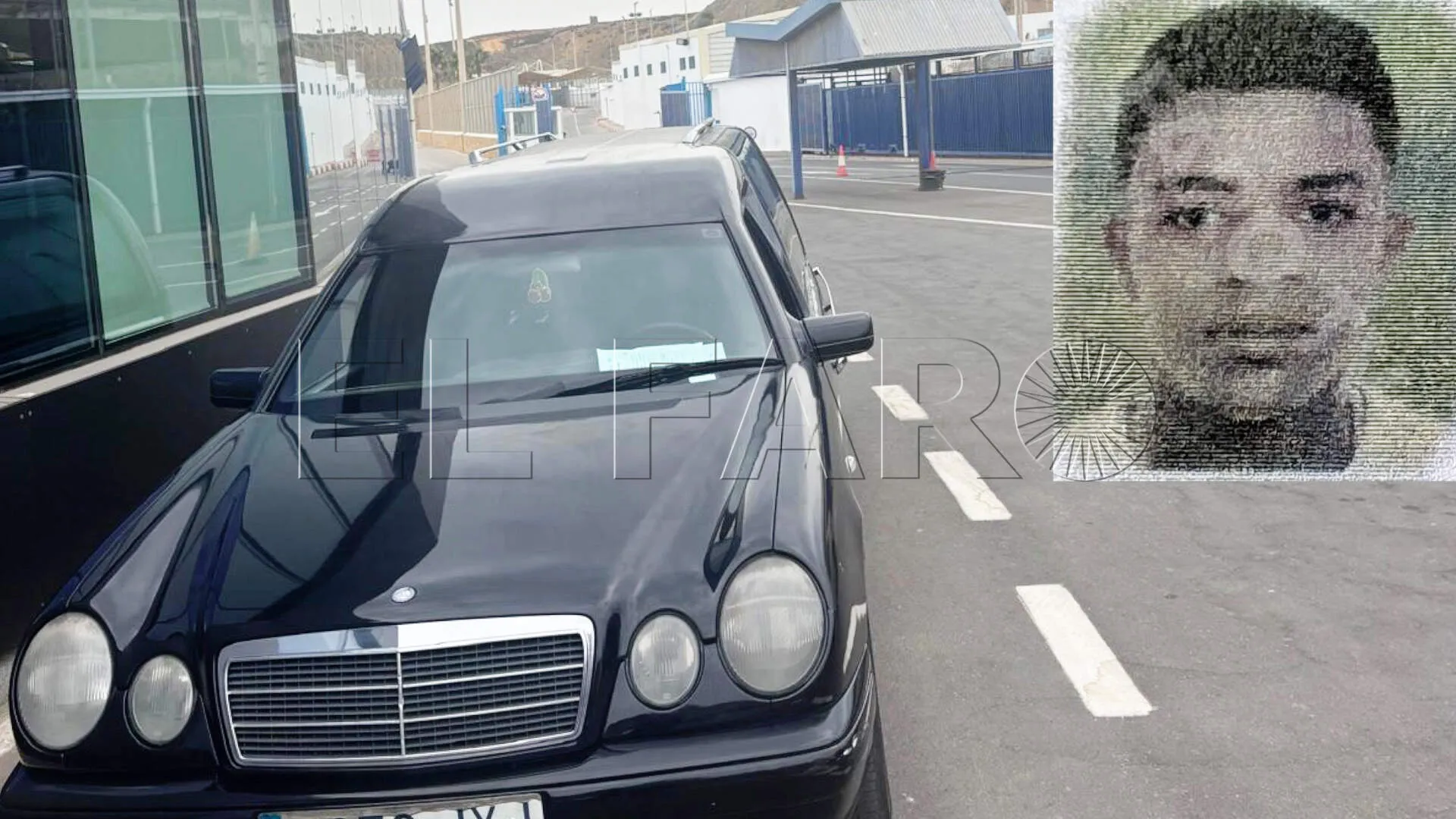

In a deeply distressing turn of events, Morocco has rejected the repatriation of the remains of a young man who tragically lost his life during the tumultuous events at the Tarajal pier in Ceuta. This incident unfolded on a Wednesday, mere days after the heartbreaking tragedy that unfolded at the end of July, where many migrants faced perilous conditions in their quest for a better life. The deceased, identified as Mohamed Said Arif, was among six individuals whose bodies had been identified by the Civil Guard, and his repatriation had been initially accepted by Moroccan authorities. However, upon the arrival of the funeral vehicle at the border, all necessary documentation was in order, yet entry was inexplicably denied, leaving the funeral team stranded at the border.
The funeral vehicle, which had crossed the border shortly after 1:30 PM, was met with resistance from Moroccan officials, despite the fact that ambulances were on standby in Morocco to receive the coffin and transport it to the family’s intended burial site in Rincón. This shocking refusal forced the vehicle to turn back to Ceuta, carrying the body of young Mohamed Said Arif, a 21-year-old whose life was cut tragically short. The situation has drawn widespread condemnation, as it represents what many are calling the most disgraceful gesture imaginable in the face of human tragedy.
The Circumstances Surrounding Mohamed Said's Death
The narrative of Mohamed Said is one marked by hardship and loss. His mother, residing in Spain, had been in the process of reuniting with her son, but the completion of their immigration procedures came too late. In a desperate attempt to seek a better future, Mohamed embarked on the perilous journey to the Tarajal pier, where chaos erupted on July 30 and 31, drawing thousands of Moroccans, the majority of whom were young people. Tragically, many drowned, while others were crushed amid the crowd. Mohamed's fate was sealed when he suffered a cardiac arrest shortly after being transported to the university hospital where he was declared nearly lifeless upon arrival. His untimely death has been linked to the tumultuous events at the pier, although it occurred days later.
The Civil Guard undertook the critical task of identifying Mohamed Said, employing forensic methods to verify his identity through fingerprints and DNA samples, particularly from those who had previously resided in Spain. Despite the successful identification and the approval for repatriation, the Moroccan authorities’ sudden change of heart remains a mystery that has left many confused and outraged. Families of other deceased migrants are similarly left in despair, hoping to bring their loved ones home for burial yet facing a similar fate as Mohamed Said.
As reported by elfarodeceuta.es.