
Moroccan Authorities Intercept Migrants Attempting to Reach Ceuta
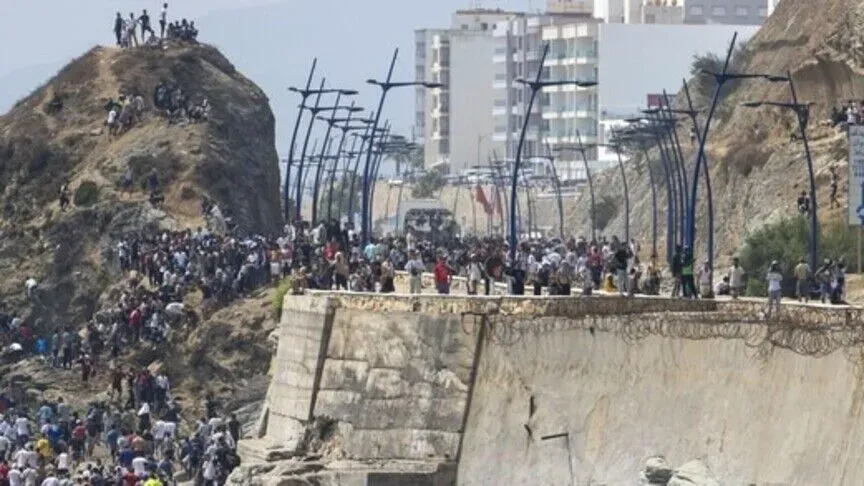
In a significant development concerning migration control, Moroccan authorities announced the detention of 111 undocumented migrants in the vicinity of Fnideq on Saturday. This action was taken in response to a collective attempt by these individuals to cross into Ceuta, a Spanish enclave situated on the northern coast of Africa. Among those apprehended, 109 were reported to be from various African nations, while two were Moroccan nationals, as detailed in an official statement from the Fnideq provincial authority.
The swift response of security forces, characterized by a heavy presence in the area, played a crucial role in thwarting this mass crossing attempt, thereby maintaining the order and security around the borders of Ceuta and Melilla. Officials emphasized that the current security situation remains stable and manageable. In light of recent patterns of migration, the authorities have committed to enhancing their surveillance efforts, particularly targeting digital incitements for mass migration.
In parallel with ongoing field operations aimed at preventing illegal crossings, the Moroccan government has mobilized both human resources and logistical support. This includes the deployment of drones for remote monitoring and specialized vehicles to deter direct confrontations with migrants. Earlier on the same Saturday, Moroccan officials successfully thwarted a large-scale migration attempt involving hundreds of undocumented migrants, predominantly from African countries, who were trying to move from Fnideq to Ceuta.
The urgency of this situation is underscored by recent intelligence indicating anonymous calls on social media platforms encouraging unlawful mass crossings to Ceuta and Melilla on August 15. In a statement released on Wednesday, Rashid Khalfi, a spokesperson for the Moroccan Interior Ministry, highlighted the concerning nature of these messages, which pose serious risks to individual safety and exploit migration issues for provocative ends. The ministry is actively monitoring these developments and has pledged to take necessary measures to counter any illegal crossing attempts and apprehend those involved in organizing such efforts.
This incident is part of a broader trend, as the borders with Ceuta experienced an influx of tens of thousands of Moroccans during a high-volume crossing attempt between July 29 and July 31. Following this spike, the National Council for Human Rights in Morocco reported that the number of fatalities related to this crossing surge had risen to 14, with Spanish data estimating around 80 deaths. While Moroccan authorities estimated that approximately 40,000 individuals attempted the crossing, Spanish officials suggested the number exceeded 70,000. The cities of Ceuta and Melilla, along with the Chafarinas Islands and other rocky territories in the Mediterranean, fall under Spanish administration, yet are regarded by Morocco as occupied Moroccan territories. Consequently, migrants from various countries continue to attempt perilous crossings through Morocco in search of better life opportunities amid economic crises and armed conflicts in their home nations.
As reported by aa.com.tr.