
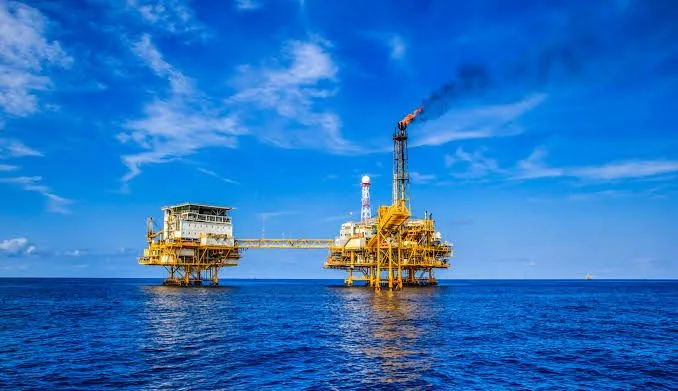

Morocco has entered a new phase in its quest for oil and gas within its deep Atlantic waters, having awarded ten exploration licenses that cover the "West Deep Offshore" area. This initiative is part of a partnership between the National Office of Hydrocarbons and Mines (ONHYM) and Murphy Morocco Oil, a subsidiary of the American company Murphy Oil. The partnership grants both entities the right to conduct the necessary studies and exploratory work to ascertain whether the region contains economically viable hydrocarbon deposits.
The licenses were published in the official gazette, numbered 7521, under decisions numbered from 997.26 to 1006.26, and they are valid for an initial period of three years starting from April 3, 2026. The ten areas encompass approximately 16,990 square kilometers of deep waters off the Atlantic coastline, extending west of the regions of Gharb, Kenitra, and Larache.
Murphy Oil holds a 75 percent operational stake in the project, while ONHYM retains the remaining 25 percent. The American company has officially confirmed that the agreement does not entail a firm commitment to drill a well during the initial three-year phase. Instead, initial efforts will focus on reprocessing and analyzing existing seismic data, as well as evaluating geological formations beneath the seabed, before making a decision on whether to proceed with exploratory drilling.
This clarification is particularly significant, as the granting of exploration licenses is sometimes mistakenly perceived as an announcement of oil discovery. In reality, the marine exploration process is lengthy and involves several stages, beginning with seismic surveys and geological studies, followed by exploratory drilling, and culminating in the evaluation of resource volumes, extraction costs, and marketability. These processes may ultimately lead to commercial discoveries or reveal limited or economically unviable quantities.
Morocco has a lengthy history of searching for hydrocarbons but has yet to achieve widespread production to meet its national needs. The ONHYM indicates that domestic production is primarily concentrated in the regions of Gharb and Essaouira, where small natural gas fields exist. The gas from the Gharb basin is characterized by a high methane content, with a portion directed to nearby industrial units, while resources from the Essaouira basin are utilized to power local facilities.
In recent years, several gas discoveries have been announced, notably the offshore "Anchois" field within the "Lixus" license. The company Chariot confirmed significant gas accumulations and high-quality dry gas after drilling the "Anchois-2" well in 2022; however, the project has not yet entered the commercial production phase and the company is currently recalibrating its development plan based on the established resource volumes.
In eastern Morocco, the Tendrara field stands out as one of the most prominent onshore projects. The recoverable resources at the "TE-5 Horst" discovery are estimated at approximately 377 billion cubic feet of gas, according to the operating company’s estimates, with plans for small-scale liquefied natural gas production to supply the local industrial market, eventually expanding to a larger phase linked to the Maghreb-Europe gas pipeline and electricity generation stations.
Moreover, Chariot recorded a gas discovery in 2024 at the "OBA-1" well in the Lukus region, having detected gas reservoirs within a total thickness of about 70 meters in the main area of interest. However, like other discoveries, this one requires further testing and evaluations before determining its commercial viability.
The new licenses come at a time when Morocco remains heavily reliant on imports to meet its oil, gas, and coal needs. Data from the Ministry of Energy Transition indicates that the dependency ratio has decreased from 97.5 percent in 2009 to approximately 90.5 percent; however, it remains high despite the expansion of solar, wind, and hydropower projects.
The demand for gas within the kingdom is on the rise as it serves as a transitional fuel that is less polluting than coal and fuel oil, essential for powering industries and electricity generation while supporting grid flexibility that increasingly relies on variable renewable sources. Morocco anticipates an average annual electricity demand increase of about 7 percent through 2030, making any local commercial gas discovery a crucial factor in reducing import costs and enhancing energy security.
Thus, the "West Deep Offshore" licenses represent a new exploratory endeavor rather than a declaration of guaranteed wealth, with their true significance resting on the results of data analysis and subsequent decisions regarding exploratory drilling, as well as the potential discovery's ability to meet technical, economic, and environmental feasibility standards.
As reported by assahifa.com.

