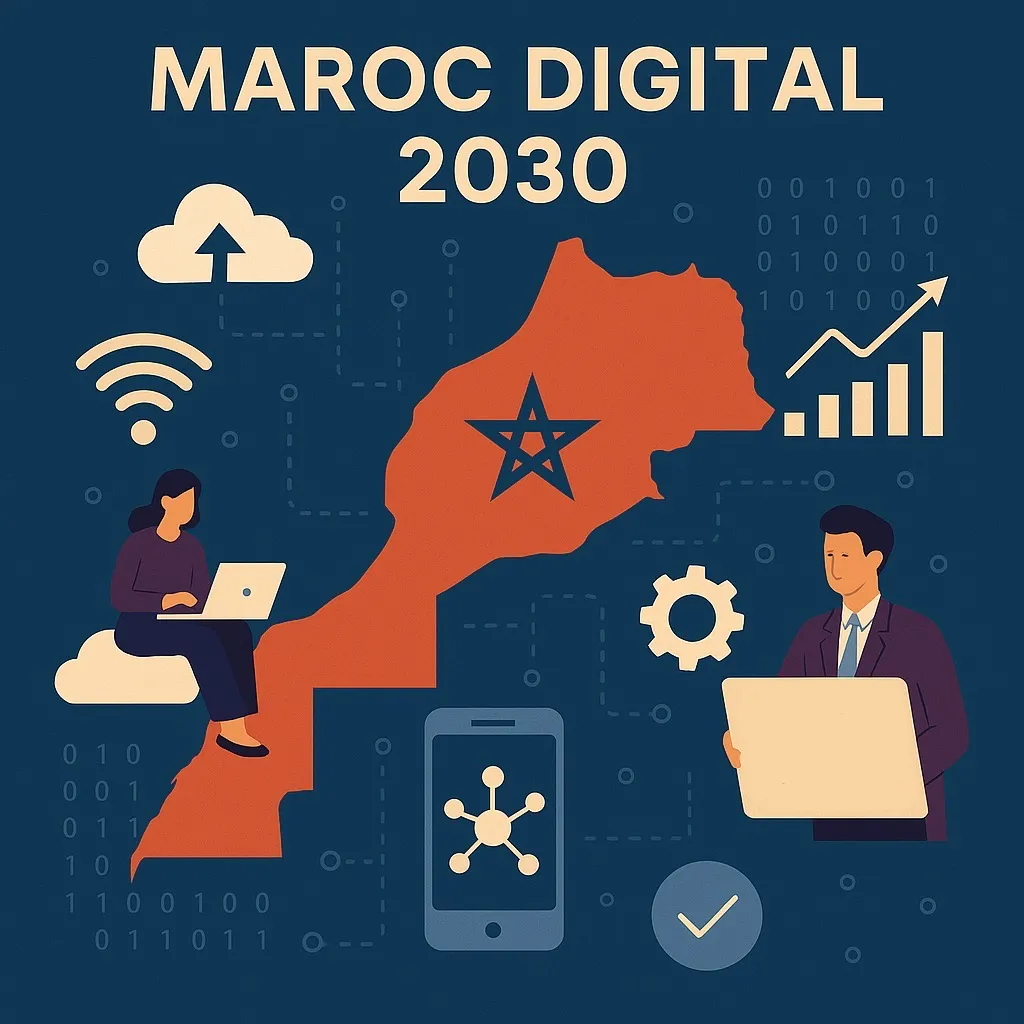

Morocco's Strategic Shift Towards Digital Innovation
Over the past twenty years, Morocco has successfully established its economic foundation through significant investments in physical infrastructure, including expansive highways, ports, and industrial platforms. Now, the nation is undergoing a transformative pivot towards a growth model that emphasizes data, artificial intelligence (AI), cloud computing, and the enhancement of human capital. This strategic shift is encapsulated in the Digital Morocco 2030 roadmap, which positions digital technology not merely as a standalone sector but as an essential driver that integrates into public administration, the productive economy, and the labor market. Notably, public investment in digital transformation has surged from a modest 11 million dirhams in 2021 to a remarkable 1.7 billion dirhams as of 2024, reflecting the government's commitment to fostering a digitally empowered economy.
Investing in Infrastructure and Human Capital
During the presentation of this roadmap in Agadir, Moroccan officials articulated the transition as a vital mechanism for stimulating economic growth and generating high-value employment opportunities for the youth. The focus is now shifting towards the operational execution of digitizing administrative services, bolstering business support, and structuring a robust startup ecosystem. These initiatives are anticipated to yield measurable productivity improvements and reduced transaction costs across various sectors. Furthermore, the establishment of an Oracle Cloud region in Casablanca, set to launch in 2026, will provide local access to advanced computing capabilities while ensuring that data storage remains within national borders, thereby reinforcing Morocco's digital sovereignty. In addition to this, new research centers in Casablanca and Agadir aim to bridge high-level engineering education with university training, fostering a skilled workforce ready to navigate the complexities of modern digital challenges.
Central to this new phase is the AI Made in Morocco 2030 strategy, which strives to develop sovereign AI solutions tailored to the nation’s specific needs. As articulated by the Minister of Digital Transition, Amal El Fallah Seghrouchni, the adoption of existing technologies must be complemented by the cultivation of local skills, the creation of relevant datasets, and the establishment of effective governance frameworks. Morocco aims to harness AI applications across critical sectors such as health, education, agriculture, and public services, while also creating models capable of processing the Arabic, Darija, and Amazigh languages, thus ensuring inclusivity and accessibility in the digital landscape.
As reported by northafricapost.com.