
Morocco is rapidly establishing itself as a significant economic hub and a bridge to Europe. With substantial investments in renewable energy and the related infrastructure, the country aims to gradually become a major exporter of green hydrogen by 2030—a clean energy source that is increasingly sought after by industries in Upper Austria. The ambitious goals set by Morocco for promoting renewable energies, particularly through the production and export of green hydrogen, highlight its strategic significance in the global energy landscape.
Geographically, Morocco is ideally positioned near Europe, with just a 14-kilometer separation across the sea between the two regions. Coupled with abundant solar and wind resources, this North African nation is poised to be a prime location for producing green energy carriers necessary for generating affordable "clean" hydrogen. Recently, approximately one million hectares of land have been designated for this purpose, showcasing Morocco's commitment to transitioning toward renewable energy.
Hydrogen's Pivotal Role in Energy Transition
Markus Achleitner, the Economic Regional Councilor, emphasizes that hydrogen will play a crucial role in meeting Europe’s energy demands. Given that Europe can only satisfy about half of its energy needs even at full capacity, partnerships are essential to ensure a reliable energy supply. Achleitner notes that Upper Austria, as the most energy-intensive province in Austria, views hydrogen as a key component of its industrial strategy. This perspective was shared during a recent delegation trip aimed at learning from Morocco's advancements in renewable energy.
Günther Steinkellner, the Infrastructure Regional Councilor, adds that the supporting infrastructure for storage and transport is equally important for the energy transition. Morocco exemplifies how the expansion of energy, mobility, and industry can work in concert, providing valuable insights for Upper Austria’s own development efforts. The country aims to increase the proportion of renewable energy in its electricity production to 50% by 2027, up from the current 37%, through initiatives like the "Offre Maroc Hydrogène Vert," which incentivizes investments and fosters the development of a competitive hydrogen ecosystem.
International Collaboration and Future Prospects
Mourad Hajjaji, General Manager of the Green H2 Cluster in Morocco, asserts that a realistic price of around five dollars per kilogram for green hydrogen is achievable. Simulations of production costs reveal that it is both viable and economically attractive to produce hydrogen in Morocco while covering all export and transport expenses to supply existing industries in Europe. The cluster plays a vital role in coordinating efforts among businesses, research institutions, and policymakers, enabling Morocco to position itself as a central hydrogen hub that not only meets Europe’s energy needs but also strengthens its domestic economy.
While the logistics of transporting hydrogen from Morocco to Europe remain uncertain, there are considerations for adapting existing natural gas pipelines for hydrogen transport across the Strait of Gibraltar. Hajjaji indicates that short-term solutions are being explored through ports and shipping, with pipeline planning also progressing. The potential to retrofit natural gas infrastructure for hydrogen transport is promising, particularly as Morocco is seen as a politically stable nation making significant investments in renewable technologies.
Furthermore, diverse sectors are optimistic about business opportunities in North Africa, where Morocco offers incentives such as tax breaks and low labor costs. The automotive industry stands out as Morocco's leading export sector, presenting significant potential for Upper Austrian companies in machinery, automotive supply, rail, transport technology, and energy and environmental engineering. Achleitner believes that Morocco's strategic positioning between Europe and Africa, its investment in future technologies, and its continuous infrastructure development make it an attractive prospect for Upper Austria’s businesses.
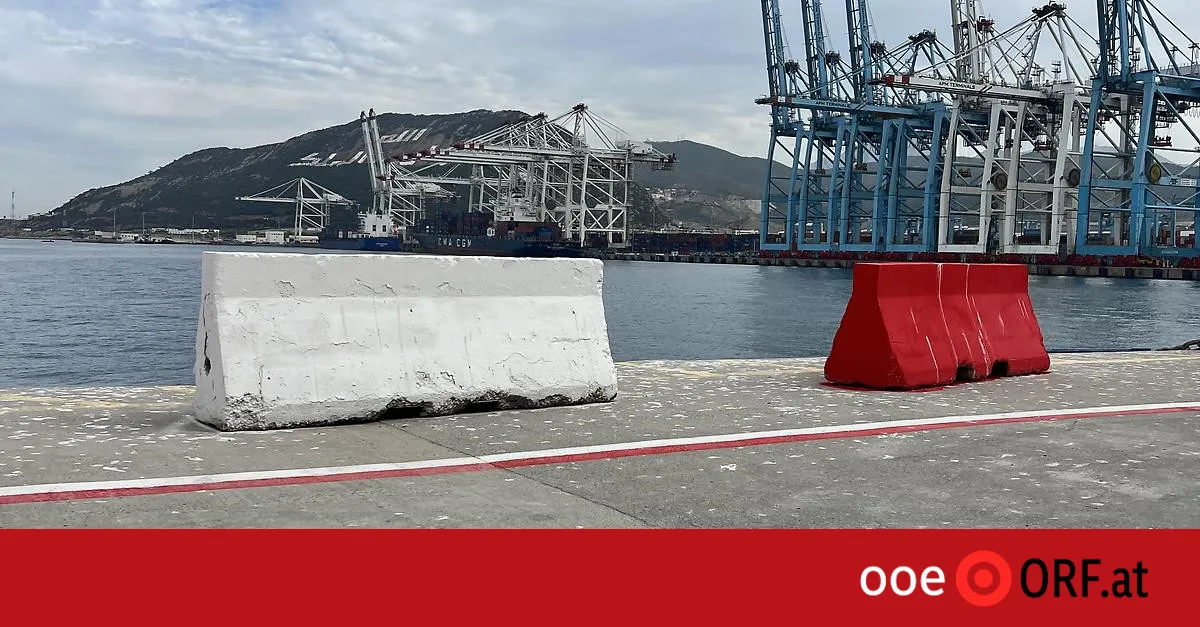
The Tanger Port complex in northern Morocco serves as a crucial logistics hub, covering approximately 1,000 hectares and featuring specialized areas, including a terminal for hydrocarbons. With the capacity to handle millions of vehicles annually, the port exemplifies modern logistics and the interconnectedness of global trade. Steinkellner emphasizes that understanding future trade flows requires an eye on Tanger, which showcases how contemporary logistics operates and connects worldwide.
As reported by ooe.orf.at.