
Morocco's Growing Role in the Global Ammonia Market
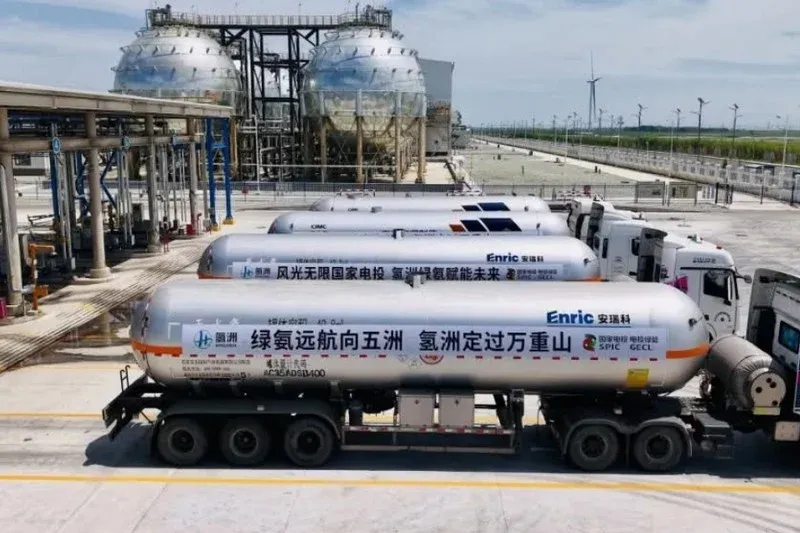
In a significant development, Morocco has established itself as a key destination for Chinese ammonia, importing a staggering 51,050 tons in May 2026 alone. This figure represents over 27% of China's total ammonia exports during the same month, which amounted to 185,000 tons, especially following the escalation of tensions from the U.S.-Iran conflict that began in February of this year. According to data from the General Administration of Customs of China (GACC), Morocco has emerged as the primary recipient of Chinese ammonia.
Official statistics reveal that the Chinese ammonia that reached Moroccan ports in May was driven by short-term demand, while the relationship between the two nations is evolving towards a deeper partnership in renewable energy and green industries. Notably, Chinese ammonia exports in May reached an all-time monthly high, soaring by 163.36% compared to April. Following Morocco, Australia ranked second with 34,344 tons, followed by South Africa with 24,997 tons and India with 24,683 tons.
Strategic Implications for Morocco's Fertilizer Industry
This remarkable shift reflects Morocco's urgent need for ammonia, as the OCP Group requires nearly two million tons of imported ammonia annually to produce fertilizers such as DAP and MAP. Despite possessing around 70% of the world's known phosphate reserves, Morocco lacks the natural gas necessary for traditional ammonia production. In 2024, Morocco's imports of anhydrous ammonia amounted to approximately $1.59 billion, making it the largest single importer of this commodity globally, accounting for about 18.6% of world imports. Key suppliers during this period included Trinidad and Tobago, Saudi Arabia, and the United States.
However, maritime disruptions in the Strait of Hormuz, the Red Sea, and the Gulf of Aden due to military tensions and security conditions in the Middle East have delayed shipments of ammonia and Gulf fertilizers. Conversely, China is experiencing a different scenario; its imports of elemental sulfur fell by 58% in the first half of 2026, with prices soaring to around $1,000 per ton, complicating the conversion of ammonia to ammonium sulfate.
As China tightens its fertilizer export policies, a surplus of raw ammonia has led Chinese companies to seek out foreign markets, with Morocco standing out as a prime option. This influx of supplies has enabled the OCP Group to maintain production at industrial sites such as Jorf Lasfar. It is anticipated that this increase is a response to a temporary surplus rather than a permanent surge, especially since Chinese customs issued announcement number 97 on July 9 of this year, which mandates legal inspections on ammonium sulfate exports starting in mid-July.
Looking towards the future, Morocco aims to produce its ammonia needs domestically, particularly with the OCP Group announcing a green investment program valued at $13 billion for the period from 2023 to 2027, targeting the production of one million tons of green ammonia annually by 2027 and three million tons by 2032. Additionally, the European Carbon Border Adjustment Mechanism, which entered its final phase in 2026, is expected to raise the cost of traditional ammonia in the European market, thereby narrowing the price gap with green alternatives.
Chinese companies are advancing in this direction as well; Energy China (CEEC) has signed a memorandum of understanding with a Saudi partner and Moroccan firm Gaia Energy to establish a unit in southern Morocco with a capacity of 1.4 million tons of green ammonia annually. Furthermore, Guofuhee has announced a $30 million investment in a gigawatt capacity electrolyzer plant, which is expected to commence construction in 2027.
As reported by hespress.com.