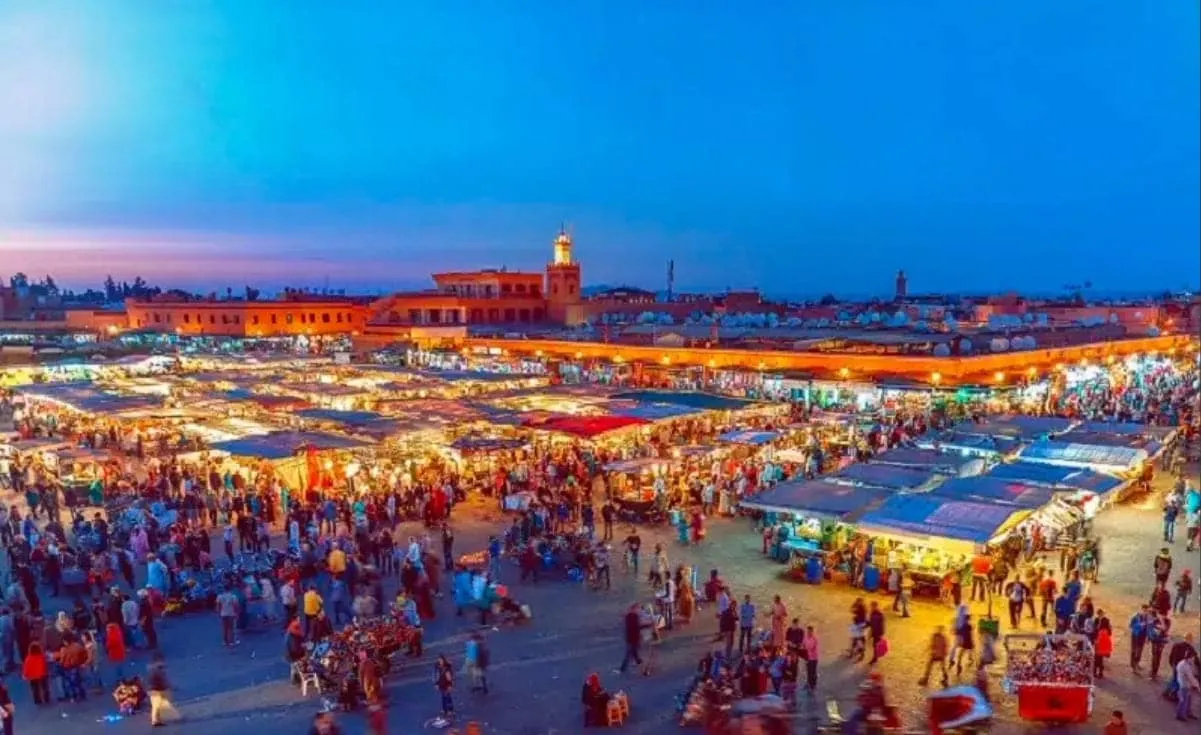

Why Morocco is Becoming the Preferred Destination for French Travelers
The ongoing conflict in the Middle East, which intensified at the end of February 2026, has significantly disrupted global tourism dynamics. With flight disruptions, a decline in Gulf destinations, and a retreat of European travelers, Morocco stands out as one of the primary beneficiaries of this shifting landscape. According to Philippe Gauguier, a Senior Advisor at In Extenso, a consultancy specializing in the French market, the nation is now perceived as a strategic refuge for French tourists seeking stability.
Since the onset of the conflict, the international flight network has faced substantial strain. The Middle East, a crucial hub facilitating travel between Europe, Asia, and Africa, has experienced severe disruptions, leading to the cancellation of 32,000 flights and a staggering 40% reduction in traffic for Gulf carriers. The soaring price of jet fuel has further exacerbated the situation, with ticket prices doubling in Northern and Western Europe, resulting in additional costs of 50 euros in economy class and up to 200 euros in business class on long-haul flights. Consequently, destinations that relied heavily on these hubs have become less accessible. The Gulf airports in Dubai and Doha, in particular, have been hit hard, incurring estimated tourism losses of over 500 million euros per day.
In light of these developments, nearly four out of ten French citizens are reconsidering their travel plans, with hundreds of thousands already opting to cancel trips abroad. Travel agencies report a surge in cancellations for trips to areas deemed risky or difficult to access. Philippe Gauguier emphasizes that Morocco is reaping the benefits of this situation, as the partial closure of certain destinations and the complexities of travel to Asia naturally redirect tourist flows toward closer, more accessible markets. Morocco is emerging as a natural outlet—both accessible and reassuring—offering direct flights from Europe without dependence on Gulf hubs and an extensive flight network to cities like Marrakech, Fès, and Dakhla.
The country boasts a diverse range of accommodations, from traditional riads to luxurious hotels, catering to various budgets. Furthermore, Morocco's cultural and gastronomic proximity to France enhances its appeal. While other regions in Southern Europe, such as Spain, Portugal, Italy, and Greece, are also capturing a portion of this demand, Morocco's unique offerings and the strong sense of adventure it provides at a short distance give it a competitive edge. Thus, it stands as a credible alternative to long-haul destinations.
A Promising Summer Ahead for Moroccan Tourism
Despite rising airfare, Gauguier notes that demand from French tourists for Morocco remains robust, with reservations continuing to flow in. He acknowledges that the Moroccan airline Royal Air Maroc's new pricing (300 euros for a one-way ticket between Paris and Casablanca) for the upcoming Eid celebrations may impact the diaspora. However, he believes that this increase will not significantly deter French tourist arrivals, as the overall value proposition of Morocco compensates for the higher transportation costs. The structural rise in airfares and ongoing geopolitical uncertainty are expected to persist, yet the summer of 2026 could signify a lasting shift in French tourism preferences towards nearby and stable destinations. In a global context where traveler confidence is fragile, Morocco is emerging as a safe bet. Should international uncertainties continue, it may even solidify its position as a favored destination.
As reported by medias24.com.