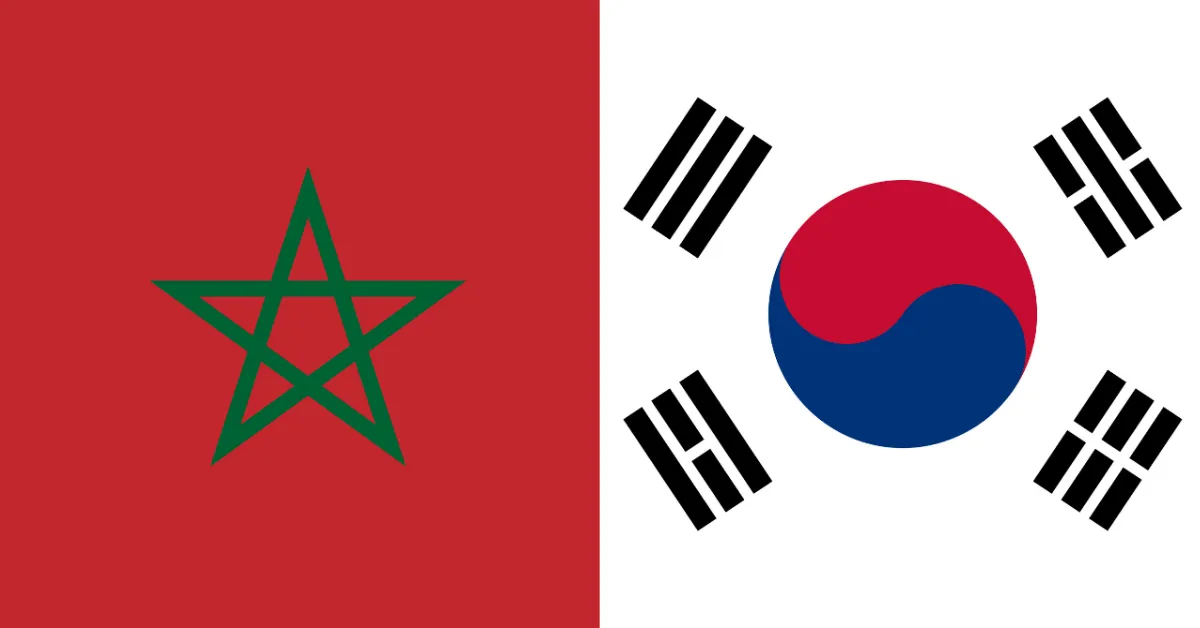

In 2026, Morocco is set to become one of the seven key partners selected by Seoul to initiate new trade negotiations, reflecting South Korea's strategic approach to diversify its trade relationships. This initiative is part of a broader effort to establish a comprehensive economic partnership agreement (CEPA), which emphasizes the significance of Morocco as a strategic ally within this framework. Alongside nations such as Egypt, Mexico, and Mercosur, Morocco will be at the forefront of discussions aimed at revitalizing and enhancing trade ties, which have yet to reach their full potential.
The dialogue between the two nations has gained momentum since last spring. On May 6, South Korea's Minister of Trade, Yeo Han-koo, expressed to Omar Hejira, the Secretary of State for Foreign Trade, a desire to expedite the establishment of a CEPA with Morocco. According to reports in South Korean economic press, "Korea aims to broaden its trade cooperation in Africa and support the geographical diversification of its businesses." This sentiment underscores the importance of Morocco in South Korea's broader trade strategy.
Industrial Depth Already in Sight
Moreover, Minister Yeo Han-koo's visit to Morocco on June 11 and 12 provided an opportunity to explore various projects spearheaded by South Korean companies operating within the Kingdom. Notably, Hyundai Rotem is preparing to construct a factory for electric trains, while LG Energy Solution is investing in a high-quality lithium refinery. These developments illustrate the industrial dimension of the partnership, confirming that Morocco is not merely an additional market but rather a vital production and export platform.
Choosing Morocco aligns with a strategic rationale that extends beyond mere bilateral exchanges. Its geographic position, coupled with a network of free trade agreements covering over 50 countries and integration into European markets, enhances its appeal to South Korean industrialists. In light of the ongoing reconfiguration of global supply chains, Seoul is keen to minimize its dependence on traditional markets while expanding its access points.
Ultimately, the prospective CEPA could evolve into more than just a tariff agreement; it promises to provide a framework for expanded cooperation in sectors such as industry, transportation, battery production, and technologies associated with energy transition. For Rabat, the stakes are twofold: to solidify a still-emerging commercial relationship and to accelerate the influx of new South Korean investments into strategic sectors.
As reported by h24info.ma.