

Significant Growth in Bilateral Trade
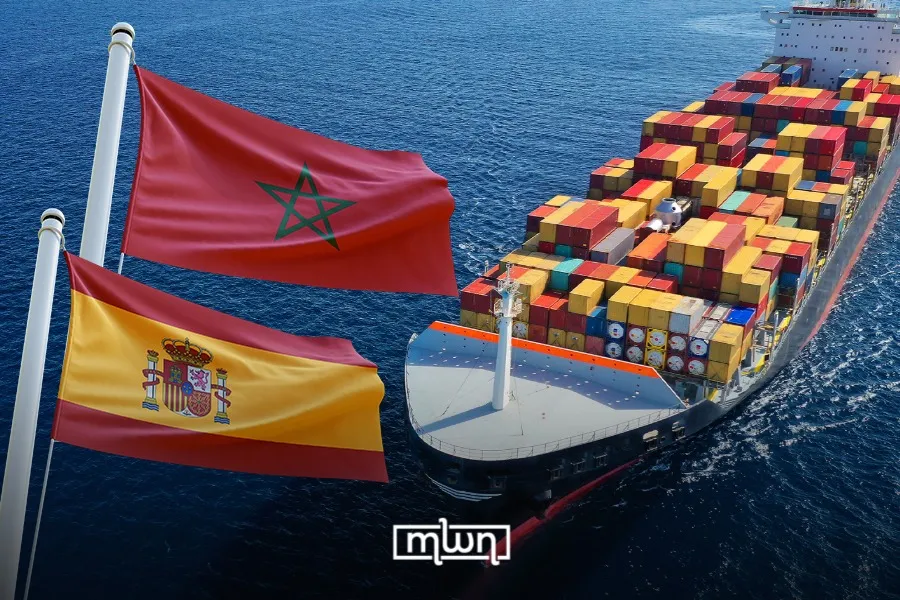
Recent data from the Spanish news agency EFE underscores Morocco's pivotal role as one of Spain's foremost trading partners, with bilateral trade projected to exceed €22.757 billion by 2025. This robust trading relationship is bolstered by the presence of major Spanish corporations across various sectors, particularly textiles, highlighting the multifaceted nature of the ties that bind these two nations. The relationship encompasses not only economic exchanges but also extends into critical areas such as logistics, migration, and security collaboration.
The report indicates that trade between Spain and Morocco has experienced significant growth over the past decade, although this expansion has moderated since 2018. Notably, Spanish exports to Morocco saw a decline of 4.1% last year, primarily due to reduced sales of fuel. Nevertheless, Spain retains its status as Morocco's primary trading partner, leading in both exports and imports. In the first half of 2026, Spanish exports to Morocco rose by 3.5%, reaching €6.4205 billion, which constitutes 3.2% of Spain's total exports. Concurrently, imports from Morocco increased by 4.1% to €5.7955 billion, making up 2.5% of Spain's total imports.
Strategic Importance and Industrial Growth
While the report acknowledges potential repercussions for Morocco stemming from strained diplomatic relations with Spain, it gives less emphasis to the strategic significance that Morocco holds for Spain and the broader European landscape. This analysis comes at a crucial juncture, particularly following recent mass crossings into Ceuta, which have reignited discussions regarding Morocco's role as an essential ally in security matters. The influx of migrants in late July prompted a reevaluation of Morocco's standing as a key partner, especially in light of the 2021 diplomatic crisis that saw Morocco exert significant influence in response to Spain's hosting of a controversial figure, Brahim Ghali, ultimately leading to a restoration of diplomatic ties.
Madrid's recognition of Morocco's Autonomy Plan as a credible solution to the Western Sahara dispute further underscores the importance placed on this bilateral relationship. The thawing of tensions was symbolized by Spanish Prime Minister Pedro Sanchez's visit to Rabat in 2022, where discussions with King Mohammed VI signified a new chapter in diplomatic relations. On the global stage, Morocco serves as a vital conduit between Europe and Africa, playing an indispensable role in managing migration, security, and regional stability.
Morocco's strategic maneuvering in tightening customs controls and limiting informal trade with Ceuta has also highlighted its economic leverage over the Spanish enclave, which has historically depended on cross-border trade. These new restrictions have impacted local businesses and port revenues, evidencing Ceuta's economic reliance on access to Moroccan markets. Moreover, Morocco’s Tanger Med port has emerged as a dominant logistics hub, facilitating increasing cargo volumes and enhancing its status as a crucial link in global supply chains, raising competitive concerns for Spanish ports in transshipment activities.
The EFE report also emphasizes Morocco's industrial ascent, particularly within the automotive sector, which has flourished largely due to its economic integration with Spain and Europe. While recognizing that the automotive sector is Morocco's largest export domain, the report suggests that much of this industrial success stems from collaboration with European markets, particularly through Spain. However, this perspective may overlook the proactive steps Morocco has taken to cultivate an independent industrial ecosystem capable of attracting major global manufacturers and integrating them into sophisticated supply chains.
Morocco has successfully positioned itself as a competitive manufacturing hub, leveraging its strategic geographic location, robust infrastructure, investment incentives, and industrial zones to attract both European and African markets. As a result, its automotive sector now boasts significant international manufacturers alongside a burgeoning network of local suppliers, solidifying Morocco's role as a manufacturing gateway connecting the two continents.
Thus, the relationship between Spain and Morocco transcends a simple investment dynamic; Morocco has cultivated an industrial ecosystem that adds considerable value to European companies. This ecosystem not only provides proximity to European markets but also facilitates access to African markets under favorable production conditions. As Morocco continues to establish itself as a desirable destination for European investment, it simultaneously emerges as a strategic production and logistics platform for businesses seeking to bridge connections between Europe and Africa. European manufacturers stand to benefit from Morocco’s impressive infrastructure and industrial capabilities while Morocco harnesses these partnerships to enhance its manufacturing prowess, attract further investment, and reinforce its stature within global supply chains.
As reported by moroccoworldnews.com.
