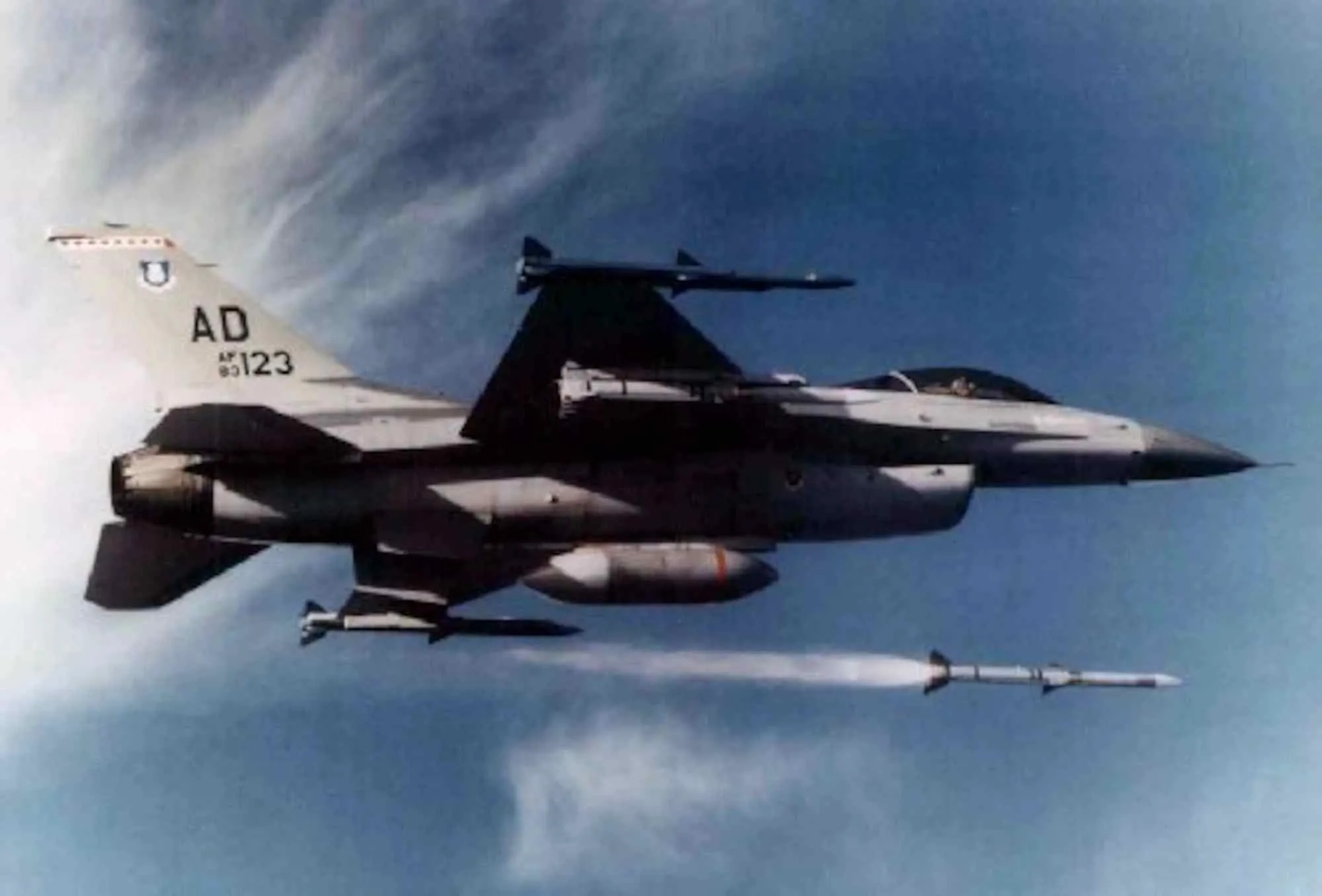

The name Morocco has prominently emerged in recent announcements from the U.S. Department of Defense regarding a new arms contract that involves the procurement of AIM-120 AMRAAM air-to-air missiles. This deal forms part of a broader agreement that encompasses 29 nations allied with the United States. The total value of this contract is approximately $105.6 million, representing a significant step in the ongoing development of the Royal Moroccan Air Force's capabilities and enhancing its air combat system.
This announcement follows a prior agreement in which Washington approved the sale of up to 30 AIM-120C-8 AMRAAM missiles to Morocco, alongside a guidance section, training equipment, and software, valued at around $88.37 million. These missiles are a critical component of modern aerial weaponry, designed to engage airborne targets at medium to long ranges, employing an active radar seeker that allows the aircraft to launch the missile at targets not directly visible to the pilot.
The introduction of these munitions cannot be separated from the trajectory of modernizing the Moroccan Air Force, especially with the acquisition of the advanced F-16 Block 72 fighter jets. U.S. documents link these missiles to equipping Morocco's new fleet of F-16s, detailing missions that encompass border protection, safeguarding territorial waters, and countering threats related to terrorism and smuggling.
The significance of the AMRAAM missiles for Morocco lies not only in augmenting its arsenal but as part of a comprehensive air combat system that integrates the fighter jet, radar, missile systems, communication networks, data transfer, training, and logistical support. Owning a modern fighter jet does not fulfill its combat potential without the appropriate armament that can leverage its capabilities in detection, tracking, and engagement.
The AIM-120C-8 missiles are distinguished by their ability to engage targets beyond visual range, with an estimated firing range of approximately 160 kilometers. This capability enables fighter aircraft to engage airborne targets before entering close combat scenarios, thereby shifting a significant portion of aerial combat beyond mere maneuvering between aircraft. Consequently, the quality of radar, communications, data, and missile systems becomes intertwined in determining the outcome of engagements.
Additionally, the AMRAAM missile employs active radar guidance in the final phase of engagement, which enhances the fighter's ability to address aerial threats from relatively long distances, benefiting from the aircraft's onboard sensors and information-sharing networks. This capability is particularly vital for Morocco's F-16 Block 72 fighters, the latest iteration of the F-16 family, as integrating modern air-to-air missiles significantly elevates the aircraft's effectiveness in air defense and interception missions.
U.S. sales details also indicate that the package associated with Morocco extends beyond just the missiles; it includes support equipment, testing, training, and software components linked to the weapon system. Such elements facilitate the operation of munitions within an integrated system rather than treating them as standalone weapons separate from other components of the air force.
Morocco’s inclusion in the U.S. contract alongside several allies and partners, including Canada, Germany, Japan, Turkey, and Poland, reflects the expanding user base of the AMRAAM system and its reliance among various air forces associated with American defense systems.
From an industrial perspective, the plans for producing the AMRAAM are also tied to RTX/Raytheon’s efforts to ramp up munitions production, targeting an annual output of at least 1,900 missiles, driven by the rising demand from the United States and its allies and partners.
For Morocco, enhancing its stockpile of AMRAAM missiles introduces a new dimension to the capabilities of its F-16s in interception and air deterrence missions, thereby empowering these aircraft to engage at ranges that exceed close combat limits. This aligns with a broader strategy to develop the Moroccan air force, ensuring that combat efficiency relies not merely on the number of aircraft but on the integration of fighters with radar systems, munitions, communication networks, reconnaissance, and command and control systems.
As reported by defense-arabic.com.