
In recent years, the Moroccan air defense landscape has undergone a remarkable transformation, evolving from limited capabilities prior to 2017 to a sophisticated multi-layered system comprising Chinese, Israeli, French, and American technologies. This enhancement spans a wide range of aerial threats and indicates that Morocco's air defense development is far from complete; rather, it is in a continuous phase of expansion, aiming to build a more integrated and capable network to counter various forms of threats.
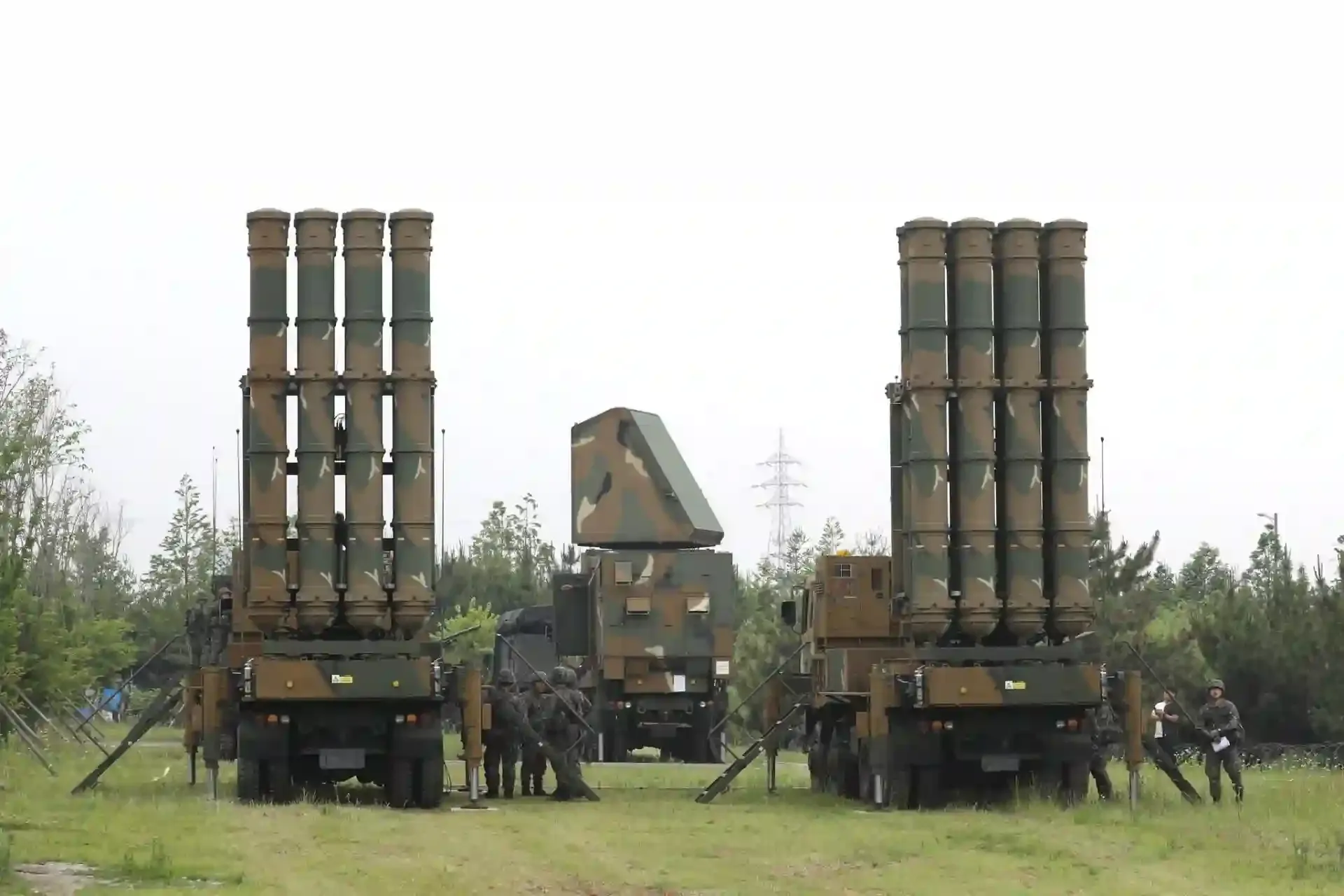
Recently, credible reports have emerged regarding Morocco's interest in acquiring the South Korean medium-range air defense system, KM-SAM, as part of a broader initiative to bolster military collaboration with South Korea. This interest coincides with potential negotiations for a significant arms package that may include not only the KM-SAM system but also South Korean KSS-III submarines, advanced training aircraft, light combat FA-50 jets, and K2 Black Panther tanks.
The initially announced Korean deal involves Morocco obtaining short-range air defense systems and shoulder-fired KP-SAM missiles, marking the beginning of defense cooperation between Rabat and Seoul, and opening avenues for the expansion of this partnership to include more advanced systems.
Information suggests that the version of the KM-SAM that Morocco is interested in is the KM-SAM Block II, which boasts an interception range of approximately 40 kilometers and the ability to engage targets at altitudes of up to 20 kilometers. This system employs a radar capable of detecting targets at distances of around 100 kilometers and can track up to 40 targets simultaneously.
Simultaneously, South Korea is developing a more advanced version of the system, referred to as KM-SAM Block III, which is expected to feature an expanded interception range between 100 and 150 kilometers, alongside a new radar system with a detection range projected to exceed 300 to 400 kilometers, thereby facilitating the detection and tracking of targets and guiding newly developed long-range missiles.
Comparative Analysis of Air Defense Systems
When comparing the KM-SAM with Morocco's existing Barak MX system, it's challenging to consider either as a direct replacement for the other, as each system is fundamentally designed for different roles within the air defense network. The Barak MX is engineered to provide extensive coverage over large areas, relying on long-range radars and offering a range of missiles with varying ranges from approximately 35 kilometers to up to 150 kilometers, which equips it to address a broad spectrum of threats, including aircraft, helicopters, cruise missiles, unmanned aerial vehicles, and certain tactical ballistic missiles.
In contrast, the KM-SAM system's focus is more concentrated on protecting specific and sensitive areas, such as major cities, industrial centers, and military installations, from both ballistic missiles and tactical ballistic threats, in addition to UAVs and cruise missiles. The Korean system could provide an additional defensive layer around critical locations like the capital, Rabat, or sensitive military sites.
One of the standout factors that make the KM-SAM appealing to Morocco is its capability to engage ballistic missile threats, in addition to its conventional role against aircraft, helicopters, UAVs, and cruise missiles. Compared to some Western systems with similar capabilities, the KM-SAM offers relatively lower operational costs and ammunition expenses, which is a crucial consideration for any nation aiming to build a multi-layered air defense network requiring substantial numbers of interceptors.
Thus, the KM-SAM can be viewed as a potential option for fulfilling certain tasks performed by systems like the American Patriot, particularly in the realm of ballistic missile defense, despite significant differences in capabilities, ranges, and operational configurations between the two systems.
The Korean system has gained additional significance following its deployment by the United Arab Emirates in addressing missile threats, with reports indicating high interception rates reaching approximately 96% in certain engagements against ballistic missiles and suicide drones.
Global Market Presence and Morocco's Strategic Interests
The KM-SAM has transitioned from being a domestic system intended solely for the Korean market to one of South Korea's most prominent defense exports. The UAE has ordered 12 KM-SAM systems as part of a deal valued at approximately $3.5 billion, which also includes significant quantities of missiles and essential technology transfers. Similarly, Saudi Arabia has procured 10 systems along with around 1,000 air defense missiles in a deal worth about $3.2 billion, with technology transfer arrangements in place. Iraq has also entered into an agreement for eight systems valued at around $2.8 billion, with expectations of acquiring approximately 1,000 missiles or more, depending on the final arms package.
While these prices may suggest that the KM-SAM is not a low-cost system in an absolute sense, it remains more economical than some Western alternatives, enabling the provision of a greater number of interceptor missiles at a more favorable operational cost.
Today, Morocco possesses a diverse array of short- and medium-range systems, including Spyder, MICA VL, Sky Dragon, and Skyguard, alongside other short-range systems such as Mistral Atlas and the Korean KP-SAM systems, in addition to Stinger missiles expected to enhance Moroccan capabilities. The primary role of these systems is to counter fighter aircraft, helicopters, UAVs, and cruise missiles, while the Barak MX system offers additional capabilities against tactical ballistic missiles.
However, the inclusion of the KM-SAM could provide an additional layer specifically dedicated to protecting vital areas and installations from ballistic missile threats, thus highlighting the importance of the system in any future conceptualization of Morocco's air defense network.
Diversifying arms sources is also a critical factor for Morocco, which currently relies on air defense systems from various nations. Acquiring a South Korean system alongside Israeli, American, French, and Chinese systems could reduce dependence on a single supplier and enhance the military's flexibility concerning supplies, munitions, and future upgrades.
In seeking an additional system specialized in ballistic missile defense, Morocco's global options are limited, with notable choices including the American Patriot, the Korean KM-SAM, Israel's David’s Sling, and the European French-Italian SAMP/T system. However, each option presents its challenges: the Patriot and SAMP/T systems are relatively high-cost, both in terms of the systems and interceptor missiles, while David’s Sling represents a highly advanced option but would increase Morocco's reliance on Israeli defense technology.
Conversely, the KM-SAM offers a combination of ballistic missile interception capability at a relatively lower cost than some Western alternatives, while also providing Morocco with an opportunity to enhance its arms source diversification. Therefore, Morocco's interest in the South Korean system, if officially confirmed, would logically align with its ongoing efforts to build a multi-layered air defense architecture, intended not to replace the Barak MX system but to complement it and distribute interception capabilities across various areas, allowing the Barak MX to cover extensive spaces while the KM-SAM offers focused protection for cities, installations, and critical sites against ballistic missiles and other aerial threats.
As reported by defense-arabic.com.