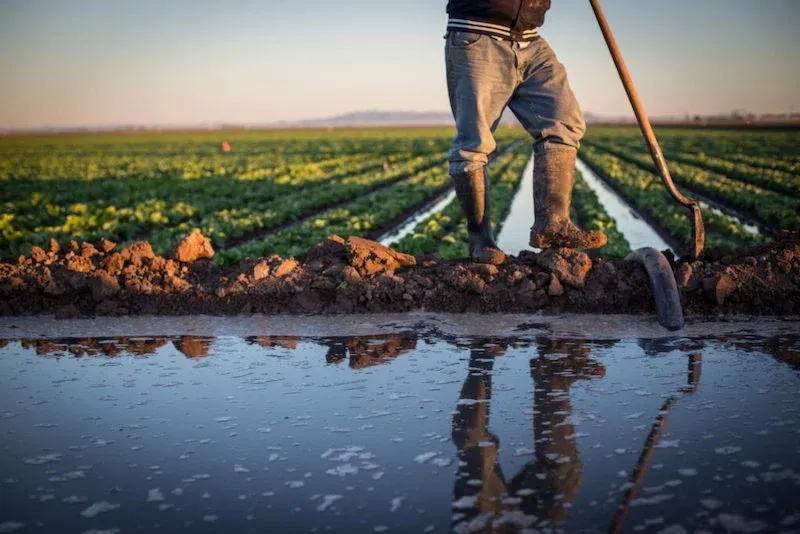

Promising Water Reservoirs Pave the Way for Agricultural Growth
As Morocco approaches the commencement of the new agricultural season, a trusted source from the Ministry of Agriculture, Fisheries, Rural Development, and Water and Forests has highlighted the significant positive water indicators that will characterize the start of this season. The country has reached impressive water levels that are expected to alleviate the pressures faced by farmers across various regions. Remarkably, the exceptional condition for the 2026-2027 season is marked by an unprecedented water reserve not seen in over a decade, allowing the agricultural sector to embark on a hopeful trajectory following the recent years of water stress experienced in the country.
The current national dam storage has exceeded 11.355 billion cubic meters of water, equating to 66.69% of total capacity—a level not recorded in nearly ten years. This substantial water reserve is poised to be a critical asset for bolstering agricultural production and ensuring the water needs of diverse farming areas, contrasting sharply with previous years that commenced with worrisome low storage levels. This encouraging situation marks the beginning of a new agricultural journey filled with optimism, as the country has moved past the crisis phase where the season would start with reserves barely reaching 4 billion cubic meters.
According to the same source, the gradual irrigation process will recommence in the major irrigation circuits that had been temporarily halted, particularly in the Doukkala, Haouz, and Tadla regions. These areas are expected to experience an unprecedented revitalization, returning them to their natural activity levels reminiscent of the years 2017 and 2018, prior to the implementation of water usage restrictions for agricultural irrigation.
Structural Changes and Future Prospects in Water Management
In a related development, the source elaborated that the water sector has entered a new structural phase through desalination projects. The installation of pipelines to supply the city of Marrakech with drinking water from the Jorf Lasfar seawater desalination plant has been completed, which will alleviate competition for surface water between drinking and irrigation needs in the region.
This renewed water availability, while sufficient to meet needs for up to three years assuming average rainfall, also necessitates consideration for farmers who have suffered in recent years due to disruptions in irrigation water and damage to irrigation channels. The source confirmed that there are action plans in place for each irrigation circuit to address these issues and restore production balance.
Data obtained from the source indicates promising forecasts for excellent production in citrus fruits, olives, pomegranates, and apples, thanks to recent snowfall and rainfall, alongside the availability of irrigation water. It has been emphasized that the quality and quantity of the harvests will be at encouraging levels, bolstering supply in the national market.
However, the source did not shy away from acknowledging existing external challenges and inflationary pressures that could trouble farmers, particularly rising energy prices, agricultural inputs, and fertilizers, as well as the ongoing effects of geopolitical crises and global supply chains on grain, corn, and soybean prices. These factors may eventually impact production costs, transportation, and the prices of certain consumer goods.
Moreover, the structural challenge posed by a shortage of seasonal labor during harvest periods remains significant and is expected to influence the upcoming periods. In conclusion, the available water resources remain the largest incentive for the success of this season and achieving tangible results that will restore vitality to the national agricultural sector.
As reported by hespress.com.