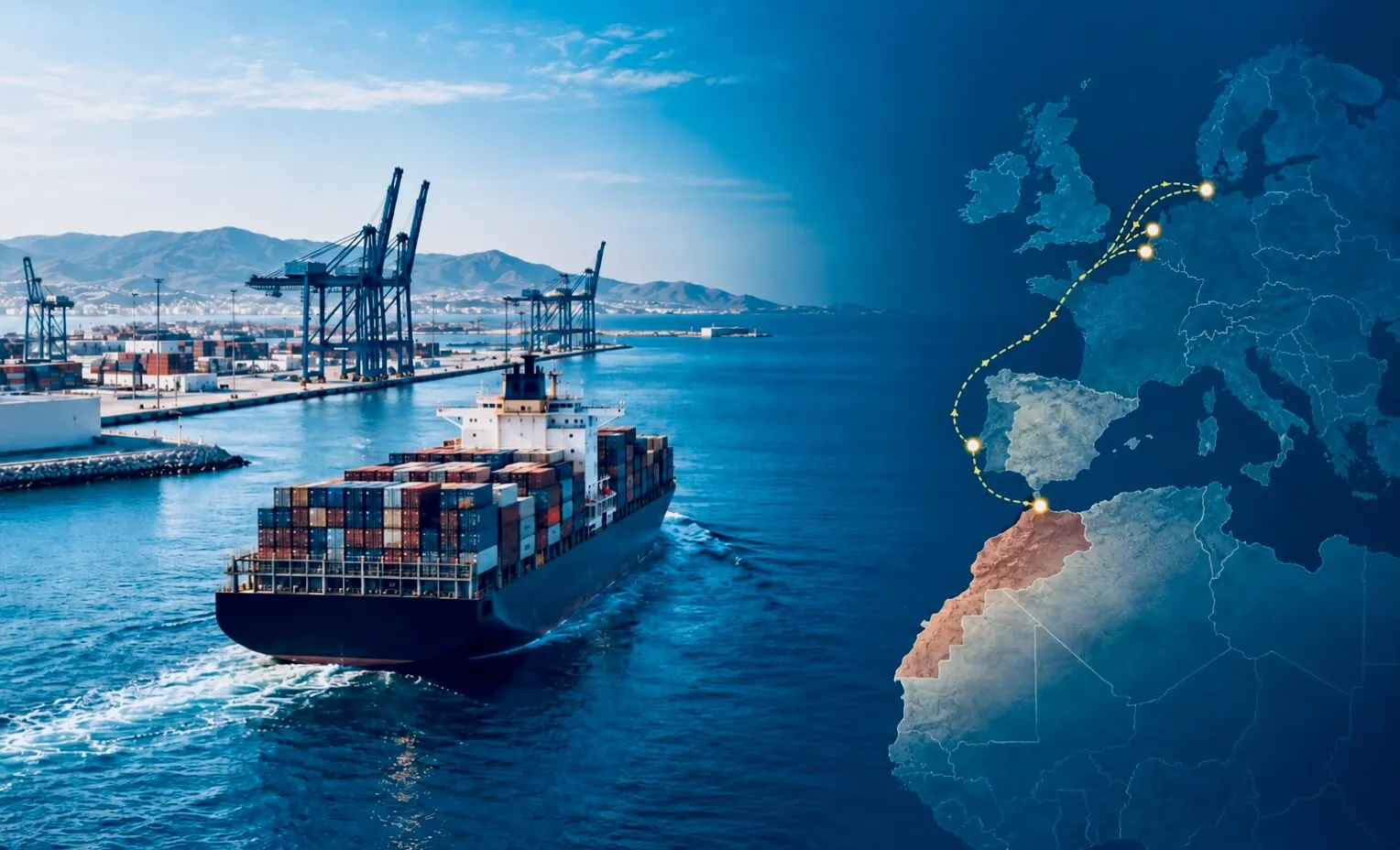

Morocco is actively broadening its commercial pathways toward Europe, a strategic move that diversifies its maritime export routes while reducing the traditional reliance on traversing thousands of kilometers overland through Spain. The latest advancement in this initiative is emerging from the port city of Nador, where the Dutch shipping company WEC Lines is set to launch an enhanced weekly service starting September 10. This service will connect the port of Nador with the Portuguese port of Setúbal, which is integrated into a vast network of ports across Northwestern Europe.
This transformative step liberates Moroccan goods from the necessity of crossing Spanish territory via trucks to reach markets in Northern Europe. A container departing from the port of Nador in Northern Morocco can now continue its maritime journey through the transshipment hub in Setúbal, thereby eliminating the high costs associated with the lengthy overland route through Spain and France, which includes traffic congestion, border crossings, and extended driving and transit times.
The new service positions Nador directly within this network, with WEC Lines estimating the maritime journey time from Nador to Setúbal at approximately three days. From the Portuguese port, containers can be redirected to key strategic ports in Northern Europe, including Rotterdam, Antwerp, Moerdijk, Timeport, and Montwyck, along with other ports connected to the company's network.
According to the published schedules, transit times from Setúbal are around three days to Montwyck, five days to Timeport, six days to Moerdijk, seven days to Rotterdam, and eight days to Antwerp. The company explicitly presents this model as an alternative to long-distance overland transport, enhancing the significance of the route beyond merely adding a new maritime journey. As the pathways for Moroccan exporters multiply, the national trade's sensitivity to a single overland corridor diminishes, allowing for a more balanced distribution of flows between sea and land based on cost, speed, cargo nature, and final destination.
This route is particularly crucial for agricultural and food products originating from the northern and eastern regions of the kingdom, as it provides refrigerated containers that allow for the transport of perishable goods within a stable cold chain. Additionally, the company offers large 45-foot containers, increasing transport flexibility and granting exporters broader options based on the nature of their cargo.
Notably, this development comes just a few months before the operational launch of the Nador West Mediterranean Port, which is scheduled for the last quarter of 2026. The new project is designed to complement the Tangier Mediterranean Port within a vision aimed at more deeply connecting the Moroccan economy to global value chains and enhancing the kingdom's logistical capabilities along the Mediterranean front.
As reported by assahifa.com.