
Morocco's Recent Actions Against Journalists
In a recent development that underscores the growing tensions along the Morocco-Spain border, two Spanish journalists from Televisión Española (TVE) and the state news agency EFE have been expelled from Fnideq, also known as Castillejos. This expulsion occurred while the journalists were reporting on potential mass entry attempts into Ceuta, a Spanish enclave in North Africa. The directive for their immediate departure was issued by local authorities, who informed their hotels of the orders received from the Moroccan government. Prior to this, a representative from Morocco's Ministry of Interior had ordered the journalists to vacate the area, indicating that they were merely following instructions.
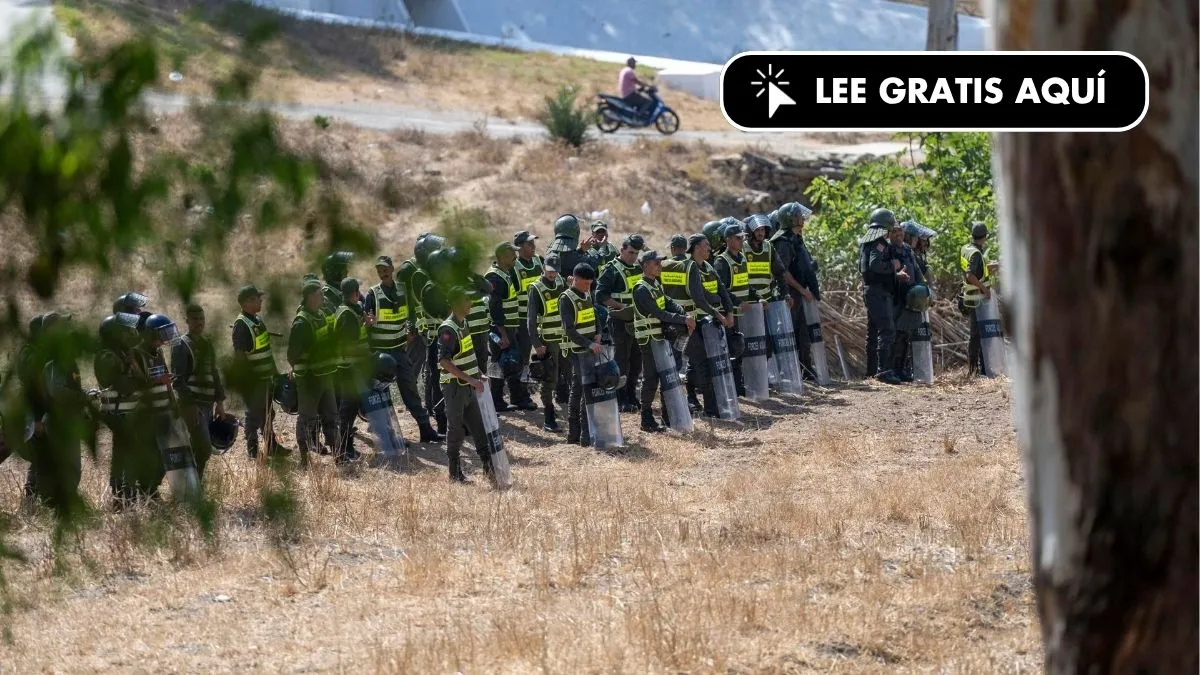
The expelled journalists had been covering the situation at the border for several days, capturing crucial footage of Moroccan anti-riot forces utilizing tear gas and batons to disperse hundreds of migrants, predominantly from Sub-Saharan Africa, who were attempting to approach the border. This confrontation likely prompted the authorities to issue an expulsion order for the journalists. According to EFE, the order was communicated in person on the morning of the expulsion by Youssef Hajji, the local head of the Ministry of Interior, who stated he was acting under direct orders.
Implications for Press Freedom
The abrupt nature of the expulsion, which was also directed at a TVE team, raises significant concerns regarding press freedom in Morocco. The Moroccan official warned that both the journalists' professional accreditations and their equipment could be confiscated if they did not comply with the order to leave. EFE has reached out to the Moroccan Ministry of Interior for clarification but has yet to receive a response. Meanwhile, the Ministry of Youth, Culture, and Communication has acknowledged the inquiry and is attempting to clarify the situation surrounding the expulsion.
This incident highlights an urgent need for dialogue about the treatment of journalists in regions experiencing heightened political and social tensions. The actions taken against the Spanish reporters not only reflect the local authorities' stance on media coverage but also pose a broader question about the state of press freedom in Morocco, especially in sensitive border areas.
As reported by theobjective.com.