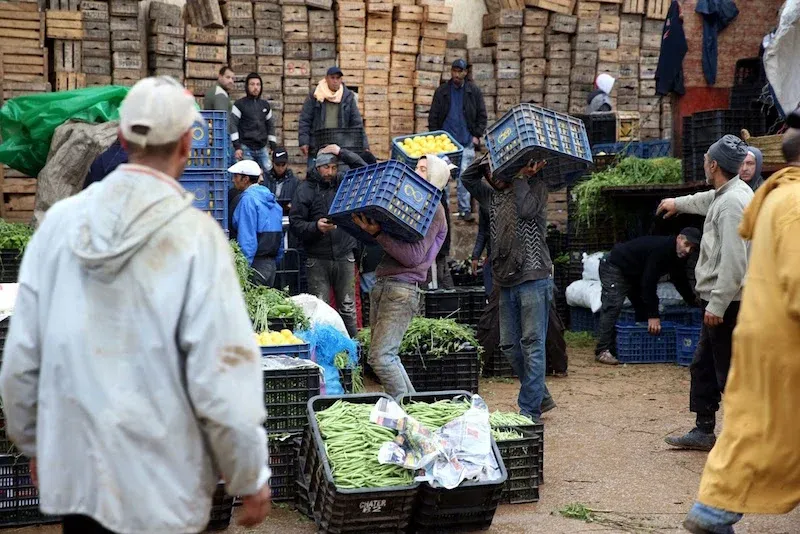

Unmatched Supply in Moroccan Markets
As summer reaches its peak, professionals in the distribution of fruits and vegetables within the wholesale markets of Casablanca and Inzikan have reported an unprecedented situation characterized by an overwhelming supply. This remarkable abundance has begun to positively influence the stability of prices, a welcome change after years of inflation tied to drought conditions experienced in the country. The onset of August, which has traditionally marked a spike in prices due to increased summer demand, is this year occurring under entirely different circumstances, as an exceptional surplus coincides with a fruitful agricultural season.
According to Abdel Razak Chabi, the president of the Casablanca Wholesale Fruit and Vegetable Traders Association, the heavy rainfall during this season has significantly enriched the market's diversity in offerings, particularly for products directly linked to the land and water table, such as watermelon, yellow melon, and grapes. He noted that the current supply levels far exceed those seen over the past fifteen years, with some seasonal crops arriving a full week or more earlier than usual.
Price Trends and Quality Insights
Current market data indicates that grape prices range from 2.5 to 7 dirhams per kilogram, with an average of 3.5 to 4 dirhams for medium-quality grapes. The yellow melon, primarily sourced from the regions of Kasr al-Kabir and Larache, is selling for less than 1 dirham to 1.5 dirhams, while watermelon prices fluctuate between 0.50 dirhams and 1.20 dirhams. Concerning peaches and "shahdiya," the prices vary significantly across different supply regions, including Agadir, Gharb, Meknes, Atlas, and Marrakech, ranging from 4 to 12 dirhams, with 8 dirhams considered a fair price without implying that lower prices indicate poor quality.
Despite the ongoing recovery of prickly pear production from past pest infestations, regular figs from Doukkala and Wazan are priced between 8 and 10 dirhams. Vegetables are also seeing a notable surplus, with onion prices ranging from 1 to 2 dirhams, alongside a healthy supply of tomatoes, potatoes, and carrots.
Chabi dismissed any notion of current price declines being influenced by so-called "speculators," asserting that the balance of supply and demand is the sole determinant of pricing. He explained that allegations of speculation are often used by certain officials to justify their inability to manage the sector comprehensively and sustainably, rather than through temporary measures. He has also expressed criticisms regarding the management of the wholesale market, pointing out organizational, hygiene, and health safety issues, and has called for genuine dialogue between market administration and professionals who are well-acquainted with the intricacies of the trade.
Reflecting on the recent past, he reminded that prices had surged dramatically during the five years of drought, but the current season has seen a reversal, with supply significantly outpacing demand. This trend serves as further evidence that supply and demand, rather than any other factors, are what truly drive prices up and down.
A professional source from the Inzikan wholesale market, one of the largest in the Kingdom, provided a detailed overview of the seasonal fruit supply map across national markets, noting that seasonal fruits, with the exception of citrus varieties like 'nafiel' and 'juice lemon,' are currently not tied to the Souss region. Presently, peaches and shahdiya are primarily sourced from Meknes, the Atlas, and Gharb regions, while figs come from Wazan and the Chaouen region, and prickly pear supply is restricted to distant southern areas stretching from Tan-Tan to Tiznit and beyond Agadir. The season for clementines has not yet arrived, although limited production is ongoing in the Lkdime area near Agadir, which has yet to reach the usual density and quality standards for its main season.
As reported by hespress.com.