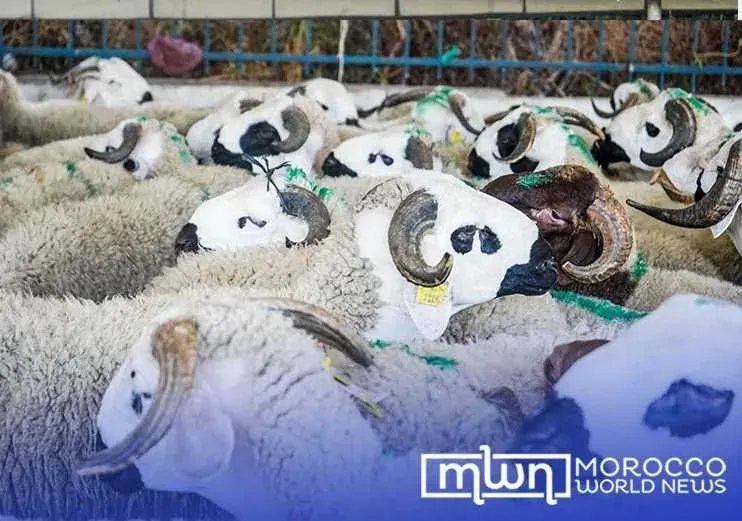

As the much-anticipated Eid Al Adha festival draws near, countless Moroccan families find themselves grappling with a pressing dilemma: how can they procure a sheep for the celebration as prices continue to surge, despite numerous governmental assurances, subsidies, and tax incentives intended to alleviate this burden? This situation has led many citizens to label the phenomenon as the "Fraqchia crisis," a term grounded in local vernacular that highlights the role of livestock traders and intermediaries accused of inflating prices and exploiting the prevailing market instability.
The widening disparity between government spending and the actual costs borne by consumers is the focal point of the latest issue of Milafat magazine, which characterizes the situation as a "government of lobbies." The investigation reveals a staggering MAD 76 billion in public funds that were allocated in support of the agricultural sector, yet failed to safeguard the interests of everyday consumers. This substantial figure encompasses direct financial assistance, customs exemptions, and tax reductions, all purportedly aimed at bolstering purchasing power.
A Market Under Strain
Delving deeper into the complexities of the issue, the investigation contends that the crisis cannot be attributed solely to a temporary shortage or adverse seasonal conditions. Instead, it highlights a network of influence that spans from feed and grain imports to livestock management, slaughterhouses, wholesalers, and retailers. The findings indicate that a select few dominant players have emerged within this market landscape, leaving the average family to shoulder the escalating costs.
This situation is particularly alarming given Morocco's ongoing struggle with the repercussions of prolonged droughts and the mounting pressures on livestock populations. Statistics reveal that as of 2025, cattle and sheep herds have plummeted by 38% since 2016, compounded by rainfall levels that were 53% below the 30-year average. In response, the government has taken measures such as suspending import duties and VAT on various livestock, including cattle, sheep, and camels, alongside orchestrating livestock imports to stabilize the market.
Additionally, King Mohammed VI has urged citizens to refrain from slaughtering sheep for Eid in 2025, citing the financial strain that many families are enduring. The Moroccan government has also committed to importing up to 100,000 sheep from Australia while eliminating taxes on livestock and meat imports to alleviate market pressures.
Stagnant Prices Amid Promises
However, as Milafat's investigation reveals, government interventions have not yielded the anticipated relief for consumers. The root of the problem can be traced back to 2022, when a confluence of drought, global inflation, and the geopolitical fallout from the Ukraine conflict exacerbated the costs of grain, feed, and fuel. While emergency support was dispatched, critics argue that the government primarily addressed the symptoms rather than reforming the underlying market structure.
One critical insight from the investigation is that feed prices have remained elevated, failing to revert to pre-crisis levels even as global prices have moderated. For instance, the cost of compound feed escalated from approximately MAD 2.8 per kilogram before the 2022 crisis to between MAD 4 and 5 in subsequent years, indicating a persistent price inflation. In parallel, retail prices for meat have surged alarmingly; beef prices in urban areas increased from MAD 68.3 per kilogram in 2018 to MAD 103.8 in February 2025, and lamb prices soared from MAD 72.9 to MAD 134.6 during the same timeframe. The widening gap between slaughterhouse prices and consumer prices has further contributed to the relentless rise in final costs, even as import and feed prices began to ease.
As such, the discourse surrounding this year’s Eid celebration transcends mere holiday preparations; it delves into deeper issues of trust and economic disparity. Families are being assured that necessary support is in place, that imports will stabilize the market, and that prices will remain manageable. Yet, the stark reality reflected in the marketplace tells a different story. With sheep prices still beyond the reach of many households, national reports underscore a persistent market tension just days ahead of Eid.
Milafat's investigation does not simply attribute these challenges to climatic conditions or international market fluctuations. Instead, it asserts that Morocco's meat and feed sectors have become overly concentrated, excessively protected, and inadequately regulated. The narrative points to a significant outflow of public funds while the advantages appear to be concentrated within a narrow circle of importers, feed suppliers, and market intermediaries.
For a substantial number of Moroccan families, the outcome remains straightforward: the cost of acquiring a sheep for Eid remains prohibitively high, and the governmental promises have yet to translate into tangible financial relief. The report from Milafat strongly suggests that unless there is a fundamental shift in how the market is governed, continued public expenditure may persist without delivering real benefits to consumers.
As reported by moroccoworldnews.com.