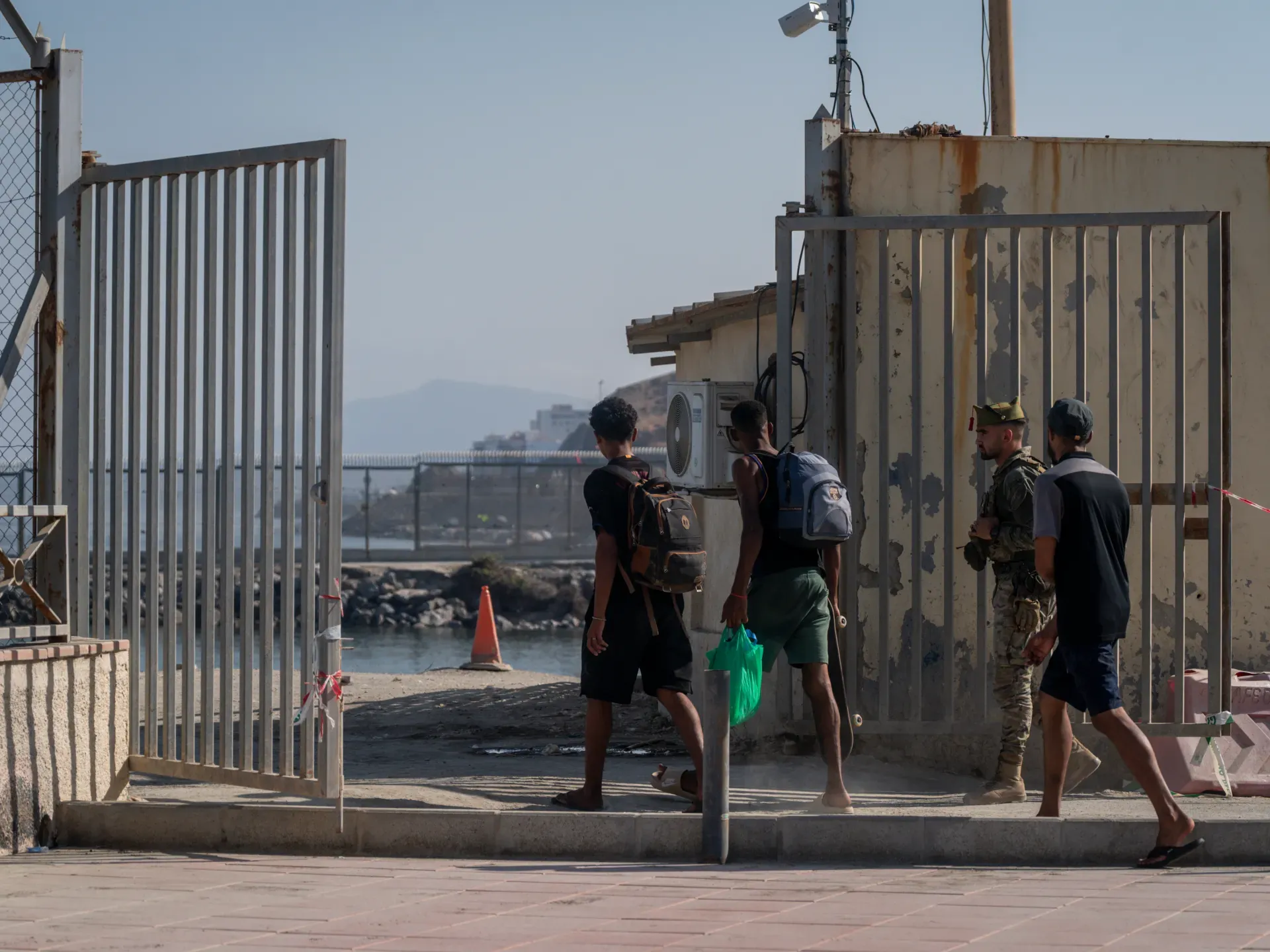

Moroccan Authorities Intercept Migrants Amid Social Media Rumors
In a recent operation, Moroccan authorities successfully thwarted a new attempt at illegal migration towards the Spanish enclave of Ceuta, detaining nearly 300 individuals, primarily from sub-Saharan African countries, near the border town of Fnideq. This crackdown comes in the wake of heightened fears of a migrant surge, fueled by misinformation circulating on social media platforms that falsely claimed the opening of the border with Spain on a Saturday, coinciding with a public holiday.
Reports indicate that a total of 294 migrants were intercepted, many of whom had gathered just a few kilometers from the border crossing. While some managed to escape, security forces apprehended a significant number of them, demonstrating Morocco's ongoing efforts to control illegal migration flows. This operation is part of a broader strategy to address the rising numbers of individuals attempting to cross into Ceuta, especially following a chaotic surge in late July that saw tens of thousands of migrants rush the border, resulting in numerous fatalities.
Context of the Recent Migration Attempts
The recent crackdown followed a series of rumors suggesting that the borders would open due to Spanish holiday celebrations, prompting a surge in migration attempts. In light of these developments, Moroccan authorities arrested 61 individuals believed to be involved in spreading these misleading claims. An official from the Moroccan government stated that the operation is a routine measure aimed at curbing illegal migration towards Ceuta.
In the aftermath of a recent crisis, where over 70,000 migrants attempted to enter Ceuta, resulting in tragic losses of life, authorities have intensified their measures to prevent such occurrences. The National Human Rights Council in Morocco reported that the death toll from this recent wave of crossings reached 14, while Spanish sources indicated that the number could be as high as 80. Migrants from various countries continue to seek passage through Morocco to Europe, driven by desperate economic conditions and ongoing conflicts in their home nations.
As reported by aljazeera.net.